
Metabolic Flexibility: A Complete Guide to Using CGM and A1C Data for Optimal Energy Metabolism

Medically reviewed by: Health is Heaven Medical Review Board | Published by Ganesh G Kamble, Health is Heaven | Published: June 6, 2026

The human body was designed to run on two fuels: glucose derived from dietary carbohydrates, and fat mobilized from adipose tissue. These two systems are not competitors - they are complements. In a metabolically healthy individual, the body reads incoming signals (blood glucose, insulin, glucagon, cortisol, the ratio of AMP to ATP inside cells) and fluidly shifts between fuel sources multiple times per day. After a carbohydrate-containing meal, glucose is the primary fuel. During the overnight fast, fat takes over. During moderate aerobic exercise, fat dominates again. This seamless biological transition is called metabolic flexibility.

Metabolic inflexibility - the loss of this switching ability - is now understood to be one of the earliest and most consequential features of cardiometabolic decline. A person who is metabolically inflexible is stuck in glucose-burning mode. Their cells have lost the enzymatic capacity to efficiently mobilize and oxidize stored fat. Fasting glucose drifts upward. Postprandial glucose spikes take longer to clear. Energy crashes mid-afternoon. The brain demands carbohydrates again. Adipose tissue fat remains locked in storage. And compensatory hyperinsulinemia quietly accumulates for years before HbA1c or fasting glucose cross a clinical threshold.

SPONSORED CONTENT

Continuous glucose monitors (CGM) and A1C testing are the two most accessible clinical windows into this process. Understanding what each measurement reveals - and what it misses - is the foundation of a genuinely evidence-based approach to metabolic health optimization. This guide covers the biochemistry, the measurements, and the evidence-based strategies for building or rebuilding your metabolic flexibility. As with all metabolic health information, the protocols described here are educational references; consult a qualified healthcare provider before making significant changes to diet, exercise, or health monitoring practices, especially if you have an existing medical condition.

Interactive Tools

Verify Your Metabolic Metrics

Use our clinical calculators to evaluate your current markers: interpret blood glucose curves and glycemic variability with the Blood Sugar Checker, or estimate physiological aging and cellular decline with the Biological Age Calculator.

What Is Metabolic Flexibility? The Clinical Definition

The term metabolic flexibility was formally defined in the scientific literature by Bret Goodpaster and Lauren Sparks in a 2017 review published in Cell Metabolism, building on earlier indirect calorimetry research. Formally, it refers to the capacity of an organism to match fuel oxidation to fuel availability - switching from primarily fat oxidation during fasting and low-intensity activity to primarily glucose oxidation after a carbohydrate-containing meal.

Clinically, metabolic flexibility is most precisely measured by the Respiratory Exchange Ratio (RER), also called the Respiratory Quotient (RQ). This is the ratio of carbon dioxide (CO2) produced to oxygen (O2) consumed during cellular metabolism, measured by indirect calorimetry (a metabolic cart or portable metabolic analyzer). Pure fat oxidation produces an RQ of approximately 0.7 (less CO2 per unit of O2 consumed, because fat is less oxidized than glucose). Pure glucose oxidation produces an RQ of 1.0. Mixed fuel utilization produces values between these extremes.

A metabolically flexible individual shows a clear shift from an RQ near 0.7 in the overnight fasted state to near 1.0 after a carbohydrate meal. A metabolically inflexible individual shows an RQ that remains near 0.85 to 0.90 in both states - their cells neither fully exploit fat during fasting nor cleanly upregulate glucose oxidation after a meal. This blunted response reflects impaired substrate switching at the cellular level, driven primarily by insulin resistance in skeletal muscle and adipose tissue.

For most people without access to a metabolic cart, the CGM serves as a practical indirect proxy for metabolic state. The pattern of fasting glucose, the speed of postprandial clearance, and the frequency of reactive hypoglycemia together paint a functional picture of how well the metabolic switch is operating. Combined with a laboratory A1C and, ideally, a fasting insulin level, CGM data allows a surprisingly detailed assessment of metabolic flexibility outside a research laboratory.

The Molecular Switch: How Insulin Controls Fuel Selection
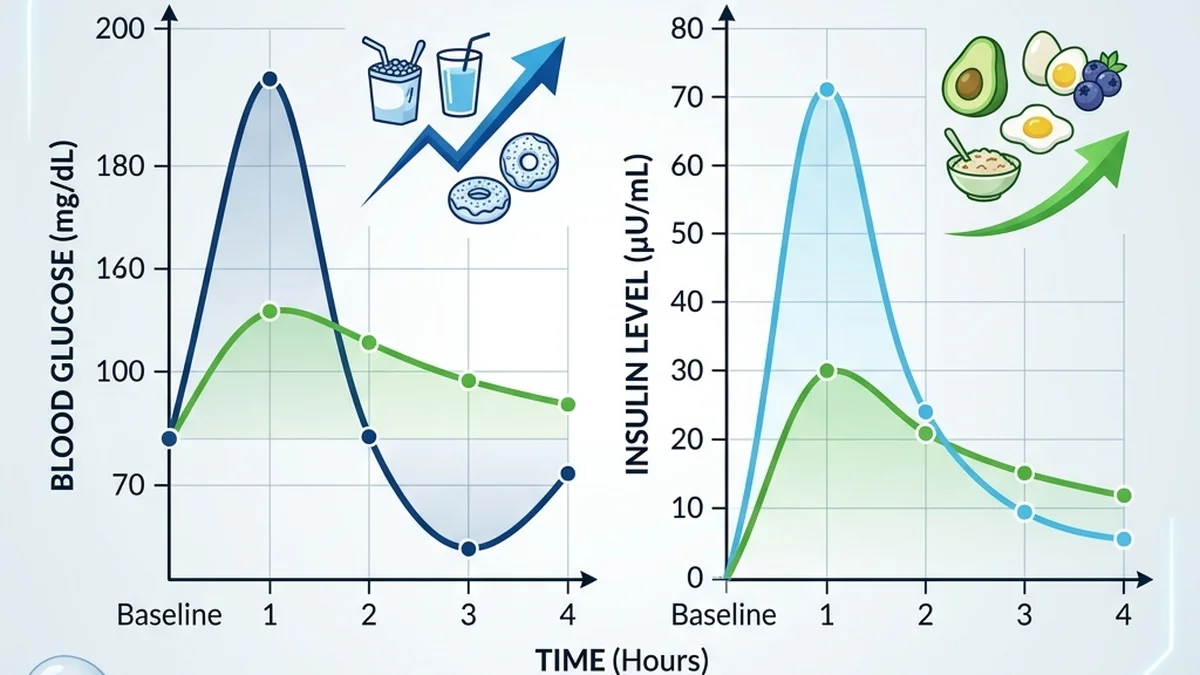
Vector chart comparing blood glucose and insulin concentration curves over 4 hours after a high-sugar refined breakfast versus a balanced whole-food meal, showing the sharp insulin spike and reactive glucose dip with the processed meal.
Macronutrient kinetics and insulin response: a high-refined-carbohydrate meal triggers a rapid insulin spike that powerfully suppresses fat oxidation for 4 to 6 hours post-meal. Insulin acts as the molecular gate between glucose-burning and fat-burning modes, keeping hormone-sensitive lipase (HSL) inhibited as long as insulin remains elevated.

Insulin is the master regulator of fuel selection. Understanding its molecular actions on fat and glucose metabolism is the most important framework for interpreting both CGM traces and A1C values in the context of metabolic flexibility.

Insulin and fat mobilization (lipolysis suppression). In adipose tissue, the enzyme hormone-sensitive lipase (HSL) is responsible for releasing stored triglycerides as free fatty acids (FFAs) into the circulation. HSL activity is powerfully suppressed by insulin - even relatively modest insulin elevations (50 to 100 picomoles per liter, far below the post-meal peak) are sufficient to inhibit HSL by 50 to 80%. This means that any state of elevated insulin - the several-hour post-meal window, chronic snacking on high-glycemic foods, or the compensatory hyperinsulinemia of insulin resistance - functionally locks adipose tissue fat in storage and prevents it from reaching muscle and liver mitochondria as fuel.

CPT-1 and the mitochondrial fat-entry gate. For fatty acids to be oxidized, they must cross the inner mitochondrial membrane, a transport step catalyzed by the enzyme carnitine palmitoyltransferase I (CPT-1). CPT-1 is potently inhibited by malonyl-CoA, a metabolic intermediate that accumulates when insulin drives acetyl-CoA carboxylase (ACC) activity in the fed state. High malonyl-CoA signals cellular energy sufficiency and closes the mitochondrial fat-entry gate. When insulin falls during fasting or prolonged aerobic exercise, malonyl-CoA levels drop, CPT-1 opens, and fatty acids flow freely into the mitochondrial matrix for beta-oxidation.

AMPK as the cellular energy sensor. AMP-activated protein kinase (AMPK) is the primary cellular energy gauge. It is activated when the AMP:ATP ratio rises - as it does during exercise, fasting, or caloric restriction. Active AMPK simultaneously triggers GLUT4 translocation to the muscle cell surface (increasing glucose uptake, independent of insulin), inhibits ACC (lowering malonyl-CoA and opening CPT-1 for fat entry), and initiates PGC-1alpha signaling (beginning the process of mitochondrial biogenesis). AMPK is thus the central mechanism by which exercise, fasting, and zone 2 aerobic training rebuild metabolic flexibility at the cellular level.

The role of glucagon and catecholamines. While insulin suppresses fat mobilization, glucagon and catecholamines (epinephrine, norepinephrine) activate it. During a 12 to 16 hour overnight fast, as insulin levels approach their nadir, the glucagon:insulin ratio rises. Glucagon promotes glycogenolysis in the liver, maintains fasting glucose stability, and signals adipose tissue HSL to release FFAs. This overnight fasting window - captured by CGM as the flat, stable nocturnal glucose trace in a metabolically healthy individual - is the body's primary daily fat-oxidation period and a crucial window for rebuilding metabolic flexibility.

Using CGM Data to Assess Metabolic Flexibility

A 14-day CGM trace contains an enormous amount of information about metabolic state. The following CGM-derived assessments are most informative for metabolic flexibility evaluation:

Overnight fasting glucose baseline. In a metabolically flexible individual who ate their last meal by 8:00 PM and wore a CGM overnight, glucose should decline steadily from approximately 90 to 100 mg/dL after dinner and stabilize in the 70 to 85 mg/dL range by midnight and through the early morning hours. A CGM trace showing glucose remaining above 90 mg/dL throughout the night, or a rising slope from 3:00 AM onward (the exaggerated dawn phenomenon), suggests that the liver is not being adequately suppressed by basal insulin - an early sign of hepatic insulin resistance and reduced metabolic flexibility.

Postprandial glucose clearance rate. How quickly glucose returns to the pre-meal baseline after a meal is a direct measure of the peripheral insulin sensitivity component of metabolic flexibility. A metabolically flexible individual sees glucose peak at 45 to 75 minutes post-meal, typically below 130 mg/dL, and return to near-baseline by 90 to 120 minutes. A metabolically inflexible individual sees a higher peak (often exceeding 140 mg/dL), a delayed peak (sometimes not reaching maximum until 90 minutes), and slow clearance that keeps glucose above 110 to 120 mg/dL for 2.5 to 4 hours after eating. CGM software from Stelo, Lingo, and Libre apps calculates glucose clearance time automatically; look for patterns across multiple meals of similar composition.

Reactive hypoglycemia as an insulin sensitivity signal. Reactive hypoglycemia (glucose dipping below 70 mg/dL approximately 1.5 to 3 hours after a high-carbohydrate meal) is a paradoxical indicator of poor metabolic flexibility. It occurs when the pancreatic beta cell over-responds to the carbohydrate load with an excessive insulin pulse that drives glucose below the normal range. This exaggerated response is associated with early insulin resistance - the beta cells are compensating for peripheral resistance by secreting more insulin. On a CGM trace, this pattern appears as a sharp postprandial rise followed by a steep drop into the low-70s or sub-70 range, often accompanied by subjective symptoms of shakiness, brain fog, and carbohydrate cravings.

Mass General Brigham clinical experts present on the mechanisms of insulin resistance, how it affects weight loss, and the treatment hierarchy required to restore metabolic flexibility.

Glycemic variability (Coefficient of Variation). A CV above 36% indicates that glucose is swinging widely across the day, reflecting poor insulin-mediated glucose homeostasis. High CV is associated with increased oxidative stress and is a hallmark of metabolic inflexibility. In a metabolically flexible individual who eats whole foods and maintains a 12-hour or longer overnight fast, CV typically falls below 25% even without any therapeutic intervention.

CGM during extended fasting (12 to 16 hours). One practical test of metabolic flexibility that CGM enables is observing glucose behavior during a planned extended overnight fast of 14 to 16 hours. In a metabolically flexible individual, glucose remains stable (or very slightly declines) across the full fast, typically holding in the 70 to 82 mg/dL range with minimal variance. In a metabolically inflexible individual, glucose may drift upward through the fast (hepatic insulin resistance), or the individual may experience significant subjective symptoms of hunger and energy loss despite glucose being within normal range - a sign that fat mobilization is insufficient to compensate for the absence of dietary glucose.

Understanding A1C in the Context of Metabolic Flexibility

Biochemical diagram of the lipolysis and mitochondrial beta-oxidation pathway showing triglyceride breakdown in adipose tissue, free fatty acid release, carnitine transport via CPT-1, and acetyl-CoA production for ATP synthesis.
Lipolysis and beta-oxidation: the pathway from adipose triglyceride to mitochondrial ATP. CPT-1 (carnitine palmitoyltransferase I) is the rate-limiting gate for fatty acid entry into the mitochondrial matrix, inhibited by malonyl-CoA when insulin is elevated. Building metabolic flexibility restores this pathway's efficiency and capacity.

HbA1c (glycated hemoglobin, reported as a percentage) reflects the proportion of hemoglobin molecules that have been non-enzymatically glycated by glucose over the preceding 90 days. It is the standard laboratory measure of average blood glucose and the primary diagnostic tool for diabetes and prediabetes. In the context of metabolic flexibility, A1C provides complementary but distinct information from CGM.

What A1C reveals. A1C is an excellent measure of sustained glycemic burden. It integrates postprandial glucose excursions, fasting glucose elevations, and nocturnal patterns over 3 months, providing a more stable picture than any single glucose measurement. An A1C below 5.7% (ADA normal range) indicates that average glucose over the quarter has been below approximately 117 mg/dL. Many longevity-focused practitioners set a more stringent target of below 5.4% (equivalent to an average glucose of approximately 108 mg/dL) as an indicator of optimal metabolic health.

What A1C misses. A1C does not capture glycemic variability - two individuals with identical A1C values of 5.4% may have very different glucose patterns, one with flat stable glucose and one with frequent spikes and dips that average out to the same value. A1C also misses the insulin response dimension entirely: a person in early compensatory hyperinsulinemia (producing excessive insulin to maintain normal glucose) may have a perfectly normal A1C while already demonstrating the early physiology of metabolic inflexibility. Additionally, A1C is subject to technical limitations: it can be falsely low in conditions that increase red blood cell turnover (hemolytic anemia, recent significant blood loss, pregnancy), in individuals with certain hemoglobin variants (HbS in sickle cell trait, HbC, HbE), and in people taking high-dose vitamin C supplementation.

The critical role of fasting insulin. When assessing metabolic flexibility, A1C alone is insufficient. Fasting insulin provides the second dimension that A1C lacks. A fasting insulin level below 7 microinternational units per milliliter (uIU/mL) is considered indicative of good insulin sensitivity by many metabolic health practitioners, though official reference ranges vary by laboratory (normal is often listed as up to 17 or 25 uIU/mL, which reflects population averages rather than optimal values). HOMA-IR (Homeostatic Model Assessment of Insulin Resistance) is calculated as: fasting glucose in millimoles per liter multiplied by fasting insulin in uIU/mL, divided by 22.5. A HOMA-IR below 1.5 is generally associated with good insulin sensitivity; above 2.5 is associated with clinically significant insulin resistance. Discuss fasting insulin testing and HOMA-IR interpretation with your healthcare provider.

The Kraft pattern insight. The clinical work of pathologist Joseph Kraft MD, published in his book Diabetes Epidemic and You, documented five distinct insulin response patterns based on oral glucose tolerance test (OGTT) results combined with serial insulin measurements at 0, 30, 60, 120, and 180 minutes. Patterns 2 through 5 represented progressively abnormal hyperinsulinemic responses despite completely normal glucose values. This work established that insulin resistance is detectable by its insulin signature up to 10 to 20 years before glucose values cross the prediabetes threshold - and long before A1C would show any change. This is the strongest argument for using CGM plus fasting insulin, not A1C alone, to assess metabolic flexibility.

The 5 Core Pillars of Building Metabolic Flexibility

Pillar 1: Reduce Dietary Glycemic Load and Extend Meal Spacing

The most direct dietary pathway to rebuilding metabolic flexibility is reducing the total glycemic burden of the diet - not through caloric restriction, but through replacing ultra-processed carbohydrates with foods that produce lower insulin responses. Legumes, non-starchy vegetables, nuts, seeds, whole grains, and intact fruit produce substantially lower postprandial insulin responses per calorie than refined grains, sugary beverages, and processed snack foods.

Meal spacing is equally important. Three to four hours between meals allows insulin to return toward the fasting range between eating episodes, providing windows for fat oxidation. A 12 to 16 hour overnight fast - achievable simply by finishing dinner by 7:00 or 8:00 PM and not eating until 7:00 or 8:00 AM - creates the longest daily fat-burning window. A 2018 randomized controlled trial by Sutton et al. published in Cell Metabolism found that early time-restricted eating (an eating window from 8:00 AM to 2:00 PM) improved insulin sensitivity by 3% within 5 weeks in men with prediabetes, without any change in total caloric intake. CGM-measurable improvements in fasting glucose baseline and postprandial clearance speed are typically visible within 1 to 2 weeks of implementing consistent meal spacing.

Pillar 2: Zone 2 Aerobic Training for Mitochondrial Biogenesis

Flat vector illustration showing skeletal muscle fibers absorbing glucose via insulin-independent GLUT4 transporter translocation during moderate aerobic exercise, driven by AMPK signaling from the AMP to ATP ratio shift.
Insulin-independent GLUT4 translocation during exercise: AMPK activation during moderate aerobic activity drives GLUT4 glucose transporters to the muscle cell surface without requiring insulin signaling. This mechanism is the foundation of zone 2 cardio's power to improve glucose disposal and metabolic flexibility independently of insulin sensitivity.

Zone 2 cardio (approximately 60 to 70% of maximum heart rate, a conversational aerobic pace) is the training zone where fat oxidation per unit of exercise time is maximized in trained individuals. Its primary benefit for metabolic flexibility is the induction of mitochondrial biogenesis via the PGC-1alpha (peroxisome proliferator-activated receptor gamma coactivator 1-alpha) signaling pathway.

AMPK activation during zone 2 exercise initiates a signaling cascade that ends in increased transcription of mitochondrial genes, including those encoding electron transport chain complexes, fatty acid oxidation enzymes (HADHA, MCAD), and the CPT-1 transporter. Over 6 to 12 weeks of consistent zone 2 training at 3 to 4 sessions per week, mitochondrial density in skeletal muscle increases measurably - more mitochondria means greater capacity to oxidize fat per unit of muscle mass. Dr. Inigo San Millan at the University of Colorado has shown in multiple studies that elite endurance athletes have mitochondrial fat oxidation capacities that are 3 to 5 times higher than sedentary individuals, a difference driven primarily by training-induced mitochondrial expansion rather than genetics.

On a CGM trace, the impact of consistent zone 2 training is visible within 3 to 4 weeks: improved postprandial glucose clearance, lower fasting glucose baseline, and reduced glycemic variability (lower CV). The mechanism is dual: AMPK-driven GLUT4 translocation improves acute glucose disposal during and after exercise sessions, while long-term mitochondrial biogenesis improves baseline metabolic flexibility across the entire day.

Pillar 3: Optimize Sleep Architecture for Overnight Fat Oxidation

The overnight fast is the body's primary daily fat-oxidation period. During deep NREM sleep (stages 3 and 4), growth hormone is released in pulses, stimulating lipolysis and promoting fat mobilization. The nocturnal decline in cortisol and insulin allows HSL to remain active, releasing free fatty acids for cardiac and diaphragm muscle metabolism. Adequate deep sleep (7 to 9 hours total, with sufficient slow-wave sleep) is thus directly required for optimal fat oxidation capacity and metabolic flexibility maintenance.

Sleep deprivation disrupts metabolic flexibility through multiple pathways. Even partial sleep restriction (4 to 6 hours for 5 nights) significantly reduces insulin sensitivity in skeletal muscle, increases cortisol, promotes inflammatory cytokine release (IL-6, TNF-alpha), and impairs the normal overnight recovery of insulin sensitivity that occurs during full sleep. A 2010 study by Nedeltcheva et al. in the Annals of Internal Medicine demonstrated that sleep-restricted individuals undergoing caloric restriction lost less fat mass than well-rested counterparts, with a shift in weight loss toward lean muscle mass - a direct consequence of impaired fat mobilization during inadequate sleep. Check your accumulated sleep debt with the Sleep Debt Calculator to evaluate whether sleep optimization should be your first metabolic flexibility intervention.

Pillar 4: High-Intensity Interval Training (HIIT) as a Complementary Modality

While zone 2 training builds the fat-oxidation infrastructure, high-intensity interval training (HIIT) provides a complementary benefit through maximal GLUT4 upregulation and rapid glycogen depletion. A HIIT session (8 to 10 rounds of 30-second maximum-effort intervals with 90-second rest periods) rapidly empties skeletal muscle glycogen stores, creating a post-exercise window during which ingested carbohydrates are preferentially taken up by muscle cells for glycogen resynthesis rather than contributing to adipose triglyceride accumulation. This glycogen-driven nutrient partitioning effectively acts as a CGM-measurable postprandial glucose blunting strategy, even with high-carbohydrate meals consumed within 1 to 2 hours post-HIIT.

HIIT also acutely elevates the post-exercise metabolic rate (excess post-exercise oxygen consumption, EPOC) for 12 to 24 hours, during which fat oxidation is elevated. The combination of 2 to 3 zone 2 sessions per week for mitochondrial biogenesis plus 1 to 2 HIIT sessions per week for glycogen management and EPOC represents the evidence-informed dual-modality training approach for metabolic flexibility optimization.

Pillar 5: Stress Management and Cortisol Control

Chronic psychological stress is a direct inhibitor of metabolic flexibility. Elevated cortisol drives hepatic gluconeogenesis (adding glucose to the bloodstream from amino acids and glycerol), promotes visceral adipose tissue accumulation (omental fat has the highest glucocorticoid receptor density of any fat depot), and suppresses insulin sensitivity in skeletal muscle through serine phosphorylation of the insulin receptor substrate (IRS-1). Chronically elevated cortisol effectively keeps the body in a hyperglycemic, fat-storing state that is difficult to exit through diet and exercise alone.

On a CGM trace, chronic stress manifests as elevated fasting glucose (above 85 to 90 mg/dL consistently), exaggerated postprandial spikes, and high glycemic variability - all identical patterns to early insulin resistance, because the mechanism overlaps substantially. A stress management protocol (diaphragmatic breathing, progressive muscle relaxation, adequate social connection, nature exposure) is therefore not a supplementary intervention for metabolic flexibility - it is a core pillar. Unmanaged chronic stress can substantially undermine the benefits of dietary and exercise improvements that are otherwise metabolically sound.

Circadian Alignment: Meal Timing as a CGM Strategy

Circadian biology diagram showing insulin sensitivity across the 24-hour day, with highest sensitivity in the morning under CLOCK and BMAL1 gene expression, declining through the afternoon, and reaching its lowest point late at night, demonstrating why late-night eating promotes insulin resistance and glucose dysregulation.
Circadian alignment and meal timing: peripheral tissue insulin sensitivity follows a CLOCK gene-driven 24-hour cycle, peaking in the morning and declining toward evening. Eating the majority of caloric intake earlier in the day aligns carbohydrate consumption with peak insulin sensitivity, producing lower postprandial glucose peaks on CGM and reducing cumulative daily glycemic load.

The timing of meals relative to the circadian rhythm significantly affects postprandial glucose responses, independent of the food content. Peripheral tissues including skeletal muscle, liver, and adipose tissue have their own intrinsic circadian clocks (CLOCK and BMAL1 gene-driven oscillators) that modulate insulin sensitivity in a time-of-day-dependent manner. Insulin sensitivity peaks in the morning hours and progressively declines through the afternoon and evening, reaching its lowest point in the late-night and early-morning hours.

This circadian gradient in insulin sensitivity means that the same meal eaten at 8:00 AM produces a measurably lower postprandial glucose peak on CGM than when eaten at 8:00 PM. Research by Dr. Satchidananda Panda at the Salk Institute for Biological Studies has demonstrated this pattern in both animal models and human studies, showing that food consumed in the morning is metabolized with greater efficiency than nutritionally identical food consumed in the evening. A practical implication for CGM users: if evening meals consistently produce higher glucose peaks than similar meals eaten earlier in the day, this is not evidence of a worsening metabolic condition - it is the expected expression of normal circadian variation. The intervention, if desired, is to shift the eating window earlier, reducing the caloric density of evening meals while maintaining or increasing the nutritional density of breakfast and lunch.

Dr. Robert Lustig presents at the University of California Television (UCTV) on the biochemistry of fructose metabolism, lipid accumulation (de novo lipogenesis), and its role in metabolic dysfunction.

CGM Pattern Guide for Metabolic Flexibility Assessment

The following table maps common CGM patterns to their likely metabolic significance and evidence-based responses:

CGM Pattern Metabolic Interpretation Primary Response
Overnight glucose stable 72-82 mg/dL, minimal drift Excellent fat oxidation during the overnight fast; healthy hepatic insulin sensitivity Maintain current sleep, meal timing, and carbohydrate quality
Post-meal peak below 130 mg/dL, returns to baseline within 90 min Good peripheral insulin sensitivity and rapid glucose disposal Continue current diet and activity; assess meal composition if peaks are near 130
Post-meal glucose stays above 120 mg/dL for 2.5+ hours Slow glucose clearance; early peripheral insulin resistance or high-GI meal effect Implement meal sequencing, post-meal walking; increase zone 2 training frequency
Overnight glucose rising from 85 to 95+ mg/dL between midnight and 6 AM Exaggerated dawn phenomenon; hepatic glucose output not adequately suppressed Address sleep quality; reduce evening refined carbohydrates; consult a physician
Reactive dip below 70 mg/dL 1.5-3 hours post-meal Exaggerated insulin response; possible early beta-cell hypercompensation Reduce meal glycemic load; add fiber and protein to meals; physician evaluation if recurrent
Fasting glucose consistently 90-99 mg/dL before first meal Suboptimal fasting baseline; likely early hepatic insulin resistance or elevated cortisol Evaluate sleep quality, stress load, and visceral fat; discuss fasting insulin with physician
CV above 36% across 14 days with frequent spikes above 140 mg/dL Significant glycemic variability; multiple meals producing impaired glucose tolerance responses Formal physician evaluation; HbA1c + fasting insulin testing; dietary restructuring

Using the Health is Heaven Tools to Track Your Metabolic Health Progress

Improving metabolic flexibility is measurable, and tracking progress is an important motivator for sustaining the lifestyle changes that drive it. The Health is Heaven platform offers two tools directly relevant to this goal:

The Blood Sugar Checker allows you to log fasting, pre-meal, post-meal, and bedtime glucose readings and receive context-specific interpretation. For metabolic flexibility tracking, log your fasting glucose (before first meal, after at least 8 hours fasting) and a consistent 1-hour post-meal glucose for a standardized meal of your choosing. Watching these two values trend toward the optimal zones over 4 to 8 weeks of dietary and exercise intervention provides direct CGM-level evidence of improving metabolic flexibility without requiring a full CGM device.

The Biological Age Calculator incorporates metabolic health markers - including resting heart rate, exercise capacity, and self-reported dietary and sleep quality - into an estimated biological age. Metabolic flexibility improvements produced by the five pillars described in this guide should translate into measurable biological age reduction over a 3 to 6 month consistent protocol. Recalculating biological age at 90-day intervals provides a broad-spectrum verification that metabolic interventions are producing systemic benefit beyond the CGM trace.

When to Seek Professional Evaluation

Self-directed metabolic flexibility work using CGM data and lifestyle modifications is appropriate for generally healthy adults. However, professional medical evaluation is indicated in the following circumstances:

  • Fasting glucose consistently at or above 100 mg/dL on laboratory testing or CGM average
  • HbA1c at or above 5.7% on a laboratory measurement
  • Fasting insulin above 12 to 15 uIU/mL or HOMA-IR above 2.5
  • Persistent postprandial glucose peaks above 140 to 160 mg/dL despite dietary modifications
  • Unexplained weight gain predominantly in the abdominal region with no change in diet or activity
  • Strong family history of Type 2 diabetes, cardiovascular disease, or non-alcoholic fatty liver disease
  • Symptoms of significant hypoglycemia (shaking, sweating, confusion, loss of consciousness) occurring spontaneously
  • History of polycystic ovary syndrome (PCOS), gestational diabetes, or prior prediabetes diagnosis

A comprehensive metabolic health evaluation typically includes fasting glucose, fasting insulin, HbA1c, lipid panel with LDL particle count or apoB, liver function tests (AST, ALT, GGT), and optionally a full OGTT with serial insulin levels. Discuss which tests are appropriate for your specific history with your physician.

Frequently Asked Questions

What does it mean to be metabolically flexible?

Metabolic flexibility is the body's ability to efficiently switch between glucose and fat as primary fuel sources depending on physiological demand. A metabolically flexible person burns fat during fasting and low-intensity activity, shifts to glucose after carbohydrate-containing meals, and transitions seamlessly between the two. Metabolic inflexibility - being stuck in glucose-burning mode - is closely linked to insulin resistance, elevated fasting insulin, and long-term cardiovascular and metabolic disease risk.

What CGM patterns indicate poor metabolic flexibility?

Several CGM patterns suggest reduced metabolic flexibility: fasting glucose consistently above 90 mg/dL, slow postprandial clearance (glucose remaining above 120 mg/dL for 2.5 or more hours post-meal), reactive hypoglycemia dips below 70 mg/dL 1.5 to 3 hours after eating, coefficient of variation above 36%, and recurrent peaks above 140 mg/dL after moderate-carbohydrate meals. Any consistent pattern of these findings warrants discussion with a healthcare provider.

How does zone 2 cardio improve metabolic flexibility?

Zone 2 cardio (approximately 60 to 70% of maximum heart rate) maximizes fat oxidation per exercise session and induces mitochondrial biogenesis via PGC-1alpha signaling. Consistent zone 2 training upregulates fat oxidation enzymes, increases mitochondrial density in skeletal muscle, and improves the resting capacity to oxidize fat. Dr. Inigo San Millan's research at the University of Colorado has documented that elite endurance athletes have mitochondrial fat oxidation capacities 3 to 5 times higher than sedentary individuals, a difference driven by training volume rather than genetics.

Does my A1C tell me if I am metabolically inflexible?

A1C reflects 90-day average glucose but does not directly measure metabolic flexibility. A normal A1C below 5.7% does not rule out early compensatory hyperinsulinemia or insulin resistance. For a more complete picture, A1C should be combined with fasting insulin and CGM-derived Time In Range and postprandial glucose patterns. Always discuss laboratory interpretation with a healthcare provider.

How long does it take to improve metabolic flexibility?

Research suggests detectable improvements within 2 to 4 weeks of dietary and exercise changes. The Sutton et al. (2018, Cell Metabolism) early time-restricted feeding trial showed insulin sensitivity improvements within 5 weeks. Exercise-induced mitochondrial biogenesis begins within hours of a single zone 2 session, with structural improvements in mitochondrial density over 6 to 12 weeks. CGM-visible improvements in glucose clearance may appear within 1 to 2 weeks of reducing high-glycemic carbohydrates and adding post-meal activity.

Scientific References and Metabolic Research Sources

  • Goodpaster BH, Sparks LM (2017). Metabolic flexibility in health and disease. Cell Metabolism, 25(5), 1027-1036.
  • Sutton EF et al. (2018). Early time-restricted feeding improves insulin sensitivity, blood pressure, and oxidative stress even without weight loss in men with prediabetes. Cell Metabolism, 27(6), 1212-1221.
  • San-Millan I, Brooks GA (2018). Assessment of metabolic flexibility by means of measuring blood lactate, fat, and carbohydrate oxidation responses to exercise in professional endurance athletes and less-fit individuals. Sports Medicine, 48(2), 467-479.
  • Battelino T et al. (2019). Clinical targets for continuous glucose monitoring data interpretation: Recommendations from the international consensus on time in range. Diabetes Care, 42(8), 1593-1603.
  • Nedeltcheva AV et al. (2010). Insufficient sleep undermines dietary efforts to reduce adiposity. Annals of Internal Medicine, 153(7), 435-441.
  • American Diabetes Association (2026). Standards of Medical Care in Diabetes. Diabetes Care, 49 (Suppl. 1). Available at diabetes.org
  • Journal of Clinical Endocrinology and Metabolism: Peer-reviewed endocrinology and metabolic research.

Medical Disclaimer

This article is for educational and informational purposes only. It does not constitute medical advice, diagnosis, or treatment. Metabolic flexibility, insulin resistance, blood glucose regulation, and related conditions are complex medical topics that may be affected by pre-existing diagnoses including Type 1 diabetes, Type 2 diabetes, prediabetes, polycystic ovary syndrome, Cushing syndrome, hypothyroidism, and others, as well as by numerous medications. The strategies described in this article are educational references for generally healthy adults and are not appropriate substitutes for individualized medical care. Always consult a qualified healthcare provider before changing your diet, exercise program, or health monitoring practices, particularly if you have a pre-existing medical condition, are taking medications that affect blood glucose or insulin, or have a family history of metabolic disease. Laboratory values and targets cited in this article are general educational references and may differ from the reference ranges used by your specific healthcare provider. Never adjust insulin or other diabetes medications based on self-monitoring data without physician supervision. In the event of a medical emergency, contact emergency services immediately.

Ganesh G Kamble
About the Author

Ganesh G Kamble

Ganesh G Kamble is the founder and editor of Health is Heaven. He spent 14 years as a techno-functional consultant on enterprise ERP systems in Bangalore before turning his attention to health publishing. His background is technical, not clinical, and he is not a medical professional. He started Health is Heaven because most online health information is either too vague to act on, too technical to understand, or too commercial to trust. The site's mission is to provide clear, evidence-based answers to common health questions, with sources you can verify, alongside free interactive calculators built using standard medical formulas published by recognised authorities including the World Health Organization, the U.S. Centers for Disease Control and Prevention, the American Heart Association, the American Diabetes Association, and the National Institutes of Health. Every article is reviewed against authoritative sources before publishing, dated with both publish and last-updated timestamps, and clearly marked as informational only when covering medical topics. Articles dealing with diagnosis, treatment, or medication recommend speaking with a qualified healthcare provider. The site does not accept paid placements that influence editorial content; any future advertising is clearly labelled and separated from articles. Ganesh is based in Bangalore, India, and connects with readers and collaborators on LinkedIn.

🧠Stress
Scroll to Top
Connect & Follow