
Medically reviewed by: Health is Heaven Medical Review Board | Published by Ganesh G Kamble, Health is Heaven | Published: April 27, 2026 · Last updated: August 18, 2026
Hair loss in men is a deeply personal and often stressful experience. By age 35, approximately two-thirds of men experience some degree of hair thinning. By age 50, roughly 85 percent have noticeable hair loss, according to the American Academy of Dermatology (AAD). While androgenetic alopecia (male pattern baldness) is the primary driver, finding hair loss treatments for men that work depends on identifying other physiological triggers early because they are highly responsive to treatment before the follicles die permanently.
This clinical guide details the root causes of male hair thinning, evaluates the biochemical evidence behind active treatments, exposes common marketing scams, and outlines the preventative self-tracking habits required to protect your hair.
Before We Begin: Establish Your Physiological Baseline
To establish your physiological baseline, you can screen your current symptoms using a specialized screening assessment. Before reading further, we highly recommend taking two minutes to complete our free male pattern baldness calculator. This clinical-grade screening tool analyzes your thinning patterns, genetic risks, and lifestyle factors to help identify whether your hair loss is genetic pattern baldness or temporary shedding. We strongly advise that you complete the assessment, copy or write down your resulting risk category and baseline numbers, and save them for future reference. Frame this as a dedicated health tracking habit to monitor your physiological numbers over time and share high-fidelity data with your dermatologist during clinical checkups.
Why Tracking Your Numbers Matters: Hair loss is a slow, progressive miniaturization of hair follicles. By the time you notice visible thinning with the naked eye, you have already lost approximately 50 percent of the hair density in that specific zone. Storing your baseline photos, Norwood stage, and diagnostic blood metrics is the absolute golden rule of hair preservation, allowing you to catch early physiological trends and verify the efficacy of your treatment protocol over 6-month intervals.
How Much Hair Loss Is Normal?
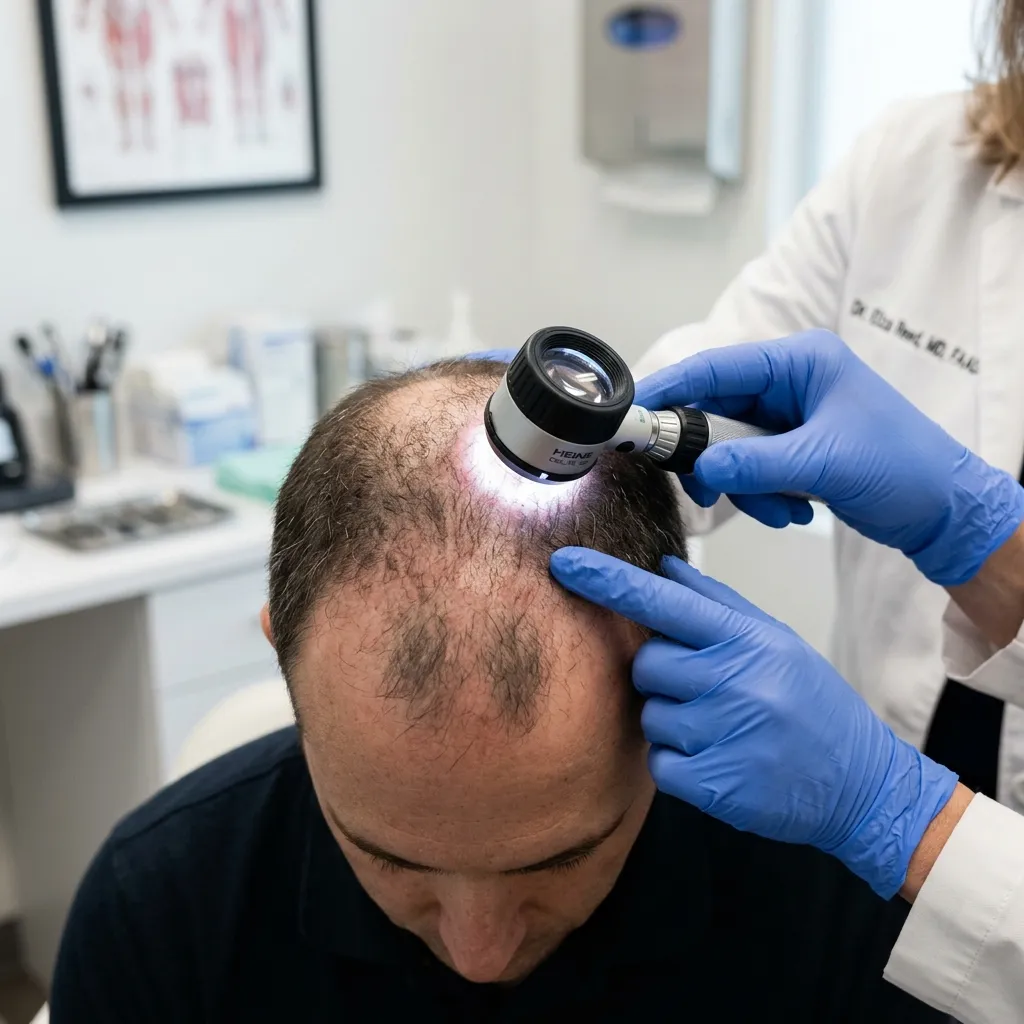
Losing 50 to 100 hairs per day is normal. This shedding is a natural part of the hair growth cycle. However, if you notice a receding hairline at your temples, diffuse thinning at your crown, or a sudden increase in hairs on your pillow, it is time to investigate. Modern research shows that starting treatment early yields vastly superior results because dormant follicles eventually scar over and lose their capacity to grow hair entirely.
Understanding the True Causes of Hair Loss
Hair loss is rarely caused by a single isolated factor. Multiple physiological pathways are often involved. Understanding these pathways is key to selecting a treatment that works.
1. Male Pattern Baldness (Androgenetic Alopecia)
This genetic condition accounts for over 95 percent of male hair loss. It is driven by your follicles' genetic sensitivity to Dihydrotestosterone (DHT), a potent derivative of testosterone. DHT binds to receptors in your scalp follicles, causing them to miniaturize. Over successive growth cycles, the hair becomes thinner, shorter, and eventually ceases to grow.
2. Dermal Papilla Cellular Dynamics: The Biochemistry of Follicle Miniaturization
At the very base of every hair follicle lies the dermal papilla, a highly specialized group of mesenchymal cells that acts as the command center for hair growth and cycling. The dermal papilla controls the transition of the follicle through the active growth phase (anagen), the transitional regressive phase (catagen), and the resting phase (telogen). In men with a genetic predisposition to androgenetic alopecia, these dermal papilla cells express high levels of androgen receptors.
The primary biochemical driver of this condition is the enzyme 5-alpha reductase (5-AR). There are two distinct isoenzymes of 5-alpha reductase involved in human physiology. Type 1 5-alpha reductase is found predominantly in the sebaceous glands, liver, and skin. Type 2 5-alpha reductase is highly concentrated in the outer root sheath of the hair follicle and directly within the dermal papilla cells. This Type 2 enzyme converts circulating testosterone into Dihydrotestosterone (DHT), which has an affinity for the androgen receptor that is five to ten times greater than testosterone itself.
When DHT binds to the androgen receptors in the dermal papilla, it initiates a cellular signaling cascade that alters gene expression. This pathway upregulates inflammatory cytokines, such as Transforming Growth Factor-beta (TGF-beta), and downregulates critical follicular growth factors, including Vascular Endothelial Growth Factor (VEGF) and Insulin-like Growth Factor 1 (IGF-1). The result is cellular miniaturization: with each successive hair cycle, the anagen phase is severely shortened, while the telogen phase remains constant. The dermal papilla itself physically shrinks, producing finer, shorter, and depigmented vellus hairs. If left untreated, this progressive miniaturization leads to microvascular depletion, local fibrosis, and eventual permanent scarring of the follicular stem cell niche.
3. Telogen Effluvium (Stress-Triggered Shedding)
This is a form of temporary, diffuse shedding. It is triggered by major physical or emotional stress, severe illness, rapid weight loss, or major surgeries. The stress shock forces a large percentage of active follicles into the resting phase (telogen) prematurely. About two to three months after the trigger, massive shedding occurs. Fortunately, this condition typically resolves within six to nine months once the underlying stressor is removed.
4. Ferritin, Thyroid, and Vitamin D Clinical Targets: Blood Serum Standards
When evaluating the causes of hair thinning, it is clinically vital to rule out underlying nutritional deficiencies or endocrine imbalances that can accelerate hair shedding or impair follicular recovery. Detailed dietary interventions are explored in our dermatological nutrition skin barrier diet guide. Standard laboratory reference ranges are often designed to detect severe disease states rather than optimize cellular function for tissue regeneration. To support active follicle growth, you should aim for optimal clinical targets rather than just standard normal reference ranges. The following table outlines the key blood serum metrics required for optimal hair growth:
| Biochemical Marker | Standard Reference Range | Optimal Hair Target | Physiological Role in Follicle Health |
|---|---|---|---|
| Serum Ferritin | 15 - 150 ng/mL | > 70 ng/mL | Stored iron co-factor for ribonucleotide reductase; essential for rapid cellular division in the hair matrix. |
| Vitamin D3 (25-OH) | 30 - 100 ng/mL | 50 - 80 ng/mL | Modulates hair follicle receptor expression; crucial for initiating and sustaining the active growth phase (anagen). |
| TSH (Thyroid Stimulating Hormone) | 0.45 - 4.5 mIU/L | 0.5 - 2.5 mIU/L | Regulates systemic cellular metabolism; imbalances trigger diffuse telogen shedding across the entire scalp. |
| Serum Zinc | 60 - 120 mcg/dL | 90 - 150 mcg/dL | Co-enzyme for protein synthesis and nucleic acid repair; vital for protecting hair follicle structural proteins. |
Treatments That Actually Work
Understanding the causes above matters because treatment selection depends on which mechanism is actually driving hair loss in a given individual — androgenetic alopecia, telogen effluvium, and a nutritional deficiency each respond to a different intervention, and treating one when the actual driver is another wastes both time and money.
1. Topical Minoxidil
Minoxidil is an FDA-approved topical treatment believed to work by extending the anagen (active growth) phase of the hair cycle and increasing blood flow to the follicle, counteracting the miniaturization process discussed earlier. It requires consistent daily application, typically for at least 3-6 months before visible results, and any gains are generally lost within months of discontinuing use, since it manages the underlying process rather than curing it. A temporary increase in shedding during the first few weeks is a recognized, expected part of the hair cycle resetting, not a sign of worsening loss.
2. Oral Finasteride and Dutasteride
Finasteride and dutasteride are prescription medications that inhibit the 5-alpha-reductase enzyme responsible for converting testosterone into DHT, directly addressing the hormonal mechanism behind androgenetic alopecia described above. Both require a prescription and ongoing physician monitoring, since they carry a recognized, though relatively low-incidence, risk of sexual side effects that should be discussed directly with a prescribing doctor before starting, along with a full discussion of the specific risk-benefit profile for your situation.
3. Correcting Nutritional Deficiencies
When bloodwork confirms a deficiency in ferritin, vitamin D, zinc, or an underlying thyroid abnormality using the reference targets in the table above, correcting that specific deficiency is often the most direct and effective "treatment," since it addresses telogen effluvium's actual cause rather than masking symptoms. This is precisely why the blood panel matters clinically — supplementing blindly without a confirmed deficiency provides no benefit and, in the case of iron or zinc specifically, can cause harm at excessive doses, making testing before supplementing the appropriate first step.
4. Low-Level Laser Therapy (LLLT)
LLLT devices (combs, caps, or helmets) use red light wavelengths believed to stimulate mitochondrial activity within the dermal papilla cells discussed earlier, potentially supporting follicle metabolism. Clinical evidence shows a modest benefit for some users, generally smaller in magnitude than minoxidil or finasteride, making it more commonly used as an adjunct to those treatments rather than a standalone primary intervention.
5. Platelet-Rich Plasma (PRP) Injections
PRP involves drawing a patient's own blood, concentrating the platelets, and injecting the resulting plasma into the scalp, with the intent of delivering growth factors directly to struggling follicles. Research quality and result consistency vary considerably between studies and providers, and PRP is generally considered an emerging rather than a first-line established treatment; it is also typically not covered by insurance and requires repeated sessions, making cost a practical consideration alongside its still-developing evidence base.
6. Hair Transplantation (FUE/FUT)
For more advanced androgenetic alopecia, surgical hair transplantation relocates DHT-resistant follicles (typically from the back of the scalp) to thinning or balding areas. Follicular Unit Extraction (FUE) and Follicular Unit Transplantation (FUT) are the two primary techniques, differing mainly in donor-area harvesting method and resulting scar pattern. This is generally considered after medical treatments have been tried or in cases where the degree of miniaturization is already advanced, and does not itself stop the ongoing hormonal process — many surgeons recommend continuing medical treatment like finasteride alongside a transplant to protect the surrounding native hair.
Matching treatment to actual cause is the central principle running through all six options above: confirm whether androgenetic alopecia, telogen effluvium, or a nutritional deficiency (or some combination) is actually driving your hair loss with bloodwork and, where needed, a dermatologist evaluation, before committing to a specific treatment path. Readers can use our hair loss assessment and male pattern baldness calculator to help characterize the pattern before that appointment.
How long does minoxidil take to work?
Visible results typically take 3 to 6 months of consistent daily use, and a temporary increase in shedding during the first few weeks is a normal, expected part of the hair cycle resetting rather than a sign the treatment is failing. Results are generally lost within months if use is discontinued.
Is finasteride safe to take long-term?
Many men use finasteride for years under physician monitoring, but it carries a recognized, relatively low-incidence risk of sexual side effects that should be discussed directly with a prescribing doctor. It requires an ongoing prescription and periodic follow-up rather than being a one-time treatment.
Should I get blood tests before starting any hair loss treatment?
It is a reasonable and often clinically recommended first step, particularly if the hair loss pattern is diffuse rather than a classic receding hairline, since testing can identify a nutritional deficiency or thyroid issue that would respond to a completely different, often simpler, treatment than medications aimed at androgenetic alopecia.
Does PRP for hair loss actually work?
Evidence is mixed and still developing; some studies show benefit while quality and consistency vary by provider and protocol. It is generally considered an emerging treatment rather than an established first-line option, and it is not typically covered by insurance.
Can hair loss from a nutritional deficiency be fully reversed?
Telogen effluvium caused by a confirmed deficiency in ferritin, vitamin D, zinc, or thyroid hormone often improves substantially once the underlying deficiency is corrected, since the follicles themselves were not permanently damaged, only pushed prematurely into the resting phase.
Is a hair transplant a permanent solution?
Transplanted follicles are typically taken from DHT-resistant donor areas and generally remain resistant to the hormonal process after relocation, but a transplant does not stop the ongoing loss of the surrounding native hair, which is why many surgeons recommend continuing medical treatment like finasteride alongside the procedure.
What is the difference between androgenetic alopecia and telogen effluvium?
Androgenetic alopecia is a progressive, pattern-based hair loss driven by DHT sensitivity in genetically susceptible follicles. Telogen effluvium is a temporary, typically diffuse shedding triggered by stress, illness, or a nutritional deficiency, and it generally resolves once the trigger is identified and addressed.
When should I see a dermatologist about hair loss instead of trying treatments on my own?
See a dermatologist for sudden or patchy hair loss, hair loss accompanied by scalp pain, redness, or scarring, or if over-the-counter treatments have not produced improvement after several months of consistent use, since these patterns can indicate a condition requiring a specific diagnosis and treatment beyond standard androgenetic alopecia management.
Sources
- American Academy of Dermatology. Hair Loss: Diagnosis and Treatment.
- Kelly Y, et al. Androgenetic alopecia: an update of treatment options. Drugs, 2019.
- Trink A, et al. A randomized, double-blind, placebo- and active-controlled, half-head study to evaluate the effects of platelet-rich plasma on alopecia. British Journal of Dermatology, 2013.
- Trüeb RM. Serum ferritin in women with hair loss. Dermatology, 2016.
- American Hair Loss Association. Treatment Options for Men.
Medical Disclaimer: This article is for general educational purposes only and does not constitute professional medical advice, diagnosis, or treatment. Always consult a qualified healthcare provider or dermatologist before starting any hair loss medication, supplement, or procedure, especially prescription treatments like finasteride and dutasteride. See our full Medical Disclaimer and Editorial Policy.

Ganesh G Kamble
Ganesh G. Kamble is the founder and editor of Health is Heaven. He built this site after losing his father to a preventable condition, with the mission of providing clear, trackable health indicators so others can act early. His background is in the IT industry (16 years as an enterprise consultant) and he is not a medical professional; all medical content, formulas, and guides are reviewed by a credentialed medical reviewer/board before publication.