
Medically reviewed by: Health is Heaven Medical Review Board | Published by Ganesh G Kamble, Health is Heaven | Published: June 6, 2026 · Last updated: August 11, 2026
At Health is Heaven, we analyze reproductive technology through the lens of systems engineering. A single IVF cycle is a highly coordinated attempt to manually override the female endocrine system, surgically harvest microscopic biological data in the form of oocytes, fertilize those oocytes in a controlled laboratory setting, and nurture the resulting embryos in an atmospheric incubator. The costs are high because the technology required to execute this cellular level manipulation is complex and largely excluded from standard medical insurance grids (to understand how to navigate general policy options, see our guide on how to choose best health insurance plan). This guide provides a detailed breakdown of the costs associated with IVF across the United States, United Kingdom, Canada, and Australia, helping you navigate the financial and physiological requirements of the process.

Estimate Your Baseline Fertility & Ovulation Metrics First
Before committing tens of thousands of dollars to an IVF cycle, establishing a precise baseline of your natural menstrual and ovulatory patterns and learning how to track ovulation to get pregnant is a critical first step. Metabolic health, hormonal regularity, and cycle timing directly influence how your ovaries respond to stimulation medications. For women optimizing their metabolic health prior to treatment, reviewing a structured pcos diet plan pdf practical guide can help lower systemic inflammation and improve egg quality.
The Bio-Hardware Matrix: What Are You Paying For?
To understand the true cost of IVF, the total bill must be separated into its primary clinical and laboratory components. A standard quote from a fertility clinic often covers only the base procedure, leaving patients responsible for significant out-of-pocket costs for medications, genetic testing, and embryology add-ons. If these surprise expenses accumulate, finding professional medical debt help can provide strategies for negotiating clinic fees. The process is broken down into five distinct phases, each with its own specific costs and biological rationale.
1. Controlled Ovarian Hyperstimulation (The Endocrine Override)
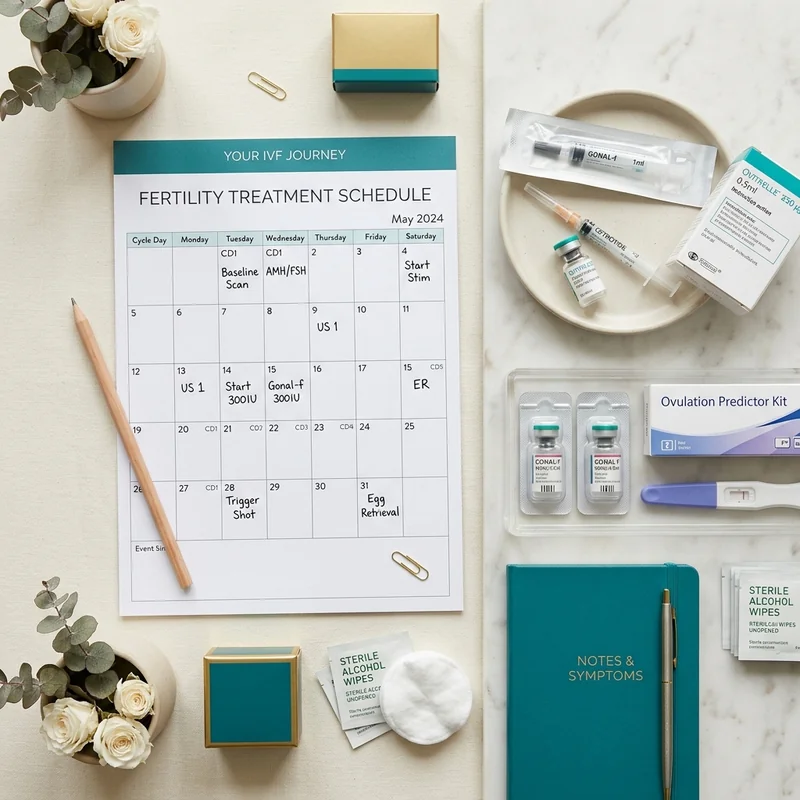
Under normal physiological conditions, the female body recruits and matures a single dominant follicle during each menstrual cycle. Because the success of IVF depends on harvesting multiple mature eggs, clinics must bypass this natural constraint. This is achieved through Controlled Ovarian Hyperstimulation (COH). Patients inject high doses of gonadotropins, which are synthetic versions of Follicle Stimulating Hormone (FSH) and Luteinizing Hormone (LH). These medications stimulate the ovaries to grow 10 to 20 follicles simultaneously.
Because these biologic drugs (such as Gonal-F, Follistim, and Menopur) are highly patented and tightly controlled by a small number of pharmaceutical manufacturers, their cost is substantial. A typical 10 to 12 day stimulation cycle requires between $3,000 and $7,000 in medication alone. This cost is rarely included in the base price quoted by clinics, and it must be paid directly to specialty pharmacies.
2. Transvaginal Oocyte Retrieval and Anesthesia
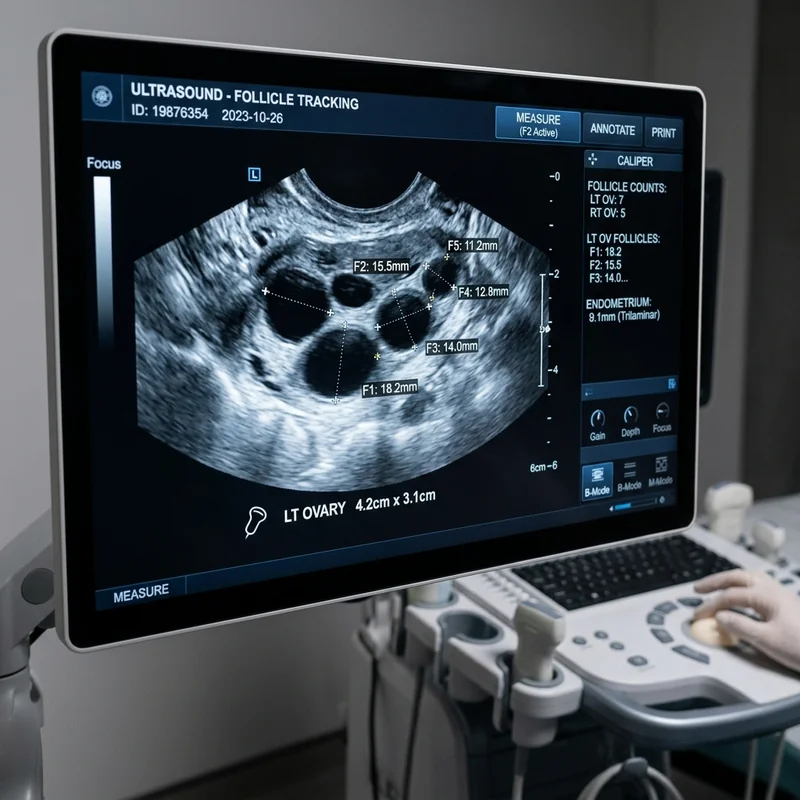
Once monitoring shows that the majority of follicles have reached an optimal size of 18 to 22 millimeters, a trigger shot of human Chorionic Gonadotropin (hCG) or a GnRH agonist is administered to initiate the final maturation of the eggs. Exactly 34 to 36 hours later, before spontaneous ovulation can occur, the eggs must be surgically retrieved.
This procedure, known as Transvaginal Oocyte Retrieval (TVOR), is performed under ultrasound guidance. A physician passes a needle through the vaginal wall directly into the ovarian follicles to aspirate the follicular fluid containing the eggs. Because this is an invasive surgical procedure, it requires a sterile operating suite, specialized surgical staff, and an anesthesiologist to administer deep sedation, typically using propofol. Anesthesia and facility fees generally add $1,500 to $3,000 to the cycle cost.
3. Embryology Laboratory and Intracytoplasmic Sperm Injection (ICSI)
Once the follicular fluid is collected, it is immediately transferred to the embryology laboratory. In traditional IVF, retrieved eggs are placed in a dish with tens of thousands of washed sperm, and fertilization occurs naturally. However, if there are male factor issues, such as low sperm count or poor motility, or if previous fertilization attempts have failed, traditional fertilization may not succeed.
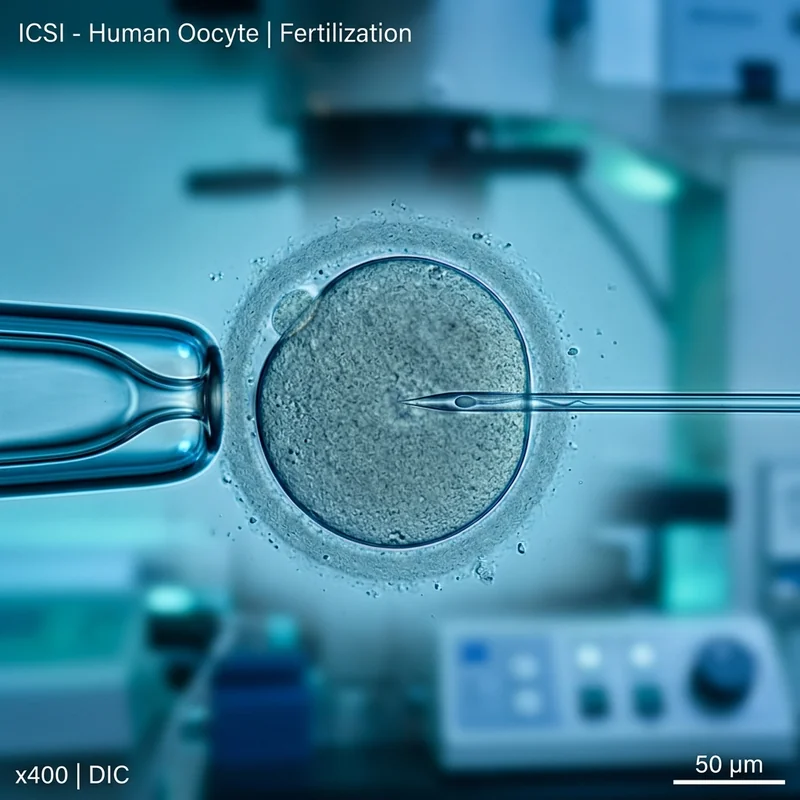
In these cases, embryologists use Intracytoplasmic Sperm Injection (ICSI). Under a high power microscope, a single sperm is captured in a micro needle and injected directly into the cytoplasm of a mature egg. This specialized procedure bypasses natural barriers to fertilization but adds $1,500 to $2,500 to the laboratory fees. Following fertilization, the embryos are cultured in specialized triple gas incubators that mimic the physiological conditions of the fallopian tubes for 5 to 6 days until they reach the blastocyst stage.
4. Preimplantation Genetic Testing (PGT-A)
Once embryos reach the blastocyst stage, they consist of two distinct cell populations: the inner cell mass, which develops into the fetus, and the trophectoderm, which forms the placenta. To verify genetic health before transfer, a biopsy of 5 to 10 cells is taken from the trophectoderm of each blastocyst. These cells are analyzed using Next Generation Sequencing (NGS) to verify that the embryo has the correct number of chromosomes, a status known as euploidy.
Preimplantation Genetic Testing for Aneuploidies (PGT-A) helps reduce the risk of miscarriage and improves implantation success rates, particularly for patients over the age of 35. However, this testing is highly specialized and is usually performed by external genetics laboratories. PGT-A typically costs between $1,500 and $3,500 for the biopsy and genetic analysis, plus an additional cost per embryo tested (typically $150 to $300 per embryo).
5. Embryo Transfer and Cryopreservation
The final phase of an IVF cycle is the transfer of a selected embryo back into the uterus. This can be done as a fresh transfer (typically 5 days after retrieval) or as a Frozen Embryo Transfer (FET) in a subsequent cycle. FET has become increasingly common as it allows the patient's hormone levels to return to a baseline state after the intense stimulation phase, creating a more natural endometrial environment for implantation.
A Frozen Embryo Transfer requires preparing the uterine lining with estrogen and progesterone, thawing the cryopreserved embryo, and placing it into the uterine cavity using a catheter under ultrasound guidance. The cost of a frozen transfer ranges from $3,000 to $5,000. Additionally, storing remaining embryos requires vitrification, a rapid freezing process using liquid nitrogen at -196 degrees Celsius to prevent cell damage. Cryopreservation and the first year of storage typically cost $1,000 to $2,000, with annual storage fees ranging from $500 to $1,000 thereafter.
Global Price Comparison: IVF Costs in 2026
The cost of IVF varies significantly around the world due to differing healthcare systems, government regulations, and insurance mandates. The United States is the most expensive market for fertility care, while countries with public healthcare systems, like the United Kingdom and Australia, offer opportunities for subsidized treatment or lower private costs. For older individuals researching family planning or grandchild guardianship coverage options, understanding standard public and private health insurance for seniors Medicare structures provides a useful foundation for global policy design, and for those who travel or relocate internationally, checking options for health insurance for expats is vital.
The table below provides a detailed comparison of the average out of pocket costs for a single complete IVF cycle (including stimulation medications, egg retrieval, fertilization, embryology, and embryo transfer) across the United States, United Kingdom, Canada, and Australia.
| Expense Component | United States (USD) | United Kingdom (GBP) | Canada (CAD) | Australia (AUD) |
|---|---|---|---|---|
| Base IVF Cycle Fee | $12,000 - $16,000 | £4,500 - £6,500 | $9,000 - $12,000 | $8,000 - $11,000 |
| Stimulation Medications | $4,000 - $7,000 | £1,500 - £3,000 | $4,000 - $6,500 | $1,500 - $3,000 |
| ICSI Fertilization Add-on | $1,500 - $2,500 | £1,000 - £1,500 | $1,500 - $2,500 | $1,000 - $2,000 |
| PGT-A Genetic Testing | $2,000 - $4,500 | £1,500 - £2,500 | $2,500 - $4,000 | $1,500 - $3,000 |
| Anesthesia & Facility Fees | $1,500 - $3,000 | Included in Base | $1,000 - $2,000 | $1,000 - $1,800 |
| Government Subsidies / Rebates | Almost None | NHS (Strict Eligibility) | Provincial (Limited) | Medicare (Up to 50%) |
| Total Avg Out-of-Pocket Cost | $21,000 - $33,000 | £8,500 - £13,500 | $18,000 - $27,000 | $4,500 - $8,500 (Net) |
Each of these regions operates under a unique regulatory and economic framework:
- United States: The high cost of IVF in the US is driven by an unregulated market for medical services and specialty drugs. While some states have mandates requiring insurance coverage, many patients must pay entirely out of pocket, often relying on fertility loans, retirement withdrawals, or credit cards to fund treatment.
- United Kingdom: The National Health Service (NHS) theoretically provides up to three free IVF cycles for women under 40 who meet strict clinical criteria. However, local funding groups, known as Integrated Care Boards (ICBs), often limit this to one cycle or enforce strict age, BMI, and lifestyle restrictions. As a result, many patients turn to private clinics, where a cycle costs approximately £8,500 to £13,500.
- Canada: Healthcare is managed provincially in Canada. Ontario offers a funded IVF program that covers the surgical and lab portions of one cycle, but patients must still pay for medications and testing, which can cost $4,000 to $7,500 CAD. In other provinces, funding is limited, and private treatment costs average $18,000 to $27,000 CAD.
- Australia: Australia has a supportive system for fertility care. The Medicare safety net covers a significant portion of out of pocket medical expenses once a threshold is reached. While the initial upfront cost of a cycle in a private clinic is around $12,000 AUD, Medicare rebates return a substantial amount, reducing the net out of pocket cost to between $4,500 and $8,500 AUD per cycle.
Age-Stratified Success Modeling: SART and CDC Data
When calculating the financial requirements of IVF, it is important to realize that a single cycle does not guarantee a live birth. The success of IVF is strongly correlated with maternal age, which directly affects egg quality and chromosomal health. The Society for Assisted Reproductive Technology (SART) and the Centers for Disease Control and Prevention (CDC) track national success rates, showing a clear decline in success as maternal age increases.
The primary biological reason for this decline is a rise in chromosomal abnormalities, or aneuploidy, in the oocytes. As women age, the meiotic spindle fibers that separate chromosomes during egg maturation become more prone to errors, and the cohesin proteins that hold chromosomes together degrade. This leads to a higher rate of genetic abnormalities, resulting in failed fertilization, poor embryo development, or miscarriage.
The table below shows average success rates by age cohort, comparing the likelihood of a live birth from a single egg retrieval cycle to the cumulative likelihood over three complete cycles.
| Maternal Age Cohort | Avg Euploidy Rate (PGT-A) | Live Birth Rate per Single Transfer | Cumulative Success (3 Cycles) | Avg Cycles Needed for 1 Live Birth |
|---|---|---|---|---|
| Under 35 Years | 65% - 75% | 50% - 55% | 80% - 85% | 1.2 - 1.5 Cycles |
| 35 - 37 Years | 50% - 60% | 40% - 45% | 65% - 70% | 1.8 - 2.2 Cycles |
| 38 - 40 Years | 30% - 40% | 25% - 30% | 45% - 50% | 3.0 - 3.5 Cycles |
| 41 - 42 Years | 10% - 15% | 10% - 15% | 20% - 25% | 6.0 - 8.0 Cycles |
| Over 42 Years | < 5% | < 3% | < 8% | > 10 Cycles (Often Donor Eggs) |
Understanding these statistics is key to evaluating the actual cost of treatment. For a woman under 35, there is a high likelihood of success within one or two cycles. However, for a patient aged 38 to 40, the average requirement rises to three or more cycles to achieve a live birth. This multiplies the projected financial commitment, making it important to plan for the possibility of multiple rounds before starting treatment.
Understanding Insurance Underwriting & Mandates
For patients residing in the United States, obtaining insurance coverage for IVF is difficult but possible (using tools like our health insurance premium calculator to gauge plan rates), depending on the state of residence and the type of employer group plan. Currently, 21 states have passed laws mandating some form of infertility coverage, but these mandates vary in scope. Some states have a mandate to cover, which requires insurance plans to pay for treatments, while others have a mandate to offer, which only requires insurers to offer a policy option with infertility coverage to employers.
Even under supportive insurance plans, underwriting networks write specific requirements to control utilization. A common requirement is that patients must document the failure of three to six cycles of Intrauterine Insemination (IUI) before the insurer will approve coverage for an IVF cycle. IUI is a simpler, less expensive procedure with lower success rates (typically 10% to 15% per cycle), but insurers use it as a gatekeeping step to avoid paying for more expensive IVF treatments.
In addition to prior authorization steps, insurers often set age and BMI limits. For example, a policy may deny coverage for IVF if the patient's BMI is over 35 or under 19, citing clinical data that links high or low BMI to reduced implantation rates and increased pregnancy complications (which you can monitor using our pregnancy due date calculator to establish standard timelines). Understanding these underwriting rules is key to preparing a successful coverage request.
Navigating Clinical Billing Codes
Obtaining insurance approval requires using correct diagnostic and procedural codes in all documentation submitted by your clinical team. The table below lists the primary codes used in the billing and authorization process for assisted reproduction.
| Code Type | Code Number | Clinical Description | Actuarial Purpose |
|---|---|---|---|
| ICD-10 Diagnostic | N97.9 | Female Infertility, Unspecified | Establishes the primary medical diagnosis. |
| ICD-10 Diagnostic | N97.1 | Female Infertility of Tubal Origin | Indicates anatomical blockage, often expediting IVF approval. |
| ICD-10 Diagnostic | Z31.83 | Encounter for Assisted Reproductive Technology | Identifies the patient encounter as an IVF procedure. |
| CPT Procedural | 58970 | Follicle Aspiration / Egg Retrieval | Bills for the surgical retrieval portion of the cycle. |
| CPT Procedural | 89280 | Intracytoplasmic Sperm Injection (ICSI) | Bills for the micro fertilization laboratory procedure. |
| CPT Procedural | 58974 | Embryo Transfer (Fresh or Frozen) | Bills for the placement of the embryo into the uterus. |
Metabolic Fitness and IVF Outcomes
While the financial and clinical steps of IVF are significant, the physiological health of the patient is a key factor in success. Controlled Ovarian Hyperstimulation places a heavy burden on the body. The large doses of hormones used to stimulate the ovaries are metabolized by the liver, and the high estrogen levels can increase the risk of vascular issues and metabolic stress.
Metabolic health, particularly insulin sensitivity, has a direct effect on egg quality. High insulin levels in the ovaries can disrupt follicular development and lead to poor quality oocytes, which increases the likelihood of fertilization failure or chromosomal issues. Additionally, insulin resistance can affect the receptivity of the endometrium, reducing the chances of successful embryo implantation.
Optimizing your metabolic health before starting an IVF cycle can help support a better response to medications and improve your chances of success. Monitoring your weight, blood sugar levels, and body composition can help identify areas for improvement before beginning a cycle. For patients with severe obesity and insulin resistance who are advised to achieve significant weight reduction prior to fertility treatment, investigating options such as gastric procedures and the associated bariatric surgery cost with insurance is a valuable part of their pre-cycle planning.
Pre-Cycle Health Optimization Checklist
To help prepare your body for the physical demands of an IVF cycle, consider the following evidence based guidelines in consultation with your medical team:
- Verify Body Composition and Weight: Having a body mass index within a normal range (18.5 to 24.9) is associated with more predictable responses to stimulation medications. You can estimate your body mass index using our BMI Calculator and track body composition with our body fat calculator percentage.
- Monitor Glycemic Patterns: Keeping blood sugar levels stable helps support healthy ovarian function. Consider using our Blood Sugar Checker to track your baseline glucose levels.
- Optimize Micronutrient Intake: Certain supplements, such as Coenzyme Q10 (CoQ10 in the form of ubiquinol), methylfolate, and Myo-inositol, have been shown in clinical trials to support mitochondrial function in developing eggs, helping to improve egg quality. Consult your doctor or use our Vitamin Quiz to review your nutritional needs.
- Support Sleep and Circadian Health: Melatonin is a powerful antioxidant in follicular fluid, and consistent sleep patterns support healthy hormone production. You can estimate sleep patterns and debt using our Sleep Debt Calculator.
- Maintain Hydration: Adequate hydration supports blood flow to the reproductive organs. Track your fluid intake using our free water intake calculator.
Conclusion: Managing the Financial and Physical Journey
Navigating IVF is a complex process that requires careful financial and physical preparation. Because costs are high and insurance coverage can be limited, understanding the expense components and planning for the possibility of multiple cycles is key to managing the financial side of treatment.
At the same time, taking steps to optimize your metabolic health, monitor your hormonal cycles, and work closely with your medical team can help support your body through the process. By combining financial planning with physical preparation, you can approach the journey with greater confidence and clear, realistic expectations.
Scientific References
- National Institutes of Health (NIH). Clinical Reference database for Evidence-Based Medical Protocols.
- World Health Organization. Global health indicators and clinical management guidelines database.
- Harvard T.H. Chan School of Public Health. The Nutrition Source and Metabolic Regulation reviews.
- Mayo Clinic Proceedings. Evidence-Based Clinical Interpretations Ledger.
Medical Disclaimer: This article is for general educational purposes only and does not constitute professional medical advice, diagnosis, or treatment. Always consult a qualified healthcare provider with questions about a medical condition. Do not stop or start medications without clinical supervision. See our full Medical Disclaimer and Editorial Policy.

Ganesh G Kamble
Ganesh G. Kamble is the founder and editor of Health is Heaven. He built this site after losing his father to a preventable condition, with the mission of providing clear, trackable health indicators so others can act early. His background is in the IT industry (16 years as an enterprise consultant) and he is not a medical professional; all medical content, formulas, and guides are reviewed by a credentialed medical reviewer/board before publication.