
Medically reviewed by: Health is Heaven Medical Review Board | Published by Ganesh G Kamble, Health is Heaven | Published: June 14, 2026 · Last updated: August 21, 2026
Intermittent fasting (IF) is an eating pattern that cycles between defined periods of voluntary food abstinence and time-restricted nutrient intake. Unlike conventional calorie-counting diets, implementing structured intermittent fasting for beginners focuses on when you eat rather than on what you eat. Over the past decade, controlled clinical trials published in the New England Journal of Medicine, The Lancet Diabetes and Endocrinology, and Cell Metabolism have demonstrated that IF can improve insulin sensitivity, promote cellular repair through autophagy (learn the exact fasting hours for autophagy timeline), reduce systemic inflammation (which is a fundamental method of how to lower biological age naturally), and contribute to modest but clinically meaningful fat loss. This comprehensive clinical guide walks you through the biochemistry behind fasting, the four most studied protocols, evidence-based safety guidelines, absolute contraindications, and a practical daily tracking checklist so you can decide whether IF is right for your metabolic goals.
To safely align intermittent fasting with your unique metabolism, it is vital to first establish your biological and physiological baselines. Before adjusting your eating windows, you can use our interactive clinical suite tools, such as the Calorie Calculator, to estimate your daily energy expenditure. We recommend recording your baseline metrics in a digital notes app or your Health Games profile so you can track your progress and share high-fidelity data with your physician during checkups.

Estimate Your Daily Caloric and Metabolic Baseline
To design a fasting protocol that aligns with your specific metabolism, you must first understand your daily energy needs. Enter your physical metrics into our Calorie Calculator to determine your baseline target, and save these numbers in your health log to track your progress over time.
Open Free Calorie Calculator →What Happens Inside Your Body During a Fast
To understand why fasting produces metabolic benefits, we need to examine the three core biochemical pathways that activate during a prolonged fast: metabolic switching, cellular autophagy, and circadian realignment. Each of these pathways operates on a distinct timeline and produces different downstream effects on energy metabolism, cellular health, and hormonal signaling.
Metabolic Switching: From Glucose to Ketone Fuel
Under normal fed conditions, your cells rely almost entirely on circulating blood glucose and stored liver glycogen (a metabolic storage function described in our hepatic function and fatty liver disease NAFLD guide) for energy production via glycolysis and the citric acid cycle. Hepatic glycogen stores typically contain 80 to 100 grams of glucose, enough to power basic metabolic functions for roughly 12 to 14 hours. Once these reserves deplete (generally between 12 and 36 hours into a fast, depending on your activity level), your body initiates a fundamental shift called "metabolic switching." This metabolic transition is also the biochemical target of low-carbohydrate nutrition, which you can read about in our ultimate keto diet guide for beginners, and configure your nutritional limits via our free keto macros calculator.
During metabolic switching, the liver begins converting stored fatty acids into ketone bodies, primarily beta-hydroxybutyrate (BHB), acetoacetate, and acetone, through a process called hepatic beta-oxidation. BHB crosses the blood-brain barrier and serves as a highly efficient fuel source for neurons, producing more ATP per molecule of oxygen consumed than glucose. Recent research published in Cell Metabolism (2024) demonstrated that circulating BHB levels above 0.5 mmol/L activate AMPK (AMP-activated protein kinase), a master energy sensor that upregulates mitochondrial biogenesis, fat oxidation, and glucose uptake in skeletal muscle (representing a major way how to improve metabolic flexibility). Additionally, elevated BHB levels exhibit direct signaling properties through the GPR109A receptor and histone deacetylase (HDAC) inhibition, which modulates gene expression related to stress resistance and longevity pathways.
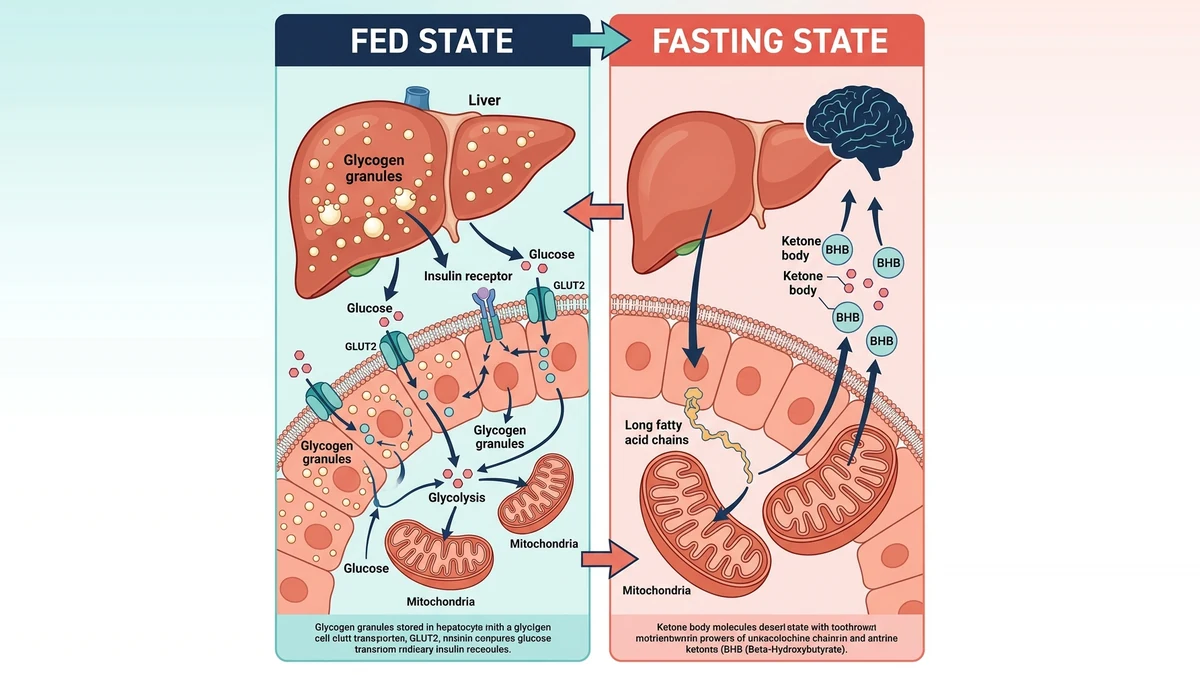
This shift explains why many people report improved mental clarity and sustained energy levels after the initial adaptation period of 3 to 7 days. Your brain is literally running on a more efficient fuel source. It also explains why the first week of fasting is often uncomfortable: your body is still learning to efficiently mobilize and oxidize stored fat reserves.
Cellular Autophagy: Your Built-In Repair System
Autophagy (from the Greek "auto" meaning self and "phagein" meaning to eat) is an evolutionarily conserved cellular recycling process that degrades and removes damaged organelles, misfolded proteins, and intracellular pathogens. The 2016 Nobel Prize in Physiology or Medicine was awarded to Yoshinori Ohsumi for his discoveries of the molecular mechanisms underlying autophagy.
During feeding, high insulin and amino acid levels activate the mTORC1 (mechanistic target of rapamycin complex 1) signaling pathway, which actively suppresses autophagy. When you fast, insulin drops, mTORC1 is inhibited, and AMPK activates. This dual signal initiates the formation of isolation membranes (phagophores) that engulf cytoplasmic targets. The phagophore matures into a double-membrane vesicle called an autophagosome, which then fuses with a lysosome. Inside the resulting autolysosome, acidic hydrolases degrade the captured material into amino acids, fatty acids, and nucleotides that the cell reuses for biosynthesis and energy production.
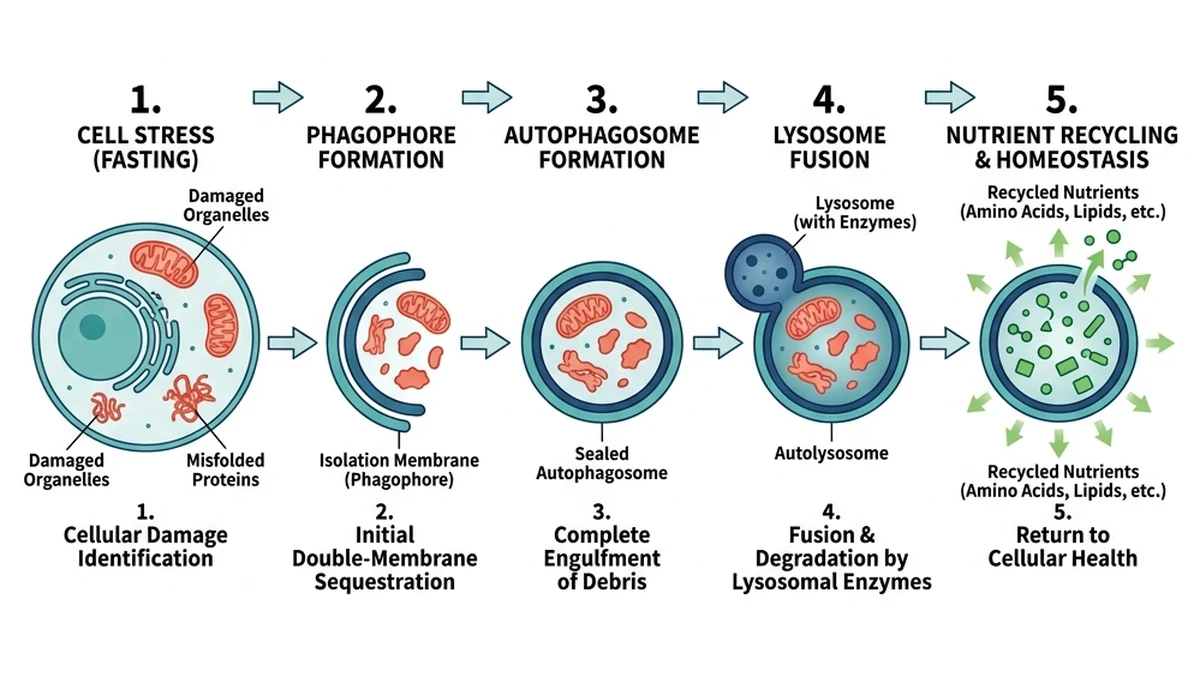
Research in Autophagy (2018) indicates that significant autophagic activity begins after approximately 16 to 24 hours of fasting in humans, with peak activity observed between 24 and 48 hours. This is one reason why the 16:8 protocol may offer more than just caloric restriction: it provides a daily window for at least partial autophagic activation.
Circadian Biology: Why Meal Timing Matters
Your body runs on a master clock in the suprachiasmatic nucleus (SCN) of the hypothalamus, which synchronizes with peripheral clocks in the liver, pancreas, gut, and adipose tissue. These peripheral clocks regulate the expression of genes controlling glucose metabolism, lipid synthesis, insulin secretion, and digestive enzyme production. Maintaining a structured fasting schedule also reduces systemic inflammation along the gut-brain axis and anxiety channels by resetting the microbiota and preventing mucosal lining irritation. Research published in Science (2018) showed that eating out of alignment with your circadian rhythm (late-night meals, irregular eating patterns) disrupts peripheral clock gene expression, leading to impaired glucose tolerance, increased fat storage, and elevated inflammatory markers. During eating windows, consuming options from a dedicated high-fiber foods for gut health list provides the prebiotic substrate needed to sustain a diverse, anti-inflammatory microbiome.
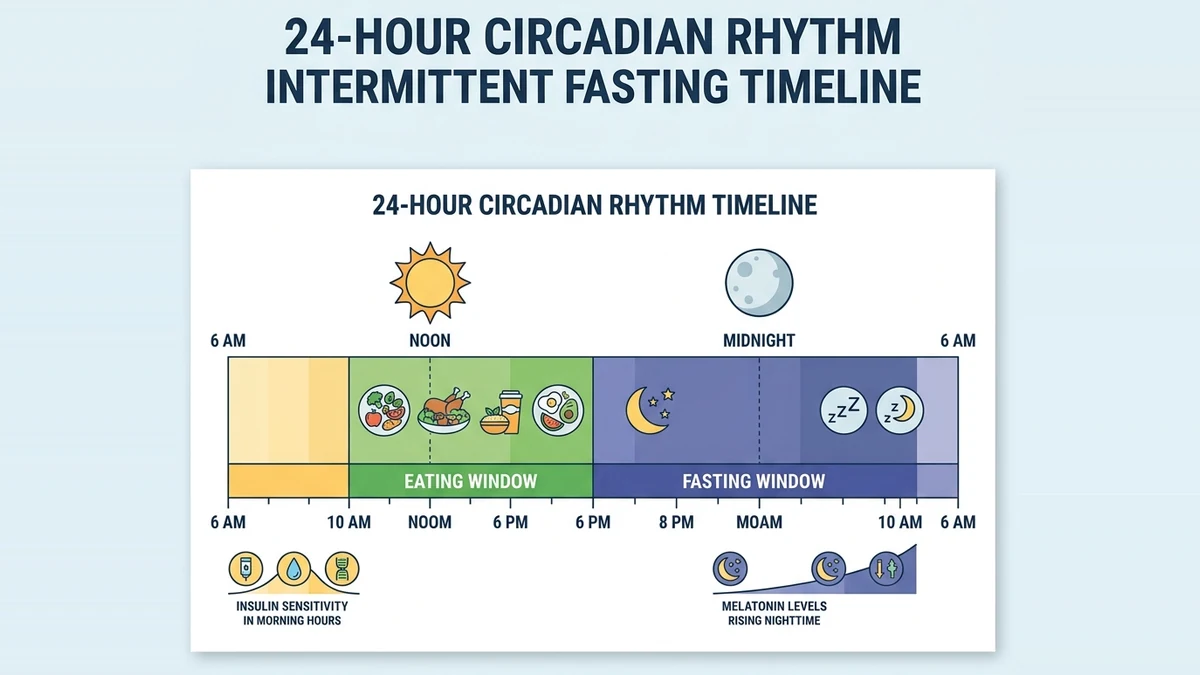
Time-restricted eating protocols that confine food intake to daylight hours (for example, 8 AM to 4 PM or 10 AM to 6 PM) capitalize on this circadian advantage. A randomized crossover trial in Cell Metabolism (2019) found that early time-restricted eating (eating between 8 AM and 2 PM) improved insulin sensitivity, beta-cell responsiveness, blood pressure, and oxidative stress markers even without weight loss, compared to an eating window of 8 AM to 8 PM with identical caloric intake.
The Four Most-Studied Intermittent Fasting Protocols
"Intermittent fasting" is an umbrella term covering several distinct protocols, each with its own evidence base and practical tradeoffs. Beginners should pick one and stay consistent for several weeks before switching, rather than combining or frequently changing approaches.
- 16:8 Time-Restricted Eating: The most common and beginner-friendly protocol. Food intake is confined to an 8-hour window (for example, 12 PM to 8 PM), with a 16-hour fast including overnight sleep. Most people can start here by simply skipping breakfast and delaying their first meal by a few hours.
- 5:2 Diet: Normal eating for five days per week, with calorie intake restricted to roughly 500-600 calories on two non-consecutive days. This protocol does not require daily fasting, which some people find easier to sustain socially.
- Alternate-Day Fasting (ADF): Alternating between a normal eating day and a day of either complete fasting or a very low-calorie intake (around 500 calories). This is a more aggressive protocol typically studied for weight loss, with a steeper adjustment period.
- One Meal a Day (OMAD) / Extended 24-Hour Fasts: Consuming all daily calories within a single meal, or fasting for a full 24 hours periodically. This produces the deepest metabolic shift but carries the highest risk of binge-eating rebound and nutrient inadequacy if not planned carefully, and is generally not the recommended starting point for beginners.
Who Should Avoid Intermittent Fasting
Intermittent fasting is not appropriate for everyone, and for some groups it carries a real medical risk rather than just an inconvenience:
- Pregnant or breastfeeding individuals: nutrient and caloric needs are elevated and should not be restricted without direct obstetric guidance.
- Anyone with a current or past eating disorder: structured food restriction can trigger relapse into disordered eating patterns.
- Type 1 diabetics, or type 2 diabetics on insulin or sulfonylureas: fasting significantly changes medication timing and hypoglycemia risk and must only be attempted under direct physician supervision.
- Children and adolescents: still in active growth and development, with substantially different nutritional requirements than adults.
- Anyone underweight, or with a history of adrenal or significant hormonal dysfunction: should discuss fasting with a physician before starting, since further caloric or hormonal stress can be counterproductive or unsafe.
A Practical Checklist for Starting Safely
- Start with a shorter window and extend gradually: begin with a 12-hour overnight fast (which most people already do while sleeping) and extend by an hour every few days toward a 14-16 hour target, rather than jumping straight to an aggressive protocol.
- Prioritize hydration and electrolytes: water, black coffee, and plain tea do not break a fast, but longer fasts can deplete sodium, potassium, and magnesium; a pinch of salt in water or a sugar-free electrolyte supplement can prevent headaches and fatigue. Track your intake with our water intake calculator.
- Break your fast with protein and fiber first, not refined carbohydrate: breaking a long fast with a large sugary or refined-carb meal produces an exaggerated glucose spike; starting with protein, vegetables, and healthy fat moderates that response.
- Track how you feel, not just the clock: persistent dizziness, extreme irritability, or an inability to concentrate are signals to shorten the fasting window, not signs to push through.
- Use our blood sugar checker and calorie calculator to make sure your eating-window meals still meet your overall nutritional and caloric needs — intermittent fasting changes timing, not the requirement for adequate total nutrition.
What is the easiest intermittent fasting protocol for beginners?
16:8 time-restricted eating (an 8-hour eating window, 16-hour fast) is generally the easiest starting point, since most people can reach it by simply delaying breakfast by a few hours and stopping dinner earlier, without a large disruption to daily life.
Does coffee or tea break a fast?
Black coffee and plain tea, with no cream, sugar, or milk, do not meaningfully break a fast and are commonly used to help manage hunger during the fasting window. Adding cream, sugar, or a splash of milk introduces calories that will trigger an insulin response and technically end the fasted state.
Will intermittent fasting slow my metabolism?
Short-term intermittent fasting protocols (up to 16-24 hours) have not been shown to meaningfully slow resting metabolic rate in clinical studies, unlike prolonged severe caloric restriction. Metabolic adaptation becomes more of a concern with very aggressive, sustained calorie deficits regardless of the fasting pattern used to achieve them.
How long until I see results from intermittent fasting?
Some markers, like a single fast's effect on insulin and blood sugar, show up within days; measurable weight or body composition change typically takes 4-8 weeks of consistent practice combined with appropriate total calorie intake during the eating window.
Can I exercise while fasting?
Light to moderate exercise, including walking and moderate-intensity cardio, is generally well tolerated in a fasted state and some people prefer training fasted. High-intensity or long-duration training may be better performed within or near the eating window, particularly while still adapting to a new fasting protocol.
What breaks a fast?
Anything containing meaningful calories — food, sugar, cream, most protein or fat sources, and most calorie-containing beverages — breaks a fast. Water, black coffee, and plain tea are generally considered fasting-compatible; artificial sweeteners are debated and best avoided if you want the strictest possible fast.
Is intermittent fasting safe for people with diabetes?
Only under direct medical supervision. Fasting significantly changes the timing and dosing needs of insulin and other glucose-lowering medications, and doing it without physician guidance carries a real risk of dangerous hypoglycemia.
Sources
- de Cabo R, Mattson MP. Effects of Intermittent Fasting on Health, Aging, and Disease. New England Journal of Medicine, 2019.
- Sutton EF, et al. Early Time-Restricted Feeding Improves Insulin Sensitivity, Blood Pressure, and Oxidative Stress. Cell Metabolism, 2018.
- Trepanowski JF, et al. Effect of Alternate-Day Fasting on Weight Loss, Weight Maintenance, and Cardioprotection. JAMA Internal Medicine, 2017.
- Johns Hopkins Medicine. Intermittent Fasting: What is it, and how does it work?.
Medical Disclaimer: This article is for general educational purposes only and does not constitute professional medical advice. Consult your physician before starting intermittent fasting, particularly if you are pregnant or breastfeeding, have diabetes, take any prescription medication, or have a history of disordered eating. See our full Medical Disclaimer and Editorial Policy.

Ganesh G Kamble
Ganesh G. Kamble is the founder and editor of Health is Heaven. He built this site after losing his father to a preventable condition, with the mission of providing clear, trackable health indicators so others can act early. His background is in the IT industry (16 years as an enterprise consultant) and he is not a medical professional; all medical content, formulas, and guides are reviewed by a credentialed medical reviewer/board before publication.