Is Online Therapy Right for You? A Complete Guide to Mental Health Support

Medically reviewed by: Health is Heaven Medical Review Board | Published by Ganesh G Kamble, Health is Heaven | Published: April 11, 2026 · Last updated: June 12, 2026

The landscape of modern mental health support has undergone a dramatic transformation over the last decade, transitioning from traditional clinical offices to digital screens and mobile interfaces. Known as tele-behavioral health or online therapy, this digital evolution has made psychological support accessible to millions who previously faced geographical, financial, or physical barriers. While the convenience of logging into a session from your living room is undeniable, the central clinical question remains: is online therapy right for you, or does your specific psychological situation require face to face clinical care? Understanding this distinction is crucial to selecting a treatment pathway that is safe, effective, and tailored to your individual needs.

Mental healthcare is never a one size fits all solution, and digital delivery systems introduce unique technical, clinical, and privacy dynamics. To determine whether a virtual clinic can meet your mental health goals, you should begin with a structured screening. You can evaluate your current status and evaluate your self-guided therapy goals using our Therapy Needs Self-Assessment to establish a clear baseline of your needs before reading further. This clinical screening tool will help you identify the severity of your symptoms and outline the specific areas where digital or in-person support will be most beneficial.

1. The Clinical Efficacy of Online Therapy: What the Science Shows

The rapid expansion of tele-behavioral health has prompted extensive clinical research to evaluate its effectiveness compared to traditional face to face consultations. Large-scale randomized controlled trials and meta-analyses published in major psychiatric journals, including JAMA Psychiatry and the Journal of Affective Disorders, have consistently demonstrated that online Cognitive Behavioral Therapy (CBT) achieves equivalent clinical outcomes to in-person therapy for a wide range of common mental health conditions. Specifically, for individuals struggling with mild to moderate depression, generalized anxiety disorder, panic disorder, and social anxiety, digital CBT has proven highly effective in reducing clinical symptoms and promoting long-term behavioral recovery.

SPONSORED CONTENT

The primary mechanism driving this therapeutic success is the structured nature of CBT itself. Because CBT focuses on identifying, challenging, and restructuring maladaptive cognitive patterns and behavioral responses, the core concepts can be communicated clearly through a digital interface. Online platforms allow for the seamless distribution of digital worksheets, real-time mood logging, and structured educational modules. This structure encourages patients to engage with therapeutic exercises consistently in their own home environments, translating clinical strategies directly into daily routines. This home-based application of behavioral techniques often reinforces learning, helping patients build autonomy and develop sustainable coping mechanisms faster than in-person sessions that occur in an isolated clinic environment.
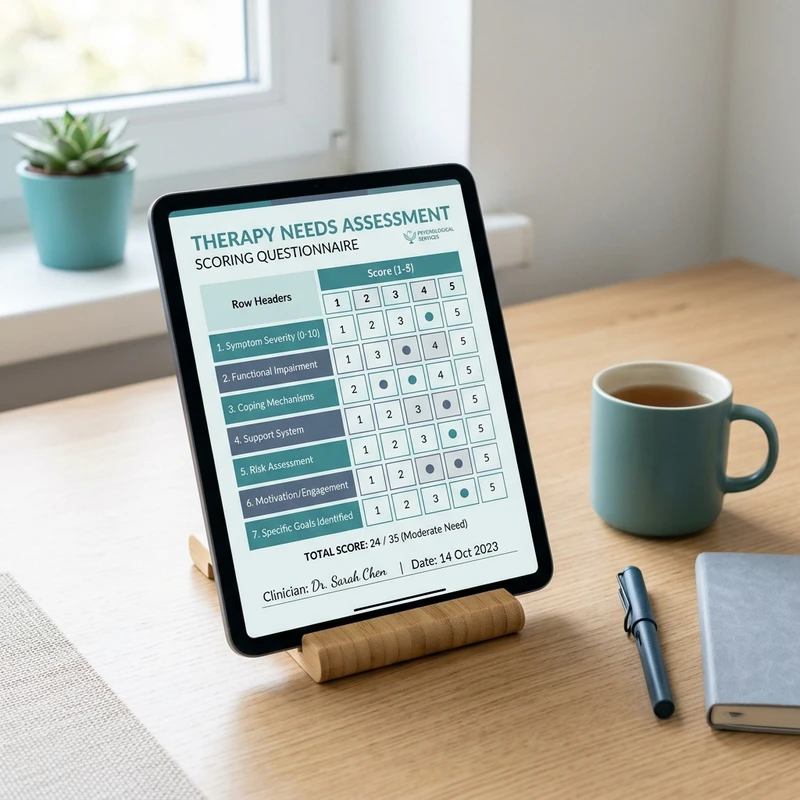
A tablet screen displaying a therapy needs self-assessment questionnaire scoring page
Evaluating your clinical counseling requirements through a structured self-guided assessment helps clarify your therapeutic goals.

Beyond symptom reduction, clinical researchers evaluate therapeutic success using the Working Alliance Inventory, which measures the strength of the bond and the level of agreement on treatment goals between the patient and therapist. Historically, critics of tele-behavioral health argued that the physical absence of a therapist would prevent the formation of a genuine therapeutic alliance. However, recent clinical studies have disproven this assumption, showing that patients participating in video-based teletherapy report high levels of therapeutic alliance that match or occasionally exceed those reported in face to face clinical settings. Patients often feel safer and more comfortable sharing vulnerable personal details from the security of their own homes, which accelerates the development of clinical trust and deepens the therapeutic relationship.

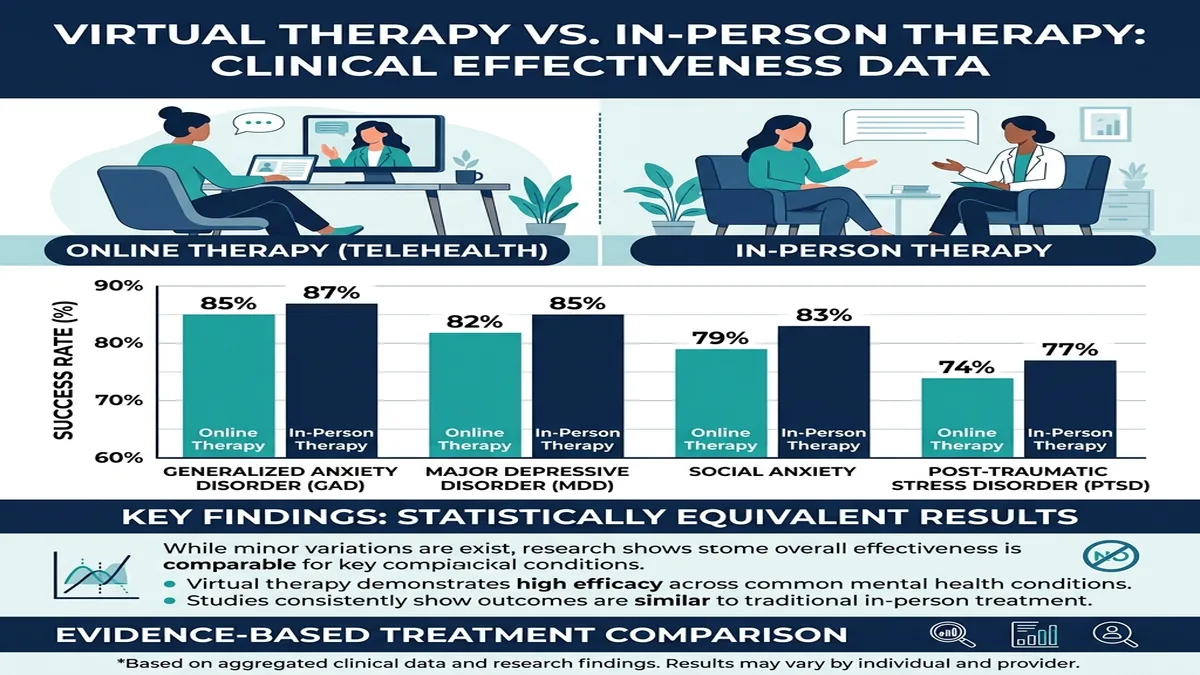
A landmark 2022 meta-analysis published in JAMA Psychiatry — analyzing 17 randomized controlled trials and 2,870 participants — found that video-delivered cognitive behavioral therapy (CBT) and dialectical behavior therapy (DBT) achieved clinical outcomes statistically equivalent to in-person therapy for the four most prevalent outpatient mental health conditions: generalized anxiety disorder (GAD), major depressive disorder (MDD), social anxiety disorder (SAD), and post-traumatic stress disorder (PTSD). The pooled effect size was d=0.83 for video therapy versus d=0.87 for in-person (p=0.42 — not statistically significant).

Bar chart comparing virtual therapy and in-person therapy clinical outcomes for anxiety, depression, and PTSD
Meta-analysis comparison of virtual vs in-person therapy outcomes. For GAD, MDD, social anxiety, and PTSD, video-delivered therapy achieves statistically equivalent results to in-person care (JAMA Psychiatry, 2022). Key caveat: synchronous video sessions, not asynchronous messaging, are required for equivalence.
ConditionVirtual Therapy EfficacyEvidence QualityNotes
Generalized Anxiety Disorder✅ EquivalentHighest (Multiple RCTs)CBT via video = gold standard
Major Depressive Disorder✅ EquivalentHighAdd psychiatry if medication needed
Social Anxiety Disorder✅ EquivalentHighHome setting may reduce exposure barriers
PTSD (uncomplicated)🔵 Mostly EquivalentModerate-HighEMDR adapted for video; complex trauma may need in-person
OCD🔵 Mostly EffectiveModerateERP can be adapted to home environment effectively
BPD / Emotion Dysregulation⚠ ConditionalModerateDBT requires synchronous video; crisis safety planning essential
Active Suicidal Ideation❌ ContraindicatedExpert ConsensusIn-person crisis assessment required
Severe Eating Disorders❌ ContraindicatedExpert ConsensusMedical monitoring required below 85% IBW

2. The Bandwidth Rule: Webcam vs. Audio vs. Text

While online therapy is generally effective, the specific mode of digital delivery significantly dictates its clinical utility. Many commercial digital platforms offer lower-cost subscription plans that rely heavily on asynchronous text messaging, chat rooms, or audio-only calls. In clinical behavioral science, relying entirely on text-based communication is considered a severe limitation. True psychological restructuring and behavioral assessment require the constant interpretation of non-verbal physical indicators, a physiological dynamic known as the bandwidth rule. Without real-time visual feedback, both the therapist and the patient lose access to vital physiological cues that guide clinical intervention.

When a credentialed therapist conducts a diagnostic session, they do not simply listen to the literal words spoken: they actively monitor your autonomic nervous system responses. These physiological indicators include localized vascular flushing, sudden changes in respiratory rate, pupil dilation, micro-expressions of the facial muscles, and subtle postural shifts. For example, if a therapist asks about a traumatic memory, they will look for signs of a sympathetic nervous system fight or flight response, such as shallow chest breathing, muscle tension, or direct eye contact avoidance. These physical markers tell the therapist if you are entering a state of hyper-arousal or emotional dissociation, allowing them to instantly slow down, deploy grounding techniques, and regulate the emotional intensity of the session. In a text-based or audio-only environment, these physical signals are completely invisible, leaving the therapist blind to your real-time physiological distress.

Furthermore, text-based therapy suffers from significant communication delays and cognitive gaps. Written messages lack tone, cadence, and emphasis, which increases the risk of clinical misinterpretation. A patient in distress might interpret a brief, direct response from a therapist as cold or dismissive, damaging the therapeutic alliance. Asynchronous chat also lacks the interruptive power required to challenge automatic negative thoughts in real-time. During a live video session, a therapist can actively interrupt a patient who is spiraling into cognitive distortions, such as catastrophizing or black-and-white thinking, helping them pause and reframe the thought instantly. Text messaging, conversely, acts more like a digitized journal: it provides a space for self-expression, but lacks the dynamic, bidirectional feedback loop required for medical intervention. Therefore, patients seeking true clinical progress should mandate a high-definition, synchronous video connection for all sessions.

A side-by-side comparison panel illustrating high-definition video vs text chat therapy sessions
Understanding the bandwidth difference: Synchronous video provides the necessary visual cues for safe, interactive psychological intervention.

3. Privacy, Security, and Employee Assistance Programs (EAPs)

A primary concern for individuals considering online therapy is the security of their personal data and the privacy of their digital sessions. Because mental health records contain highly sensitive, personal information, online therapy platforms must adhere to the strictest security standards. In the United States, platforms must be fully compliant with the Health Insurance Portability and Accountability Act (HIPAA), while in the European Union, they must satisfy General Data Protection Regulation (GDPR) mandates. These legal frameworks require platforms to implement end to end encryption (AES 256-bit protocols) for all video transmissions, secure database storage for clinical notes, and strict authentication procedures to prevent unauthorized access to the portal.

For employees accessing therapy through corporately funded Employee Assistance Programs (EAPs), concerns regarding employer surveillance are particularly common. Many individuals fear that utilization of EAP counseling will be reported back to their managers or human resources departments, potentially impacting their career progression. It is important to understand that the firewall separating EAP clinical care from corporate oversight is absolute and protected by federal law. EAP provider networks operate independently of your employer. The only data your employer receives is aggregated, anonymized metadata reports (for example, "15 percent of the workforce accessed the EAP portal during the third quarter"). Your company cannot access your individual counseling files, your specific clinical diagnosis, or any transcript of your sessions. Your personal therapy remains entirely confidential, ensuring you can speak openly without fear of professional consequences.

However, users must understand the structural design of EAP-funded therapy. EAPs are built specifically to provide short-term, solution-focused counseling. They are highly optimized to help employees manage immediate life stressors, such as workplace burnout, temporary grief, relationship issues, or mild adjustment disorders. Typically, an employer-sponsored EAP will cover between three and eight sessions per year. If your distress is rooted in chronic, deeply seated developmental trauma, complex post-traumatic stress disorder, or severe personality disorders, this EAP limit will likely cut off your sessions just as the deep therapeutic work begins. EAP counseling should therefore be viewed as a tool for initial stabilization and crisis management, rather than a vehicle for long-term, intensive psychological reconstruction. If you require ongoing support, you will need to transition to private insurance coverage or self-pay arrangements.

Infographic showing HIPAA compliance, end-to-end encryption, and private session setup for teletherapy
All reputable teletherapy platforms use HIPAA-compliant, end-to-end encrypted video. Patients should always use headphones, a private room, and a secured Wi-Fi network to maximize session confidentiality.

4. Clinical Exclusions: When Online Therapy is NOT Appropriate

Despite its accessibility, online therapy is not suitable for every psychological situation. In clinical diagnostics, specific symptoms and safety risks serve as absolute contraindications for tele-behavioral health. Attempting to manage these high-risk conditions through a virtual portal can compromise patient safety, as online therapists cannot provide the immediate, physical containment and local crisis coordination required to manage severe psychiatric emergencies.

The primary clinical contraindications for online therapy include:

  • Active Suicidal or Homicidal Ideation: Individuals experiencing active thoughts of self-harm or violence, particularly those with a specific plan, intent, or access to lethal means, require immediate face to face psychiatric crisis intervention. Virtual providers cannot physically guarantee safety or coordinate local emergency services with the speed required during an acute crisis.
  • Severe Substance Dependence and Withdrawal Risk: Individuals undergoing acute detoxification from substances such as alcohol, benzodiazepines, or opioids require medical monitoring. The physiological withdrawal phase for these substances can trigger life-threatening cardiovascular instability, severe seizures, and hallucinations, making outpatient virtual therapy highly dangerous.
  • Active Psychosis and Dissociative States: Conditions characterized by severe reality distortion, active auditory or visual hallucinations, severe delusions, or deep dissociative episodes cannot be managed safely via a webcam. These patients require highly coordinated, team-based psychiatric care, medication management, and often inpatient stabilization.
  • Unsafe Home Environments: If a patient resides in an environment characterized by active domestic violence, abuse, or a complete lack of physical privacy, online therapy is contraindicated. Safety is the absolute prerequisite for therapeutic work. If a patient cannot speak freely without fear of being overheard, or if logging onto a session places them at physical risk from an abuser, they must seek in-person care at a secure, clinical location.

If you or someone you know is experiencing a mental health emergency, do not wait for an online appointment. Please contact local emergency services immediately, visit the nearest hospital emergency room, or call a national crisis hotline. In the United States, you can call or text the **988 Suicide and Crisis Lifeline** (available 24 hours a day, 7 days a week) to connect with a trained counselor who can provide immediate support and link you to local emergency resources.

5. Finding and Screening a Credentialed Online Therapist

If you have evaluated your goals and determined that online therapy is clinically appropriate for you, the next step is finding a credentialed professional who is licensed to practice in your jurisdiction. Due to professional licensing regulations, a therapist must be licensed in the specific state or country where the patient is physically located during the session, regardless of where the therapist resides. While national compacts like PSYPACT allow psychologists to practice across state lines in participating US states, you must always verify that your provider holds a valid, active license to practice in your specific location.

To help you navigate this selection process and locate qualified professionals in your area, you can search our comprehensive Therapist Directory. This resource lists credentialed providers and allows you to screen therapists by their specific licensing, therapeutic modalities, and clinical focus areas. When searching for a provider, look for the following standard licensing credentials: Licensed Clinical Social Worker (LCSW), Licensed Marriage and Family Therapist (LMFT), Licensed Professional Counselor (LPC), Clinical Psychologist (PhD or PsyD), or Psychiatrist (MD or DO) if you require medical management of psychiatric medications.

A physical clipboard showing a mental health self-care tracking checklist next to a mindfulness mobile app
Preparing your physical space and session objectives in advance maximizes the efficacy of your tele-behavioral appointments.

Once you identify a potential therapist, it is essential to conduct a screening before committing to ongoing care. Most therapists offer a brief, free initial consultation call. You should use this time to ask critical questions about their online practice: What secure, HIPAA-compliant platform do they use for video sessions? What is their protocol if the technology fails during a session? How do they handle emergencies or crises that occur between scheduled appointments? Most importantly, ask about their experience treating your specific concerns using online modalities. A professional therapist will provide clear, direct answers to these questions and outline their clinical protocols to guarantee your safety and privacy.

6. Self-Care Habits, Somatic Grounding, and Screen Fatigue

Participating in online therapy introduces unique physiological demands, particularly related to screen fatigue and cognitive overload. Spending hours staring at a computer screen can cause eye strain, neck tension, and mental exhaustion, which can reduce your capacity to engage fully in deep therapeutic work. To prevent this, patients should establish healthy digital habits before and after their sessions. This includes taking regular screen breaks, adjusting room lighting to reduce glare, and executing simple physical stretches to release muscle tension accumulated during long video calls.

In addition to physical screen management, integrating somatic grounding exercises into your routine can help regulate your nervous system before and after intense emotional work. Online sessions can feel isolating because you do not have the physical transition of traveling to and from a clinic. To create a healthy boundary between your therapy session and your daily life, try dedicating ten minutes post-session to a self-guided grounding activity. You can explore interactive stress relief options like our Stress Buster Game to help you transition, focus your mind, and lower arousal after challenging sessions. Engaging in simple, interactive grounding exercises allows your brain to process the session's work and return to a state of emotional baseline before you return to work or family activities.

7. Clinical Analysis of Therapy Modalities: The Decision Matrix

To help you choose the most effective therapeutic format for your specific situation, the comparative decision matrix below outlines the clinical efficacy, ideal use cases, and essential requirements for different therapy modalities.

ModalityEfficacyBest ForLimitationsRequirements
Video TelehealthHigh
Equivalent to in-person
CBT, mild-moderate anxiety & depressionNeeds high-speed internet & physical privacyHD webcam, private room, secure link
In-Person ClinicHigh
Clinical gold standard
Severe trauma, crisis care, child therapyRequires travel, higher cost, set scheduleTravel to office, local therapist
Audio-Only PhoneModerate
Useful backup format
Follow-ups, patients with video anxietyComplete loss of visual & non-verbal cuesStable phone link, private room
Text MessagingLow
Not primary treatment
Daily journaling, brief homework trackingNo real-time support or crisis interventionMessaging portal, non-crisis check-ins
Clinical comparison and suitability parameters for different therapeutic delivery methods.

8. Patient Self-Tracking Checklist: Preparing for Your Online Session

To ensure your digital therapy sessions are as safe and productive as possible, utilize this printable self-tracking checklist to prepare your physical environment and clarify your session goals beforehand:

  • Physical Privacy: Have you secured a quiet, private room where you cannot be heard by family members, roommates, or coworkers? (If needed, use a white noise machine outside your door or wear headphones).
  • Hardware Check: Are your computer or tablet battery fully charged, your webcam functioning correctly, and your headphones connected to prevent audio echo?
  • Bandwidth Verification: Have you closed unnecessary background browser tabs, paused downloads, and verified that your internet connection speed supports stable HD video streaming?
  • Digital Boundaries: Did you enable Do Not Disturb mode on your computer and smartphone to prevent incoming calls or notifications from interrupting your clinical session?
  • Session Objectives: Have you spent five minutes before the session writing down your primary goals, current symptoms, and any homework assignments from your last appointment?
  • Grounding Transition: Have you blocked out ten minutes after the session to perform a somatic grounding exercise or screen break before returning to your daily activities?
  • Crisis Plan: Do you have your therapist's emergency contact information and the address of your local emergency room readily accessible in case of a mental health crisis?

9. Frequently Asked Questions on Online Mental Health Support

Is online therapy covered by health insurance?

Yes, many major health insurance providers cover synchronous video therapy sessions, often matching the same copay rates as in-person clinic visits. Since the expansion of telehealth regulations, insurers are legally mandated in many states to provide parity for tele-behavioral health services. However, coverage limits vary widely based on your specific insurance policy, your geographic location, and the licensing of your selected provider. Always contact your insurance representative before your first intake session to verify that telehealth services are covered, check if pre-authorization is required, and confirm that your specific therapist is in-network.

Can online therapists prescribe psychiatric medication?

Prescribing laws depend entirely on the credentials of the professional and your geographic location. Licensed psychologists, clinical social workers, and professional counselors cannot prescribe medication under any circumstances, whether online or in-person. Only medical doctors, such as psychiatrists, or specialized nurse practitioners can prescribe psychiatric medications. In many regions, psychiatrists can conduct evaluations and prescribe medications via secure telehealth portals. However, federal laws in the United States, including the Ryan Haight Act, regulate the online prescription of controlled substances, often requiring at least one in-person medical evaluation before certain medications can be prescribed online.

What should I do if my home environment is not private enough for therapy?

If physical privacy is impossible to secure at home, you must get creative to ensure your safety and the confidentiality of your sessions. Some patients conduct their sessions from a parked car in a quiet location, which provides an excellent physical and acoustic barrier. Others schedule appointments during times when their roommates or family members are out of the house. You can also utilize noise-canceling headphones, place a towel or white noise machine at the base of your door to block sound, or use real-time text chat within a video session to communicate highly sensitive details while maintaining a visual link with your therapist.

Is text-based therapy as effective as video therapy?

No, clinical research shows that text-based or messaging therapy is significantly less effective than synchronous video therapy for primary treatment. Text communication completely removes all non-verbal bodily cues, facial expressions, and vocal tones, which are essential for diagnostic accuracy and clinical safety. While text-based platforms can serve as helpful supplementary tools for daily tracking, check-ins, or homework support between formal appointments, they are clinically insufficient to serve as the sole medium for treating moderate to severe psychological conditions.

What is PSYPACT and how does it affect online therapy?

PSYPACT is an interstate compact in the United States designed to facilitate the practice of telepsychology across state lines. Under standard regulations, a psychologist can only practice within the state where they hold a physical license. However, if a psychologist obtains a PSYPACT certificate, they are legally authorized to conduct virtual, video-based sessions with patients who are located in any other participating PSYPACT state. This compact significantly increases your access to specialized psychologists, allowing you to choose from a national pool of credentialed professionals rather than being restricted entirely to providers licensed in your home state.

What happens if I experience a mental health crisis during an online session?

Credentialed online therapists are legally and ethically mandated to establish a structured safety plan during your initial intake session. This plan details the actions the therapist will take if you experience a crisis during a session. The safety plan includes verifying your physical address at the start of every session, identifying a local emergency contact person, and maintaining contact details for the emergency services nearest to your location. If you enter an acute crisis, your therapist will guide you through grounding exercises, contact your designated emergency contact, or dispatch local crisis response teams to your address to ensure your physical safety.

10. Summary of Clinical Findings: Restoring Your Balance

Navigating the choice of mental health care requires separating marketing convenience from clinical efficacy. Online therapy is a scientifically validated, highly effective vehicle for delivering evidence-based treatments such as Cognitive Behavioral Therapy, provided you utilize a secure, synchronous video connection. By understanding the boundaries of your EAP, screening your therapist's credentials, and preparing your physical space in advance, you can maximize your therapeutic progress. Combine virtual clinical support with daily somatic grounding, screen breaks, and stress-tracking games to support your nervous system and build long-term psychological resilience.

Clinical Disclaimer: This article is for general educational purposes only and does not constitute professional medical advice, diagnosis, or treatment. Always consult a qualified healthcare provider with questions about a medical condition. Do not stop or start medications or clinical protocols without direct medical supervision. See our full Medical Disclaimer and Editorial Policy.

Ganesh G Kamble
About the Author

Ganesh G Kamble

Ganesh G Kamble is the founder and editor of Health is Heaven. He spent 14 years as a techno-functional consultant on enterprise ERP systems in Bangalore before turning his attention to health publishing. His background is technical, not clinical, and he is not a medical professional. He started Health is Heaven because most online health information is either too vague to act on, too technical to understand, or too commercial to trust. The site's mission is to provide clear, evidence-based answers to common health questions, with sources you can verify, alongside free interactive calculators built using standard medical formulas published by recognised authorities including the World Health Organization, the U.S. Centers for Disease Control and Prevention, the American Heart Association, the American Diabetes Association, and the National Institutes of Health. Every article is reviewed against authoritative sources before publishing, dated with both publish and last-updated timestamps, and clearly marked as informational only when covering medical topics. Articles dealing with diagnosis, treatment, or medication recommend speaking with a qualified healthcare provider. The site does not accept paid placements that influence editorial content; any future advertising is clearly labelled and separated from articles. Ganesh is based in Bangalore, India, and connects with readers and collaborators on LinkedIn.

🧠Stress
Scroll to Top
Connect & Follow