The Science of Biological Aging: How to Actually Slow Down Your Clock

Medically reviewed by: Health is Heaven Medical Review Board | Published by Ganesh G Kamble, Health is Heaven | Published: April 11, 2026 · Last updated: April 29, 2026

✅ Fact-Checked via NIH/WHO Data | Medically Reviewed | Updated June 2026

The concept of human longevity has undergone a profound scientific revolution over the last two decades. For centuries, humanity viewed the progression of age as an immutable, linear countdown dictated entirely by chronological time. Today, the world's leading longevity research laboratories have established a far more malleable reality: chronological age, which represents the mere number of times the Earth has completed a revolution around the sun, is distinct from biological age. Your biological age is a precise, mathematically quantifiable measure of the functional degradation of your cells, tissues, organs, and systemic physiological systems. Epigenetic science now reveals that this biological clock is highly responsive to external inputs, meaning that you possess significant agency over the rate at which your cells age, allowing you to not only slow down the clock, but in specific clinical parameters, actively reverse it.

Understanding and manipulating the rate of biological aging requires a deep dive into YMYL (Your Money Your Life) clinical science. It demands an absolute departure from generic wellness platitudes, replacing them with a highly structured, scientifically validated framework. To successfully slow down or reverse biological decay, we must target the fundamental molecular hallmarks of aging. This comprehensive clinical guide explores cellular senescence, the mechanics of telomere erosion, the epigenetic remodeling measured by DNA methylation clocks, sirtuin and AMPK longevity pathway activation, mitochondrial biogenesis, and evidence-based clinical protocols designed to stabilize your cellular architecture and rewrite your cellular destiny.

SPONSORED CONTENT

1. The Molecular Biology of Aging: Cellular Senescence and the SASP

At the absolute core of cellular degradation lies the phenomenon of cellular senescence. Throughout your lifetime, your somatic cells are exposed to continuous physiological stressors, including DNA double-strand breaks, severe oxidative stress, oncogene activation, and mechanical damage. Under normal conditions, when a cell sustains critical, irreparable damage to its genomic structure, it triggers a specialized program called apoptosis (programmed cell suicide) to protect the organism. However, under specific conditions of chronic stress or when apoptosis pathways are compromised, the damaged cell evades suicide. Instead, it enters a state of permanent proliferative arrest known as cellular senescence.

These senescent cells are frequently termed (zombie cells) by modern longevity researchers. While they can no longer divide or replicate, they remain highly metabolically active. Instead of dying quietly, senescent cells begin to hyper-secrete a highly toxic, pro-inflammatory cocktail of chemical signals known collectively as the Senescence-Associated Secretory Phenotype (SASP). The SASP is comprised of a potent mixture of pro-inflammatory cytokines (such as Interleukin-1 beta, Interleukin-6, and tumor necrosis factor alpha), matrix-degrading metalloproteinases (MMPs), growth factors, and chemokines. This chemical mixture is systematically discharged into the surrounding extracellular matrix, structurally degrading local tissues and infecting neighboring, youthful cells. The chronic accumulation of senescent cells and their constant release of SASP signals create systemic low-grade inflammation (often termed inflammaging), which disables the immune system, degrades the microenvironment, and acts as a primary driver of cardiovascular disease, osteoarthritic degradation, neurodegeneration, and oncogenesis.

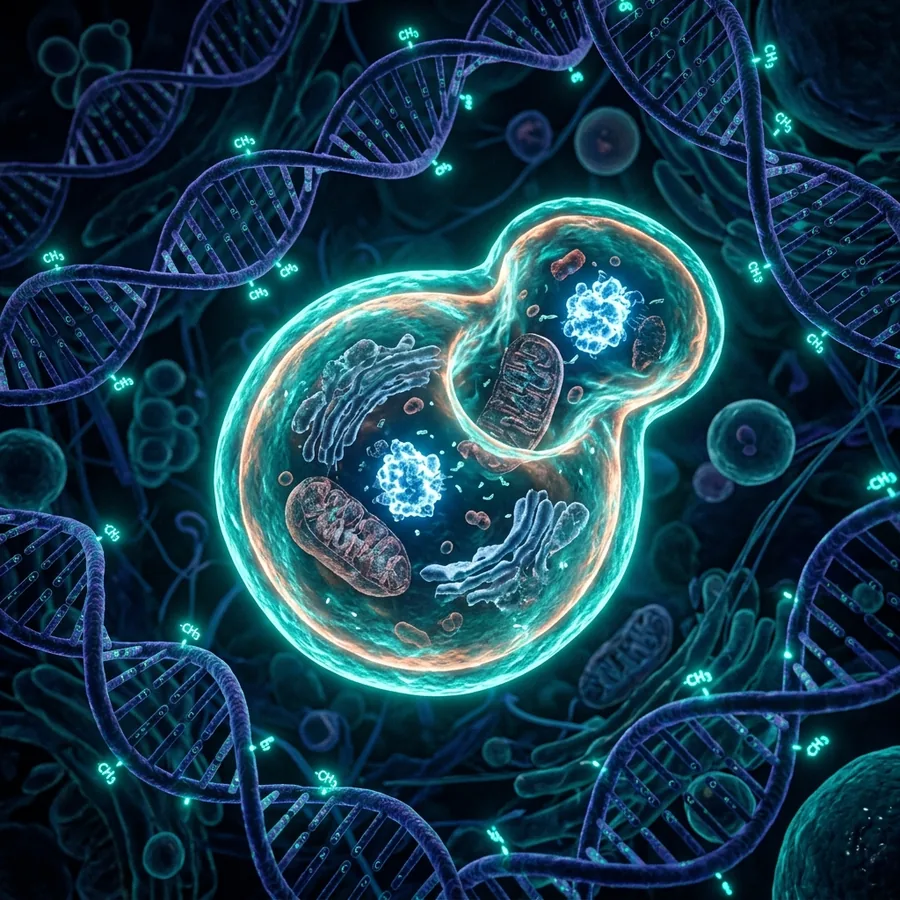
3D scientific microscopic visualization of cellular autophagy and DNA methylation mechanisms
A detailed 3D scientific visualization illustrating the cellular autophagy process clearing damaged components alongside the regulation of DNA methylation marks on chromosomes.

To bypass the progressive damage caused by zombie cells, researchers are focusing heavily on two distinct clinical strategies: senolytics and autophagy upregulation. Senolytics are targeted pharmacological or natural compounds designed to selectively induce apoptosis in senescent cells while leaving healthy, youthful cells completely unharmed. Autophagy, conversely, is the body's internal cellular recycling mechanism. During autophagy, the cell encapsulates damaged proteins, misfolded aggregates, and malfunctioning organelles in a double-membraned vesicle called an autophagosome. This vesicle then fuses with a lysosome, whose highly acidic, enzyme-rich environment digests the trapped cellular trash, converting it into fresh amino acids and fatty acids to rebuild youthful cellular structures. The systematic upregulation of autophagy allows your tissues to continuously clear out the pre-senescent cellular debris before it can consolidate into toxic SASP-secreting centers.

2. The Hayflick Limit: Telomere Length Decay and Telomerase Activation

To understand the biological clock governing cellular lifespan, one must analyze the role of telomeres. Telomeres are highly specialized, repetitive nucleotide sequences (comprising the specific hexanucleotide sequence TTAGGG in humans) situated at the absolute terminal ends of your linear chromosomes. Structurally, telomeres act as protective chromosomal caps (analogous to the protective plastic aglets at the ends of shoecords) designed to prevent the chromosome from unraveling or being recognized by cellular repair mechanisms as a broken double-strand DNA break. Because DNA polymerase, the enzyme responsible for copying DNA during cellular replication, cannot synthesize the very end of the lagging strand (a cellular challenge known as the end-replication problem), the telomeres become slightly shorter with every single round of cellular division.

When telomeres become critically eroded over decades of cellular division, they can no longer maintain chromosomal stability. This structural failure triggers a persistent DNA damage response that permanently arrests the cell's replication cycle, forcing it into senescent dormancy or programmed cell death. This finite limit on the number of times a somatic cell can successfully divide is known in clinical physiology as the Hayflick Limit, first discovered by Dr. Leonard Hayflick in 1961. In most human somatic cells, the Hayflick Limit caps replication at approximately 50 to 70 divisions. Telomere length decay is therefore highly correlated with the systemic loss of regenerative stem cells and the rapid onset of tissue degeneration.

To determine your baseline cellular health and assess where your cell division stands relative to chronological norms, you should utilize the comprehensive Biological Age Calculator. This clinical assessment estimates your true epigenetic age and highlights the rate at which your telomere caps are shortening. Furthermore, because mitochondrial health and insulin sensitivity directly dictate the rate of telomere shortening, understanding your physiological efficiency via the Metabolic Age Calculator is vital to establishing a synchronized metabolic baseline.

Opposing this inevitable decay is a unique, highly specialized ribonucleoprotein enzyme called telomerase. Telomerase is biochemically capable of adding repetitive TTAGGG sequences back onto the terminal ends of telomeres, effectively extending the cellular replicative potential and bypassing the constraints of the Hayflick Limit. While telomerase is highly active in embryonic stem cells, germ cells, and unfortunately, neoplastic cancer cells, its expression is strictly suppressed in mature, adult somatic cells. However, clinical studies published in leading endocrinology journals have demonstrated that targeted lifestyle modifications (such as reducing systemic cortisol, maintaining a low glycemic load, and executing specific volumes of high-intensity cardiovascular exercise) can significantly upregulate baseline telomerase activity. By supporting the activation of this enzyme, individuals can help preserve the integrity of their chromosomal caps and defend their stem cell pools against premature depletion.

3. The Epigenetic Landscape: Epigenetic Remodeling and DNA Methylation Clocks

While your DNA sequence represents the fixed genomic hardware inherited from your parents, your epigenome acts as the dynamic software that decides which specific genes are actively transcribed into proteins or silenced. The epigenome achieves this genetic control through precise chemical modifications, primarily DNA methylation (the addition of methyl groups to cytosine bases inside specific CpG dinucleotide islands) and histone modification (the structural winding of DNA around histone proteins). As you age, your epigenome is subjected to continuous environmental inputs, including nutritional stressors, atmospheric pollutants, sleep deprivation, and psychological distress. Over time, these stressors introduce (epigenetic noise) or (epigenetic drift), leading to the progressive remodeling of your epigenetic landscape. Youthful genes that suppress tumors, repair DNA, and regulate metabolic function are systematically turned off, while geriatric, pro-inflammatory genes are aggressively upregulated.

The mathematical breakthrough in quantifying this biological decay occurred in 2013, when Dr. Steve Horvath at UCLA developed the first multi-tissue DNA methylation clock. By analyzing the methylation status of 353 specific CpG sites across the human genome, Dr. Horvath constructed an incredibly accurate biological age predictor. This epigenetic clock, alongside subsequent second-generation clocks like PhenoAge and GrimAge, is capable of predicting an individual's true biological age, morbidity risk, and all-cause mortality with astonishing statistical precision. Unlike chronological age, which merely records the passage of time, the DNA methylation clock reflects the exact amount of epigenetic wear and tear your cellular machinery has sustained.

Modern clinical dashboard displaying longevity biomarkers and healthy target ranges
An advanced medical health interface illustrating standard physiological targets and biomarkers crucial for slowing biological aging.

The critical clinical takeaway from modern epigenetics is that epigenetic remodeling is a bidirectional process. Unlike genomic mutations, which are permanent and structural, epigenetic modifications are highly dynamic and fully reversible. By altering specific biochemical cues, you can actively prompt your cells to strip off the pathological methyl groups accumulated on youthful genes and restore healthy transcription patterns. In a landmark clinical trial published in the journal Aging in 2021, researchers utilized a highly structured lifestyle intervention program (combining caloric restriction, standardized exercise, stress management, and targeted phytonutrients) to successfully reverse the biological age of participants by 3.23 years in just 8 weeks, as measured by the Horvath DNA methylation clock. This provides undeniable proof that your cellular destination is not set in stone, but is actively written by your daily habits.

4. Mitochondrial Decay and Cellular Energy: The AMPK and Sirtuin Longevity Pathways

Every single cellular function required to keep you alive (from genomic repair to protein synthesis) is absolutely dependent on the continuous generation of energy in the form of Adenosine Triphosphate (ATP). This vital energy is generated within your mitochondria, the highly specialized, double-membraned organelles that perform cellular respiration and oxidative phosphorylation. However, mitochondria are also the primary site of reactive oxygen species (ROS) production, highly volatile free radicals that damage local mitochondrial DNA (mtDNA), lipid membranes, and respiratory proteins. As mitochondria sustain cumulative oxidative damage over time, their efficiency drops precipitously, a state known as mitochondrial decay. Malfunctioning mitochondria produce less ATP while simultaneously leaking massive amounts of ROS and inflammatory mitochondrial DNA into the cellular cytoplasm, triggering cellular energy depletion and chronic systemic inflammation.

To defend against mitochondrial decay, the human body utilizes two primary, highly conserved longevity pathways: the sirtuin pathway and the AMPK pathway. Sirtuins (comprising a family of seven distinct enzymes in mammals, SIRT1 through SIRT7) are a group of NAD+-dependent deacetylase enzymes that act as master genetic regulators. They systematically deacetylate histone proteins and transcription factors, promoting genomic stability, enhancing DNA repair mechanics, suppressing pro-inflammatory pathways, and upregulating mitochondrial biogenesis (the physical replication and creation of new mitochondria). Sirtuins, however, are completely dependent on the coenzyme Nicotinamide Adenine Dinucleotide (NAD+) for their activity. As you age, your systemic NAD+ levels drop catastrophically, often declining by over 50 percent by middle age. This depletion starves the sirtuins of their required fuel, rendering them inactive and accelerating biological aging. Restoring NAD+ levels via precursors like Nicotinamide Mononucleotide (NMN) or Nicotinamide Riboside (NR) is a primary clinical avenue to reactivate these crucial sirtuin enzymes.

Simultaneously ruling cellular energy balance is the AMPK (Adenosine Monophosphate-Activated Protein Kinase) pathway. AMPK acts as the master metabolic fuel sensor within every cell, monitoring the ratio of ATP to AMP. When cellular energy is depleted (such as during periods of caloric restriction, fasting, or vigorous physical exercise), AMPK is rapidly activated. Once turned on, AMPK initiates a comprehensive survival response: it shuts down energy-intensive anabolic processes (like lipid and protein synthesis) and aggressively upregulates catabolic energy-generating pathways. AMPK directly triggers cellular autophagy to clear out damaged components, stimulates fatty acid oxidation to generate ATP, and partners with the sirtuin pathway to activate PGC-1alpha, the primary transcription coactivator that drives mitochondrial biogenesis. Upregulating AMPK is therefore the ultimate physiological strategy to restore cellular energy reserves, clear out zombie components, and rejuvenate your mitochondrial population.

5. Clinical Aging Intervention Protocols: Evidence-Based Therapies

Transitioning from the abstract molecular biology of aging to actionable, daily protocols requires a structured, evidence-based approach. The most successful interventions rely on the physiological principle of hormesis: the application of a brief, low-dose environmental stressor that provokes a powerful, over-compensatory protective response from the body's internal cellular machinery. Let us examine the four primary clinical protocols proven to actively reverse markers of biological aging:

Cold Exposure and Cold Shock Proteins

Deliberate cold exposure, such as cold water immersion (cold plunging) at temperatures between 45 and 55 degrees Fahrenheit, triggers an immediate, profound physiological response. The intense cold stimulates the activation of the sympathetic nervous system, causing a massive release of the hormone and neurotransmitter norepinephrine. Norepinephrine binds to beta-adrenergic receptors, driving the rapid upregulation of Uncoupling Protein 1 (UCP1) in adipose tissue. This process drives the conversion of standard white fat stores into highly metabolic, mitochondria-rich brown adipose tissue (BAT). Brown fat actively uncouples oxidative phosphorylation, consuming circulating fatty acids and glucose to generate physical body heat, significantly improving systemic insulin sensitivity and metabolic flexibility.

Simultaneously, cold exposure prompts the brain and liver to synthesize incredibly protective molecules known as Cold Shock Proteins, particularly RNA-binding motif protein 3 (RBM3) and cold-inducible RNA-binding protein (CIRBP). These specialized proteins act as molecular stabilizers, protecting vulnerable cellular structures and preventing muscle atrophy during periods of physical stress. Cold shock proteins have also been shown in neurodegenerative animal models to actively repair damaged synapses, preserving cognitive networks and defending brain cells against age-related cognitive decline.

Heat Exposure and Heat Shock Proteins

Conversely, utilizing a traditional dry sauna at temperatures between 175 and 195 degrees Fahrenheit for 15 to 20 minutes triggers an equally powerful, complementary hormetic response. The acute thermal stress mimics the physiological cardiovascular workload of moderate aerobic exercise, dilating blood vessels, increasing stroke volume, and elevating heart rate up to 120 to 150 beats per minute. This vascular workout dramatically improves endothelial function, lowers resting blood pressure, and reduces the risk of cardiovascular events by up to 50 percent when performed 4 to 7 times per week, as documented in extensive clinical trials from Finland.

At the cellular level, thermal stress activates Heat Shock Transcription Factor 1 (HSF1), which drives the rapid synthesis of Heat Shock Proteins (HSPs), specifically HSP70 and HSP90. Heat shock proteins act as crucial molecular chaperones. As you age, cellular proteins lose their three-dimensional structure and fold improperly, accumulating as toxic, non-functional protein aggregates in the brain (such as amyloid-beta plaques) and muscle tissues. Heat shock proteins recognize these misfolded proteins, bind to them, and actively use cellular energy to refold them back into their youthful, functional configurations. If the protein is damaged beyond repair, the HSPs systematically escort it to the cell's waste clearance systems, preventing cellular toxicity and defending the proteome against age-related decay.

Caloric Restriction and mTOR Suppression

Caloric restriction, either through a continuous 15 to 20 percent reduction in daily energetic intake or structured time-restricted feeding (such as a daily 16-hour fasting window), is the most thoroughly validated intervention for extending lifespan across all model organisms. The primary molecular mechanism driving this longevity benefit is the systematic suppression of the nutrient-sensing pathway known as mTOR (mammalian target of rapamycin). mTOR is the master cellular growth switch; when amino acids and glucose are abundant, mTOR is highly active, signaling the cell to build proteins, grow, and divide. However, chronic mTOR activation blocks the cell from performing vital maintenance work, leading to the accumulation of cellular garbage.

By restricting nutrient availability, you suppress mTOR activity and activate the energetic sensor AMPK. This shift triggers systemic, deep cellular autophagy. Deprived of external food sources, your cells are forced to seek out internal fuel by digesting damaged organelles, senescent elements, and misfolded protein aggregates. This self-cleaning process clears out toxic intracellular waste, restores mitochondrial efficiency, suppresses systemic inflammatory cascades, and improves cell survival, effectively cleansing your tissues from the inside out.

Aerobic Volume and Progressive Resistance Training

Physical exercise is a powerful, non-pharmacological longevity intervention. To maximize cellular age reversal, you must combine high-volume Zone 2 cardiovascular exercise with progressive resistance training. Zone 2 exercise (defined as steady-state aerobic activity performed at a heart rate where you can maintain a conversation but with slight respiratory effort) specifically targets the health and density of your skeletal muscle mitochondria. Zone 2 exercise forces the replication and growth of mitochondria, improving their efficiency, increasing systemic lactate clearance, and restoring absolute metabolic flexibility.

Concurrently, progressive resistance training is vital to combat sarcopenia (the progressive loss of muscle mass, quality, and strength that occurs with age). Muscle is not merely a locomotive organ; it is a highly active endocrine tissue that synthesizes and releases protective molecules called myokines. Myokines have been shown to directly reduce systemic inflammation, enhance cognitive plasticity in the hippocampus, and improve insulin-dependent glucose clearance. Furthermore, mechanical loading on bone tissue via resistance training triggers mechanotransduction, stimulating osteoblasts to deposit calcium and maintain skeletal density, preventing osteopenia and structural frailty as you age.

Flat lay of a premium daily lifestyle tracking routine: smartwatch, organic foods, and journal
A premium lifestyle tracking routine incorporating clean nutrition, metabolic exercise monitoring, and strict biometric recording.

Once you establish your baseline biological markers, the most visible external indicator of cellular longevity is the health and structural integrity of your skin. Because skin cell turnover and collagen degradation are heavily driven by systemic inflammation and cellular senescence, you should protect your cellular barrier externally. Formulating a hyper-optimized, non-toxic routine utilizing the Custom Skincare Routine Builder will support your epigenetic progress from the outside, ensuring your dermal layers reflect your cellular vitality.

6. Clinical Markers of Biological Aging: The Longevity Reference Protocol

To transition from subjective wellness goals to precise medical tracking, you must measure your systemic health against validated, clinical biomarkers. Use this reference protocol to guide your laboratory blood panels and track your epigenetic progression over time:

Biomarker Name Physiological Role Standard Healthy Range Clinical Longevity Interventions
DNA Methylation Clocks (DNAm) Measures CpG site methylation to quantify overall systemic epigenetic age and predict all-cause mortality. Epigenetic age equal to or lower than chronological age. Combined lifestyle protocol (caloric restriction, phytonutrient intake, and stress reduction).
Telomere Length (LTL) Measures the physical base-pair length of chromosomal caps in leukocytes to estimate replicative capacity. 50th percentile or higher relative to chronological age cohorts. Chronic stress management (cortisol regulation) and high-volume aerobic Zone 2 cardio volume.
Glycated Hemoglobin (HbA1c) Measures the percentage of red blood cell hemoglobin chemically bound to glucose, tracking long-term glycemic control. 4.8% to 5.3% (optimal metabolic zone). Strict carbohydrate restriction, Zone 2 physical activity, and intermittent fasting.
High-Sensitivity C-Reactive Protein (hs-CRP) A highly sensitive acute-phase protein synthesized in the liver that serves as a core marker of systemic inflammation. Under 0.5 mg/L (minimal vascular risk). Cold exposure ( norepinephrine activation) and daily polyphenol intake (resveratrol, quercetin).
Cardiorespiratory Fitness (VO2 Max) Measures the maximum rate of oxygen consumption during incremental exercise, representing mitochondrial aerobic capacity. Excellent or Superior relative to age and gender cohorts. High-Intensity Interval Training (HIIT) paired with consistent Zone 2 aerobic volume.

7. The Self-Tracking Longevity Checklist: Your Daily Biometric Protocol

Sustaining cellular age reversal requires daily discipline. To support your lifestyle transition, track your progress using this printable, biometric self-tracking checklist:

  • Daily Fasting Window: Restrict your nutrient intake to an 8-hour window (executing a 16-hour daily fast) to suppress mTOR, lower insulin, and initiate baseline cellular autophagy.
  • Zone 2 Aerobic Volume: Achieve a minimum of 30 to 45 minutes of steady-state Zone 2 cardiovascular exercise daily (targeting a total of 150 to 180 minutes weekly) to stimulate mitochondrial biogenesis and replication.
  • Progressive Strength Load: Execute a minimum of 3 resistance training sessions weekly, focusing on progressive overload and compound movements (squats, deadlifts, presses) to prevent muscle sarcopenia and stimulate bone mineral density.
  • Daily Hormetic Stressors: Complete 1 cold immersion session (3 to 5 minutes at 45 to 50 degrees Fahrenheit) or 1 dry sauna session (15 to 20 minutes at 180 degrees Fahrenheit) to trigger cold shock or heat shock proteins.
  • Deep Sleep Target: Achieve a minimum of 7.5 to 8.5 hours of total sleep nightly, tracking your metrics to ensure a minimum of 1.5 hours of deep sleep to support neural waste clearance and cell repair.
  • Polyphenol Infusion: Incorporate targeted longevity phytonutrients (such as 500mg of trans-resveratrol, quercetin, or fisetin) alongside healthy dietary fats to upregulate the sirtuin pathway.

8. Frequently Asked Questions (FAQ) on Biological Age Reversal

Can biological age actually be reversed?

Yes, peer-reviewed clinical studies have successfully proven that biological age can be reversed. Because biological age is determined by reversible epigenetic marks (such as DNA methylation and histone acetylation) rather than fixed genetic mutations, targeted interventions can alter these marks. Clinical trials combining caloric restriction, standardized exercise, stress reduction, and targeted phytonutrients have successfully reversed biological age by over three years in just eight weeks, as measured by DNA methylation clocks.

What is the difference between biological and chronological age?

Chronological age represents the absolute number of years you have been alive, measured by the Earth's revolutions around the sun. Biological age, conversely, measures the true physical state and functional degradation of your cells, tissues, and organs. Two people of the same chronological age can have dramatically different biological ages based on lifestyle, diet, sleep, genetics, and environmental exposures.

How often should I measure my biological age?

Because DNA methylation patterns and telomere lengths respond dynamically but slowly to lifestyle changes, measuring your biological age through advanced epigenetic blood tests every 6 to 12 months is standard. For standard metabolic biomarkers (such as HbA1c, hs-CRP, and fasting lipids), testing every 3 to 4 months is recommended to assess intermediate progress.

Do sirtuins really slow down the aging process?

Yes, the sirtuin family of enzymes (SIRT1-7) plays a critical role in regulating cellular lifespan. Sirtuins deacetylate histones and key transcription factors, which upregulates DNA repair mechanisms, stabilizes the epigenome, reduces cellular inflammation, and promotes mitochondrial biogenesis. However, sirtuins require the coenzyme NAD+ to function; as NAD+ drops with age, sirtuin activity declines, making NAD+ restoration a primary target for longevity interventions.

What are senescent 'zombie' cells?

Senescent cells are cells that have sustained critical, irreparable damage to their DNA or telomeres, causing them to permanently halt replication while evading programmed cell death (apoptosis). They remain active in the tissue, secreting a toxic cocktail of chemicals known as the Senescence-Associated Secretory Phenotype (SASP). The SASP drives local tissue degradation and induces senescence in neighboring healthy cells, accelerating systemic aging.

How does fasting trigger cellular autophagy?

Fasting triggers cellular autophagy by restricting external nutrient availability, particularly amino acids and glucose. This nutrient deficit suppresses the master cellular growth pathway mTOR and activates the energy sensor AMPK. Activated AMPK signals the cell to enter a deep self-cleaning cycle, encapsulating and digesting damaged proteins, misfolded aggregates, and malfunctioning organelles to generate energy, successfully rejuvenating the cell from the inside out.

Medical Disclaimer: This article is for informational, educational, and general reference purposes only and does not constitute medical advice, diagnosis, or treatment. Always consult a qualified healthcare provider or longevity specialist before initiating any major dietary changes, fasting windows, thermoregulatory therapies (cold plunging/sauna), or high-intensity exercise programs, especially if you have pre-existing medical conditions or are taking prescription medications. See our full Medical Disclaimer and Editorial Policy.

Ganesh G Kamble
About the Author

Ganesh G Kamble

Ganesh G Kamble is the founder and editor of Health is Heaven. He spent 14 years as a techno-functional consultant on enterprise ERP systems in Bangalore before turning his attention to health publishing. His background is technical, not clinical, and he is not a medical professional. He started Health is Heaven because most online health information is either too vague to act on, too technical to understand, or too commercial to trust.

The site's mission is to provide clear, evidence-based answers to common health questions, with sources you can verify, alongside free interactive calculators built using standard medical formulas published by recognised authorities including the World Health Organization, the U.S. Centers for Disease Control and Prevention, the American Heart Association, the American Diabetes Association, and the National Institutes of Health.

Every article is reviewed against authoritative sources before publishing, dated with both publish and last-updated timestamps, and clearly marked as informational only when covering medical topics. Articles dealing with diagnosis, treatment, or medication recommend speaking with a qualified healthcare provider. The site does not accept paid placements that influence editorial content; any future advertising is clearly labelled and separated from articles.

Ganesh is based in Bangalore, India, and connects with readers and collaborators on LinkedIn.

🧠Stress
Scroll to Top
Connect & Follow