
Medically reviewed by: Health is Heaven Medical Review Board | Published by Ganesh G Kamble, Health is Heaven | Published: June 8, 2026 · Last updated: July 27, 2026
There is a devastating mechanical truth regarding malignant mesothelioma: by the time the physiological alarms sound, the pulmonary or abdominal system is already critically compromised. Deciphering early mesothelioma symptoms and diagnosis pathways is incredibly difficult because the disease mimics mundane, everyday structural failures like asthma, pneumonia, general fatigue, or even common cold and flu symptom management issues. It does not present as a sudden, catastrophic tumor; it presents as a slow, silent, suffocating grip on the internal organs. Understanding the latency period and diagnostic sequence is the only viable path to survival.
At healthisheaven.com, we analyze oncology through the framework of cellular engineering. Malignant mesothelioma is not lung cancer. It is a highly specialized cancer that attacks the mesothelium—the delicate, protective dual-layered biological lining that surrounds your lungs (pleura), heart (pericardium), and abdominal cavity (peritoneum). Decades ago, microscopic shards of asbestos were inhaled or ingested. Like tiny, invisible daggers, these fibers lodged irreversibly into the protective lining, completely bypassing the body's immune clearance mechanisms. Decades later, the constant mechanical friction of those fibers causes the surrounding cells to maliciously mutate.
In this relentlessly factual clinical blueprint, we will dissect the biological latency period of asbestos exposure. We will explicitly detail the clinical mesothelioma symptoms differentiating the pleural and peritoneal variants, highlight the diagnostic algorithms oncologists utilize, and explain how to utilize our integrated tools to calculate your biological limits before and during therapy.
SPONSORED CONTENT
Monitor Your Vital Somatic Metrics
Use our free clinical calculators to track your body mass index (BMI) to monitor for cancer-induced muscle wasting (cachexia), estimate daily caloric targets to fight weight loss, and calculate hydration limits to flush chemotherapy drugs.

The Architect's Protocol
Ganesh G Kamble - Founder & Principal Systems Strategist
"From a purely systems engineering perspective, mesothelioma is the ultimate delayed hack. Imagine introducing a near-invisible piece of malware code into a highly secure server in 1985. The malware does not execute immediately. It sits entirely dormant for 30 or 40 years, slowly replicating in the background. By the time the code finally executes and flashes a warning onto the screen in 2026, the entire motherboard is already corrupted. Understanding this massive latency period is essential because predicting the structural failure before the alarms ring is the only viable path to survival. We must match the disease's stealth with aggressive, early diagnostic scans."
The Latency Period: The Silent Biological Clock (Symptoms Overview)
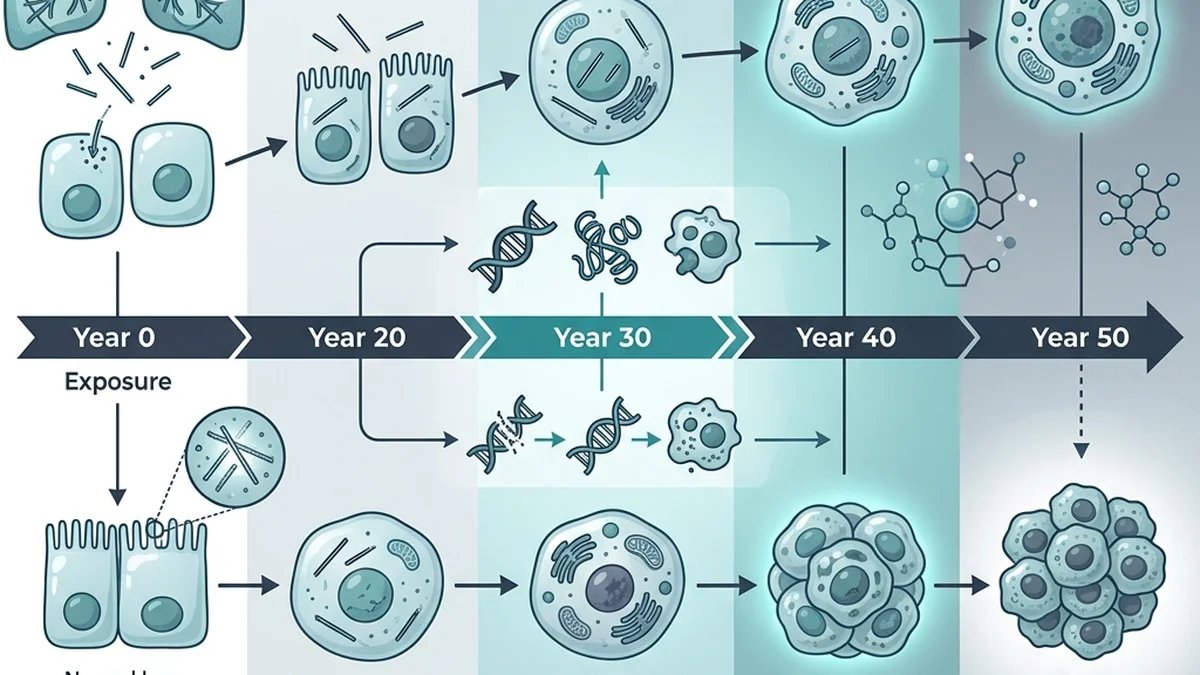
To accurately understand mesothelioma symptoms, you must grasp the concept of the biological latency period. Mesothelioma almost exclusively arises from asbestos exposure, particularly in high-risk occupational environments including shipyards, construction sites, automotive repair facilities, insulation installation projects, and military deployments—especially U.S. Navy service. However, the cancer rarely develops rapidly after initial exposure. The time between the initial inhalation or ingestion of asbestos fibers and the onset of clinically detectable symptoms typically spans 20 to 50 years. Recent epidemiological research published through 2026 continues to refine our understanding of exposure-response relationships, revealing that even low-level, intermittent exposures can trigger malignant transformation in susceptible individuals.
This massive gap often tricks patients into believing they escaped the exposure unscathed, resulting in devastatingly delayed diagnosis when the disease finally activates. The mechanical reasons for this latency lie deep within the cellular space. Asbestos is a group of naturally occurring silicate minerals composed of thin, microscopic fibers. These fibers are grouped into two primary classes: serpentine (curly fibers, such as chrysotile) and amphibole (needle-like fibers, such as crocidolite and amosite). Amphibole fibers are particularly dangerous due to their rigid, needle-like shape, which makes them highly resistant to biological clearance. Because of their physical structure, the macrophage immune cells cannot digest or break down these mineral fibers. This results in frustrated phagocytosis, where the cells continuously release pro-inflammatory cytokines and reactive oxygen species, driving chronic local tissue injury and eventual DNA mutation.
When inhaled, these micro-needles penetrate deep into the lower respiratory tract, reaching the alveoli. Due to their physical size and chemical durability, alveolar macrophages cannot engulf or break them down. This leads to a state called frustrated phagocytosis. The macrophages, unable to digest the fibers, rupture and release pro-inflammatory cytokines, reactive oxygen species (ROS), and fibrogenic factors into the surrounding tissue. This initiates a permanent, localized loop of chronic inflammation, micro-scarring (fibrosis), and DNA damage that persists for decades, eventually causing cellular mutations that lead to malignant transformation.
The Clinical Breakdown: Symptom Architecture by Variant
Mesothelioma is categorized entirely by the specific protective lining (the mesothelium) that it attacks. The symptoms vary drastically based on the localized invasion, fluid mechanics, and anatomical boundaries of the affected organ systems. We must analyze the primary variants to identify the specific warning signs.
1. Pleural Mesothelioma (The Lungs and Chest Cavity)
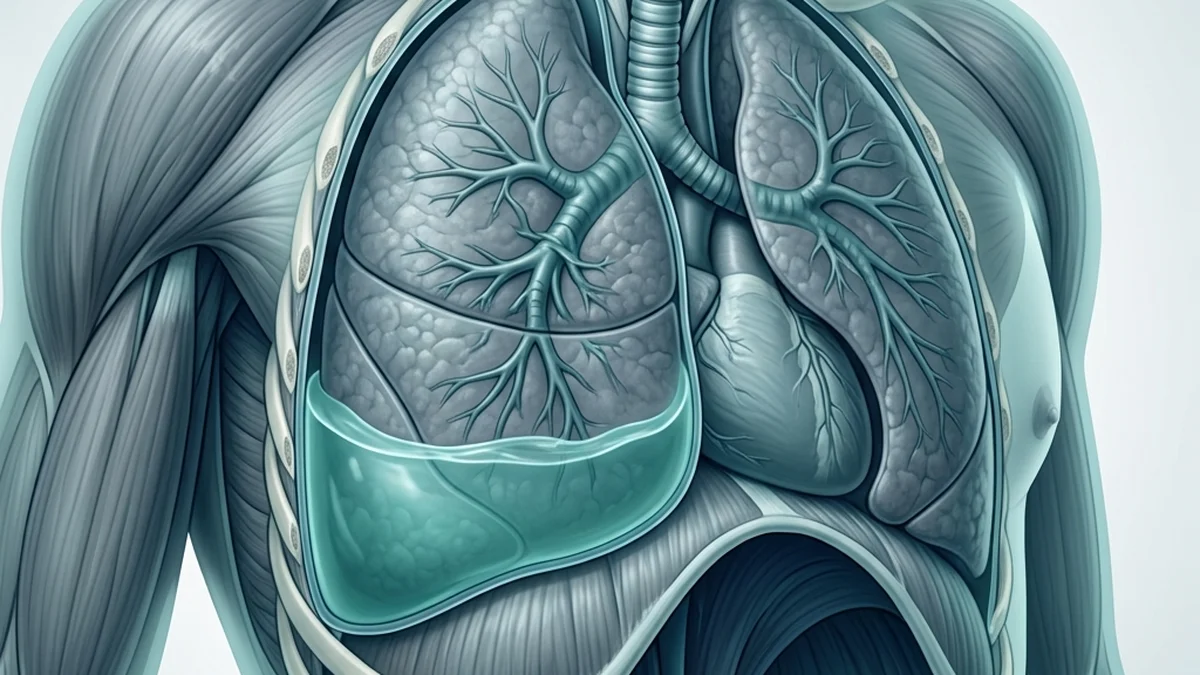
Accounting for roughly 80 to 85 percent of all diagnoses, pleural mesothelioma attacks the pleura—the dual-layered membrane surrounding the lungs and lining the thoracic cavity. The parietal pleura lines the inner chest wall, while the visceral pleura covers the lungs themselves. Crucially, the tumors do not simply grow inside the lung tissue like bronchogenic carcinomas; they form a hardened, constricting shell (or rind) around the outside of the lung, physically preventing the organ from expanding.
- Pleural Effusion: The hallmark sign. The pleura aggressively secretes fluid between its layers attempting to act as a lubricant against the tumor's physical friction. This fluid buildup, known as a pleural effusion, compresses the lung tissue, leading to severe, unexplained shortness of breath (dyspnea) that worsens when lying flat.
- Mechanical Chest Pain: A constant, dull ache located deep under the rib cage or in the shoulder blades. This pain is caused by the tumors invading the intercostal nerves and the chest wall's sensory receptors. It is non-cardiac and does not respond to changes in posture.
- Persistent Dry Cough: A lingering, non-productive cough that will not respond to standard antitussives, antibiotics, or asthma inhalers, triggered by the mechanical pressure of the tumor rind on the airway receptors.
- Hemoptysis: In rare, late-stage cases where the tumor penetrates the lung parenchyma or blood vessels, patients may cough up small amounts of blood, signaling advanced structural breakdown.
2. Peritoneal Mesothelioma (The Abdominal Cavity)
This variant accounts for 15 to 20 percent of cases and attacks the peritoneum—the membrane encasing your abdominal organs, including the stomach, liver, spleen, and intestines. This occurs when asbestos fibers are swallowed rather than inhaled, eventually migrating through the mucosal wall of the gastrointestinal tract and lodging into the peritoneal tissue. The omentum and bowel loops are heavily compromised by the diffuse tumor nodules.
- Ascites: A rapid, massive accumulation of fluid inside the abdominal cavity, causing sudden, extreme abdominal swelling, visible distension, and intense localized pressure.
- Bowel Obstruction Mechanics: Severe, chronic constipation, nausea, vomiting, or sharp abdominal cramping directly resulting from the tumor nodules physically wrapping around and strangling the gastrointestinal tract.
- Unexplained Visceral Weight Loss: A severe drop in basal metabolic body mass (cachexia) unassociated with deliberate dieting, triggered by the cancer massively hijacking the body's calorie burn rate and inducing systemic TNF-alpha production.
- Early Satiety: The sensation of feeling full after consuming only small amounts of food, caused by the physical pressure of the fluid and tumor masses compressing the stomach.
3. Pericardial and Testicular Mesothelioma (Rare Variants)
Pericardial mesothelioma attacks the pericardium, the sac surrounding the heart. It accounts for less than 1 percent of all cases. The symptoms include constrictive pericarditis, severe chest pain, cardiac arrhythmias, and shortness of breath. Testicular mesothelioma (specifically of the tunica vaginalis) is the rarest form, presenting as a painless mass or fluid accumulation (hydrocele) in the scrotum. Both variants carry a highly guarded prognosis due to their rapid progression and late diagnosis.
The Diagnostic Sequence: Confirming the Cellular Code
Because mesothelioma symptoms mimic benign ill

Ganesh G Kamble
Ganesh G. Kamble is the founder and editor of Health is Heaven. He built this site after losing his father to a preventable condition, with the mission of providing clear, trackable health indicators so others can act early. His background is in the IT industry (16 years as an enterprise consultant) and he is not a medical professional; all medical content, formulas, and guides are reviewed by a credentialed medical reviewer/board before publication.