
Medically reviewed by: Health is Heaven Medical Review Board | Published by Ganesh G Kamble, Health is Heaven | Published: April 14, 2026 · Last updated: October 31, 2026
The global medical community has fundamentally misled you about the permanence of human aging. We have been conditioned to accept aging as a linear, unalterable deterioration of the physical chassis. However, the science of biological aging explained in recent clinical studies shows that cellular rejuvenation is possible. Aging is not dictated entirely by the calendar. This is biochemically false. Chronological age (the count of years since birth) is completely distinct from biological age (the actual rate at which your cells and tissues are degrading). The science surrounding longevity is no longer theoretical; it is highly applied biochemical engineering. If you possess the operational discipline to change the signals you send to your cells, you can implement a protocol on how to lower biological age naturally and deliberately reverse the molecular clock inside your tissues.
At Health is Heaven, we approach human longevity exactly as an IT architect approaches server maintenance. Your DNA is the source code. Over decades of exposure to ultra-processed foods, environmental toxins, lack of movement, and chronic stress, the source code accumulates fatal errors (epigenetic noise). The cells forget how to read their instructions. Instead of dying cleanly, they transform into inflammatory "zombie cells" (cellular senescence) that actively corrupt the healthy tissue around them. Lowering your biological age is the exact process of identifying these corrupted files and forcing the body to manually delete them.
In this relentlessly factual clinical blueprint, we will dissect the absolute biochemical reality of cellular reversal. We will break down exactly how to trigger autophagy (explaining the fasting hours for autophagy timeline), weaponize environmental stressors via AMPK pathways, and aggressively deploy our free health tools and calculators to ensure your foundational metrics are optimized before initiating the biological reboot.
Calculate Your Rate of Biological Aging
Your calendar age is only a number. Your true physiological health is determined by the speed of cellular degradation and systemic metabolic load. Visceral adipose accumulation and chronic glycemic stress actively accelerate the biological clock. Use our free metabolic age calculator to evaluate your actual rate of aging and establish your baseline:
The Bio-Hardware Hack: Defeating Cellular Senescence
To accurately understand how to roll back your biological clock, you must identify the primary driver of physical deterioration: Senescent Cells. As cells rapidly divide to replace damaged tissue (like skin or organ lining), the protective caps at the ends of your DNA (Telomeres) slowly shorten. Eventually, the telomere becomes too short to allow safe replication. In a healthy body, the cell will initiate apoptosis (programmed cell death) and sweep itself away cleanly. However, in an aging or metabolically compromised body, these cells refuse to die. They transform into senescent cells, often referred to as "zombie cells."
These cells remain metabolically active but no longer divide. Instead, they secrete a toxic, highly inflammatory cocktail known as the Senescence-Associated Secretory Phenotype (SASP). The SASP consists of pro-inflammatory cytokines (such as IL-6 and IL-1β), chemokines, growth factors, and matrix metalloproteinases (MMPs). These compounds actively degrade extracellular matrix structures and force healthy neighboring cells into senescence, initiating a self-propagating cascade of cellular dysfunction. According to groundbreaking 2026 research from the Mayo Clinic and Stanford Center on Longevity, senescent cell accumulation is now understood to be directly linked to accelerated epigenetic drift, reduced NAD+ bioavailability, and diminished healthspan. The burden of senescent cells has emerged as a critical quantifiable marker in biological age assessment protocols. Lowering your biological age is mathematically impossible without halting this cascade and selectively clearing senescent cells from your system through targeted interventions including senolytics, metabolic optimization, and strategic stress hormesis.
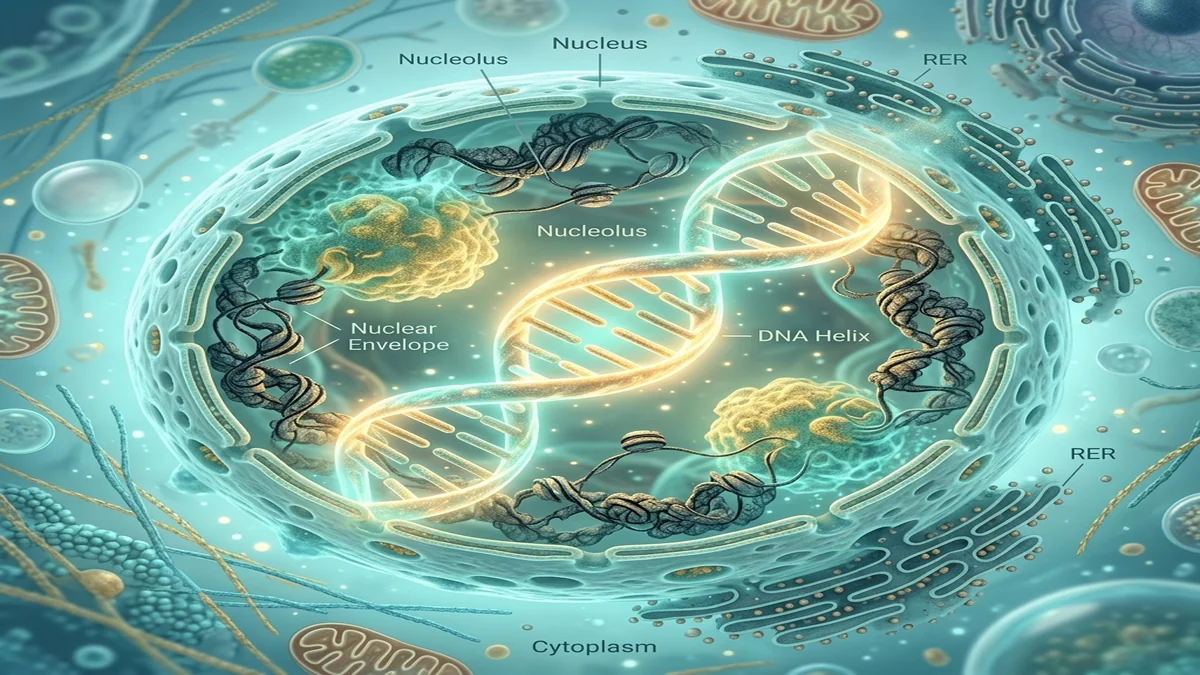
The Information Theory of Aging: Epigenetic Noise and Waddington's Canal
For decades, scientists believed that aging was caused by the random accumulation of mutations in our DNA sequence. However, groundbreaking work from the Sinclair Lab at Harvard Medical School has reshaped our understanding, introducing the Information Theory of Aging. This theory states that aging is not a loss of the genetic code itself, but a loss of the ability to read the code. It is an epigenetic failure. Think of your DNA as a digital CD and your epigenome as the laser reader. If the CD gets scratched, the laser can no longer read the data correctly, leading to skipping and errors. Epigenetics is the system of molecular switches that tells a skin cell to act like a skin cell and a liver cell to act like a liver cell.
Conrad Waddington described this using the concept of the epigenetic landscape. Visualizing cells as marbles rolling down a series of branching valleys (Waddington's canalization), they start in a state of high potential (stem cells) and eventually settle into specific valleys (specialized cells). As we age, DNA damage and environmental stressors force the cell's regulatory proteins to leave their primary duties to repair the damage. When they return, they often lose their way, causing the cell to lose its specific identity. This accumulation of epigenetic noise causes cells to malfunction, driving the physical signs of aging. Lowering biological age requires clearing this epigenetic noise and restoring the cell's original instruction set.
In developmental biology, Conrad Waddington's model illustrates how cells choose fates during differentiation. Over time, environmental toxins, metabolic overload, and persistent high-sugar diets create "friction" in this model, destabilizing the valleys and allowing specialized cells to revert to a state of confusion or transdifferentiate. This breakdown in cellular coordination leads directly to organ decline, skin thinning, and reduced cellular renewal. Re-establishing chromatin stability is thus a primary goal of clinical longevity protocols.
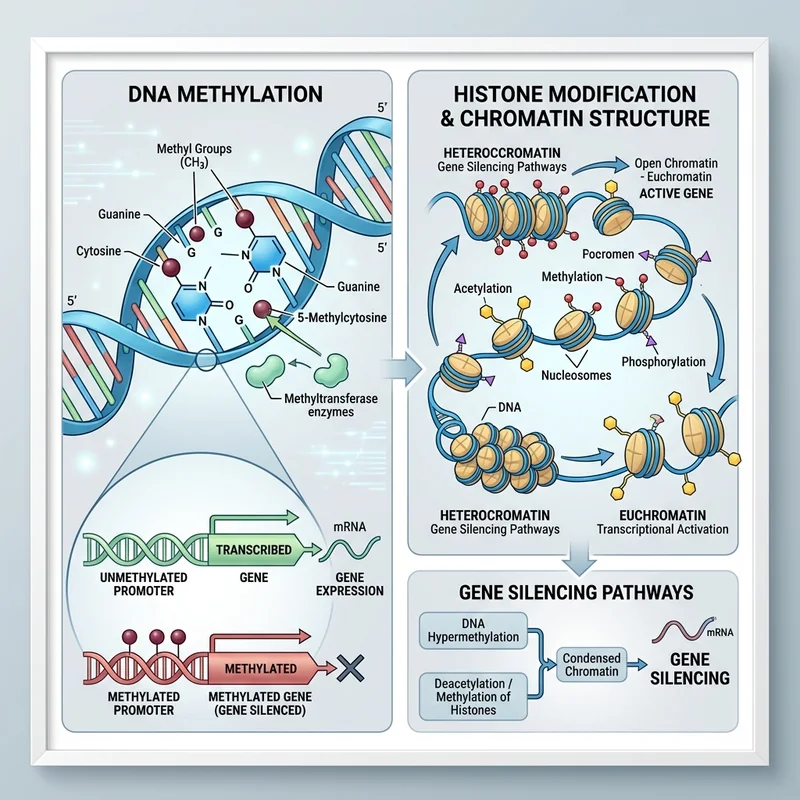
DNA Methylation Clocks: The Biomarkers of Reversal
To reverse aging, we must be able to measure it. The discovery of DNA methylation clocks by Dr. Steve Horvath revolutionized longevity science. These clocks work by analyzing specific chemical tags (methyl groups) attached to cytosine bases in DNA. As we age, these methylation patterns change in highly predictable patterns across the genome. By sequencing these specific sites, scientists can calculate your biological age with remarkable accuracy, predicting overall health span and mortality risk better than any chronological measure.
At the molecular level, DNA methylation involves the addition of a methyl group to the 5-position of the cytosine ring, typically occurring at CpG dinucleotide sites. This reaction is catalyzed by family members of DNA methyltransferases (specifically DNMT1, DNMT3a, and DNMT3b). DNMT1 is responsible for maintaining methylation patterns during cell division, copying the pattern from the parent strand to the newly synthesized strand. DNMT3a and DNMT3b are de novo methyltransferases, adding new methyl groups in response to environmental and metabolic cues. Over time, chronic inflammation, oxidative stress, and poor metabolic health disrupt these enzyme activities, leading to hypermethylation of promoter regions of protective genes (like tumor suppressors) and global hypomethylation of repetitive elements. This imbalance accelerates biological aging. Reversing these marks requires stabilizing DNMT activity through nutritional and metabolic interventions.
Second-generation clocks like GrimAge and PhenoAge have gone further by incorporating clinical biomarkers of inflammation and organ function into their algorithms. The exciting news is that these methylation marks are not permanent. They are highly responsive to environmental inputs (such as those optimized in a rheumatoid arthritis diet and lifestyle program designed to calm systemic inflammatory markers). Clinical studies from 2025-2026 have demonstrated that aggressive lifestyle, dietary, and supplement protocols can modify DNA methylation patterns, effectively rewinding the clock and lowering your biological age by 2-4 years in a matter of months. This is clinical proof that you can change your rate of cellular decay.
Sirtuin Biology: The Guardians of the Epigenome
At the core of epigenetic preservation is a family of enzymes known as sirtuins. Sirtuins are NAD+-dependent deacetylases, with SIRT1, SIRT3, and SIRT6 playing the most prominent roles in regulation. These enzymes act as cellular supervisors. When DNA damage occurs, sirtuins leave their post on the chromatin template to recruit repair machinery, including PARP1 (Poly [ADP-ribose] polymerase 1). Once the damage is repaired, the sirtuins return to the chromatin to restore gene silencing. However, if DNA damage is continuous due to poor diet, chronic stress, or high glucose exposure, the sirtuins remain permanently distracted. This chronic displacement allows genes that should be silenced to turn on, creating epigenetic chaos.
SIRT6, in particular, is highly localized to telomeres and double-strand DNA break sites. It deacetylates histone H3 at lysine 9 and lysine 56, promoting chromatin packaging and preventing genomic instability. A decrease in intracellular NAD+ levels directly starves sirtuins of their essential cofactor, rendering them inactive. Restoring NAD+ levels through precursors (such as NMN or NR) resupplies these critical enzymes, enabling them to return to the chromatin template, repress inflammatory genes, and repair damaged DNA, thereby directly lowering your biological age.
Metabolic Synergy: How Insulin Resistance Speeds Up the Biological Clock
Clinical science has firmly established that metabolic dysfunction is one of the most powerful accelerators of the epigenetic clock. Chronic hyperinsulinemia (elevated fasting insulin levels) and high glycemic variability drive systemic oxidation and non-enzymatic glycation of structural proteins. When blood insulin remains chronically elevated, it signals constant nutrient abundance to the cell, keeping the mTOR growth pathway locked in the "on" position. This prevents the activation of AMPK and blocks the initiation of autophagy. Consequently, cellular waste, damaged proteins, and dysfunctional mitochondria accumulate, generating high levels of reactive oxygen species (ROS).
<!-- wp
Ganesh G Kamble
Ganesh G. Kamble is the founder and editor of Health is Heaven. He built this site after losing his father to a preventable condition, with the mission of providing clear, trackable health indicators so others can act early. His background is in the IT industry (16 years as an enterprise consultant) and he is not a medical professional; all medical content, formulas, and guides are reviewed by a credentialed medical reviewer/board before publication.