
Medically reviewed by: Health is Heaven Medical Review Board | Published by Ganesh G Kamble, Health is Heaven | Published: June 8, 2026
The global narrative surrounding severe obesity is fundamentally broken. It is consistently framed as a purely moral failure-a lack of dietary willpower, a failure of personal character, or a refusal to implement basic self-discipline. Clinically, severe obesity is a completely unrecoverable bio-mechanical feedback loop. When a biological system reaches a certain threshold of insulin resistance, leptin blindness, and adipose-tissue-induced inflammation, the hormonal system physically refuses to dump stored body fat. Investigating the bariatric surgery cost is not about funding a cosmetically lazy way out or paying for a quick shortcut; it is about purchasing a physical, structural intervention designed to violently reboot an entirely failed metabolic operating system.
At healthisheaven.com, we approach bariatric procedures precisely as gastric engineering. The surgeon physically restricts the fuel tank (the stomach) and dramatically shortens the nutrient absorption pathway (the small intestine). This forces the body into an immediate, severe caloric deficit while simultaneously severing the receptors that produce Ghrelin (the hunger hormone). The result is the near-instantaneous remission of Type-2 Diabetes and a major reduction in systemic cardiovascular risk. However, funding this highly aggressive surgical intervention introduces massive financial variables.
In this relentlessly factual clinical and financial breakdown, we will dissect the immense price disparity surrounding the total bariatric surgery cost across the US, UK, Canada, and Australia. We will expose the strict, unforgiving hoops that insurance companies force you to jump through, analyze the mechanical differences between a Bypass and a Sleeve, outline how to utilize our integrated tools to calculate your foundational surgical eligibility, and map the path from hospital discharge to long-term weight stabilization.
SPONSORED CONTENT
Verify Your Underwriting Risk Metrics
Use our free clinical estimators to evaluate your baseline BMI, body fat percentage, blood pressure, and blood sugar risk before applying for bariatric coverage.

The Architect's Protocol
Ganesh G Kamble - Founder & Principal Systems Strategist
"From a purely systemic layout, paying out-of-pocket for bariatric surgery is the ultimate preventative hardware investment. Insurance companies will gladly pay 15,000 dollars a year for your insulin, 3,000 dollars for your blood pressure medication, and 50,000 dollars when you inevitably suffer a stroke. Yet they actively fight paying a single 20,000 dollars upfront surgical bill that would cure all three conditions instantly. You must understand how to mathematically manipulate the medical underwriting algorithms so they recognize that paying for your surgery is physically cheaper than paying for your chronic decay."
The Bio-Hardware: Vertical Sleeve vs. Gastric Bypass Anatomy
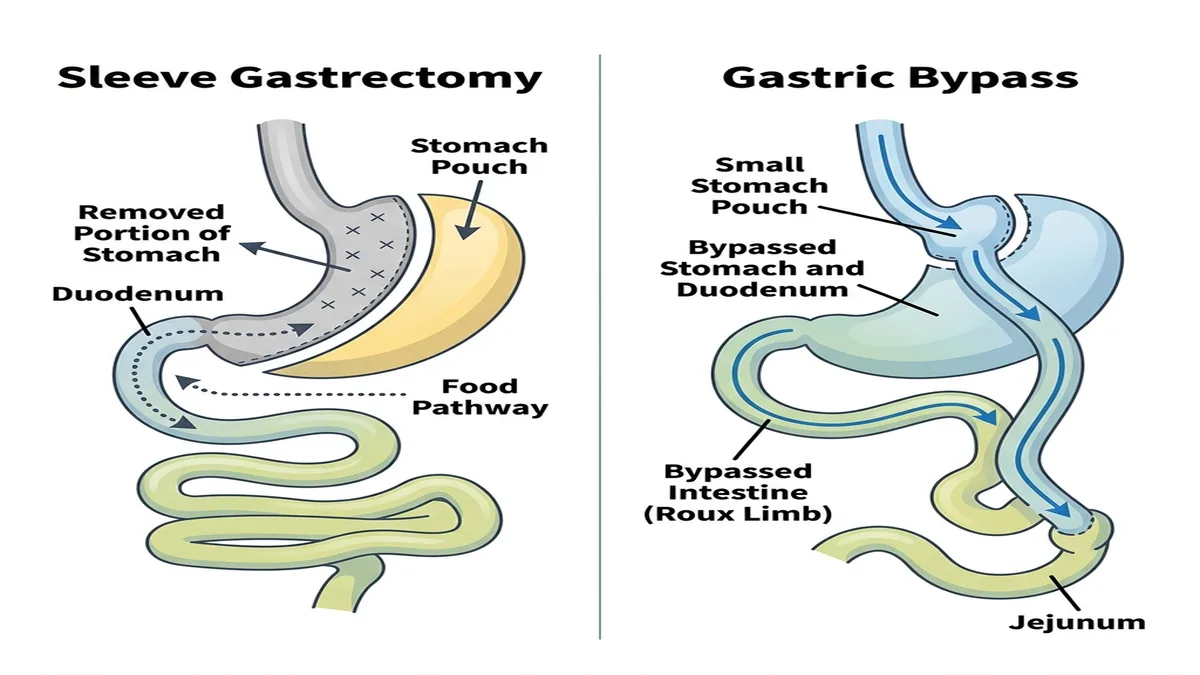
To accurately evaluate the bariatric surgery cost, you must separate the two primary forms of surgical intervention. They carry vastly different structural risks, anatomical modifications, and price tags. The surgical choice dictates not only the immediate surgical billing but also the long-term nutritional maintenance and follow-up clinical protocols. Understanding the mechanical differences is the first step in assessing your potential financial and physiological commitment.
1. Vertical Sleeve Gastrectomy (VSG)
This is the most common modern deployment. The surgeon physically cuts away and permanently removes 80 percent of your stomach, leaving a thin sleeve roughly the size of a banana. It acts as a pure mechanical restrictor, limiting the volume of food you can consume. Because the portion of the stomach that secretes Ghrelin (the hunger hormone) is amputated and discarded, your hormonal drive to eat is violently suppressed. The procedural complexity is moderate, keeping hospital fees lower.
From a physiological perspective, VSG preserves the pyloric valve, which controls the release of food from the stomach to the small intestine. This preservation significantly reduces the incidence of dumping syndrome, making the post-operative transition smoother for many patients. Furthermore, because the digestive tract's continuity remains intact, the malabsorption of vitamins and minerals is less severe than in bypass procedures, although daily supplementation is still required. The operation typically takes 60 to 90 minutes under general anesthesia, and most patients can expect to spend one night in the hospital, minimizing inpatient facility billing.
2. Roux-en-Y Gastric Bypass (RYGB)
This is the massive nuclear intervention. Not only is the stomach partitioned into a tiny pouch, but the surgeon cuts the small intestine and reroutes it directly entirely past the first section of the digestive tract. This creates BOTH mechanical restriction AND massive caloric malabsorption. It is significantly more expensive and surgically complex, demanding higher operating room fees, specialized anesthesia management, and typically a multi-day inpatient stay.
The metabolic impact of RYGB is swift and profound. By bypassing the duodenum and proximal jejunum, the surgery alters the secretion of gut hormones, including glucagon-like peptide-1 (GLP-1) and peptide YY (PYY). This hormonal shift improves insulin sensitivity almost immediately, often before any significant weight loss occurs. However, the creation of a new connection (anastomosis) between the stomach pouch and the intestine introduces risks of marginal ulcers and internal hernias. This surgical architecture requires a surgeon with advanced laparoscopic skills, which contributes to the higher overall cost of the procedure.
The 2026 Global Price Comparison Matrix
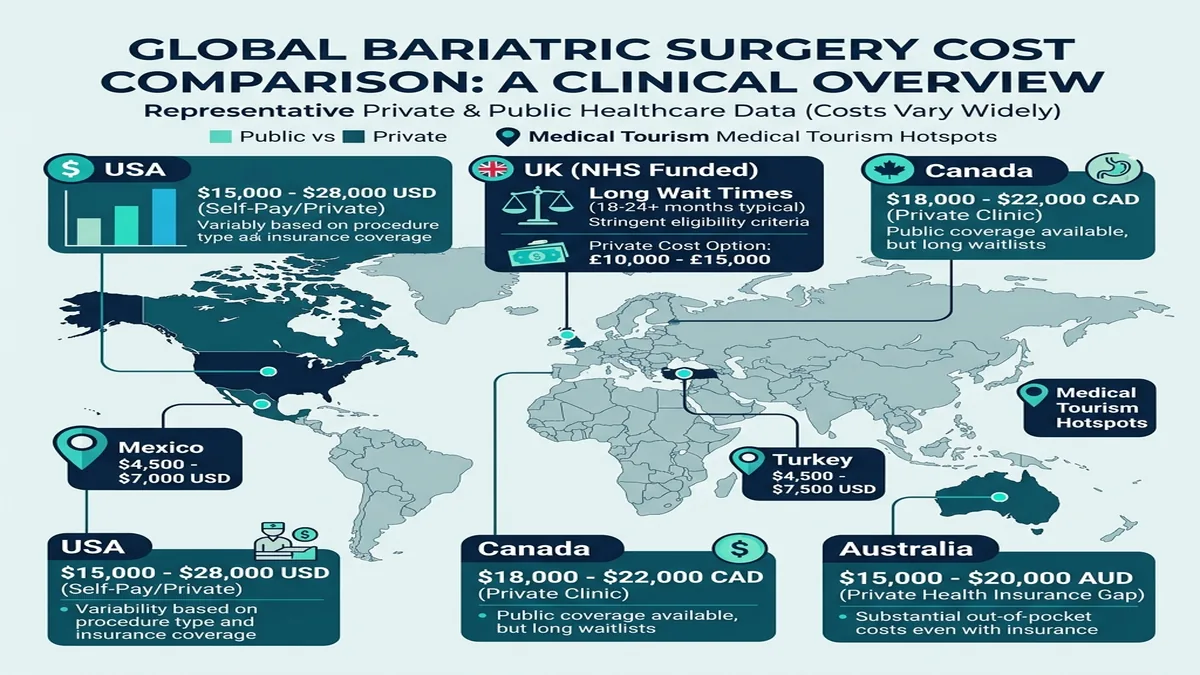
You cannot effectively hack a financial system without establishing exact operational benchmarks. Here is the strict, actuarial cross-comparison of the absolute out-of-pocket baseline costs (assuming no insurance coverage) across four major countries compared to medical tourism destinations.
| Country / Region | Gastric Sleeve (VSG) Cost | Gastric Bypass (RYGB) Cost | Average Wait Time (Public) | Insurance Coverage Details |
|---|---|---|---|---|
| United States | $15,000 - $20,000 | $23,000 - $28,000 | N/A (Private System) | Highly Variable (Requires Criteria Match) |
| United Kingdom | £8,000 - £10,000 | £11,000 - £15,000 | 2 - 5 Years (NHS wait lists) | Covered by NHS if Tier 3/4 guidelines met |
| Canada | $16,000 - $20,000 CAD | $20,000 - $25,000 CAD | 1.5 - 4 Years (Provincial wait) | Provincially covered but heavily rationed |
| Australia | $15,000 - $20,000 AUD | $18,000 - $24,000 AUD | 2 - 3 Years (Public Medicare) | Partial rebate via Private Health Insurance |
| Mexico & Turkey | $4,000 - $6,000 | $5,500 - $7,500 | Immediate (Scheduled in days) | Exclusively cash pay or medical loans |
1. The United States Baseline
In the United States, the self-pay bariatric surgery cost is heavily inflated. For a Gastric Sleeve (VSG), the baseline out-of-pocket cost averages 15,000 to 20,000 dollars. For a Gastric Bypass (RYGB), the billing routinely climbs to between 23,000 and 28,000 dollars. This pricing includes the surgeon fee, facility fees, anesthesiology fees, pre-operative laboratory work, and post-operative surgical checks. If complications occur and a longer ICU stay is required, the billing can double within 24 hours.
The disparity in pricing across different states is significant. For instance, private bariatric clinics in metropolitan areas like New York or Los Angeles often charge premium prices that exceed the national average by 20 to 30 percent, reflecting higher operational costs and local demand. Conversely, clinics in the Midwest or Southern states may offer package prices closer to the lower end of the spectrum. When reviewing self-pay contracts, patients must verify whether the quoted price is a comprehensive package or if separate invoices will be generated by the anesthesiologist and pathology laboratories, which can lead to unexpected billing post-surgery.
2. United Kingdom (NHS vs. Private)
The NHS covers bariatric surgery under strict NICE guidelines, but the waiting lists are frustratingly long-frequently stretching 2 to 5 years while your health decays. If you choose to bypass the public system and pay out-of-pocket in the UK private sector, a Gastric Sleeve costs approximately 8,000 to 10,000 pounds, while a Gastric Bypass ranges from 11,000 to 15,000 pounds. This self-pay option provides immediate scheduling but requires significant liquid capital.
Private treatment in the UK typically includes a package of post-operative care, which may cover dietary consultations for up to one year and access to bariatric support groups. This structured follow-up is a critical component of the overall package, as private clinics recognize that long-term weight maintenance is a behavioral process. However, patients must verify the limits of this support, as any emergency admissions to private hospitals for post-operative complications are usually excluded from the initial price, meaning patients are often transferred to NHS emergency rooms for critical care management.
3. Canada & Australia Baselines
In Canada, provincial healthcare plans (such as OHIP in Ontario or MSP in British Columbia) cover bariatric surgery, but the queue is heavily rationed with wait times of 1.5 to 4 years. Private clinics in Canada charge 16,000 to 22,000 CAD for a Gastric Sleeve. In Australia, public patients wait 2 to 3 years. Private patients with top-tier private health insurance can secure faster treatment but must pay out-of-pocket gap fees ranging from 5,000 to 10,000 AUD, while self-funded uninsured patients pay 15,000 to 24,000 AUD.
In Australia, the private system relies heavily on the Medicare Benefits Schedule (MBS) rebates. Private health funds will cover the hospital stay and theater fees, but the surgeon and assistant surgeon fees often exceed the schedule fee, resulting in the gap payment that the patient must pay out of pocket. Canadian private bariatric clinics often operate under strict provincial regulations, and some patients travel across provincial borders (medical tourism within Canada) to access faster treatment options at private facilities in provinces like Quebec or Alberta, where regulatory structures allow more private clinic operations.
4. The Medical Tourism Market: Tijuana & Istanbul
Because domestic costs are entirely prohibitive, hundreds of thousands of patients utilize global medical tourism. High-tier, JCI-accredited bariatric centers in Tijuana, Mexico or Istanbul, Turkey utilize identical laparoscopic hardware (such as Ethicon staplers) and charge only 4,000 to 6,000 dollars for a completely inclusive package. This packages includes local transport, luxury hotel recovery, surgeon fees, and post-operative dietary support. However, you must factor in the cost of flights, complications travel insurance, and localized follow-up care when you return home.
Safety must remain the primary metric when evaluating international options. While the cost savings are substantial, patients must conduct rigorous due diligence on the credentials of the operating surgeon. A qualified surgeon in Mexico should hold a specialization in bariatric surgery and be a member of the Mexican Association of General Surgery (AMCG) or the International Federation for the Surgery of Obesity (IFSO). In Turkey, the hospital should have a dedicated international patient department that can facilitate communication between the patient's local primary care doctor and the surgical team to ensure seamless continuity of care post-discharge.
Defeating the Insurance Underwriting Algorithm
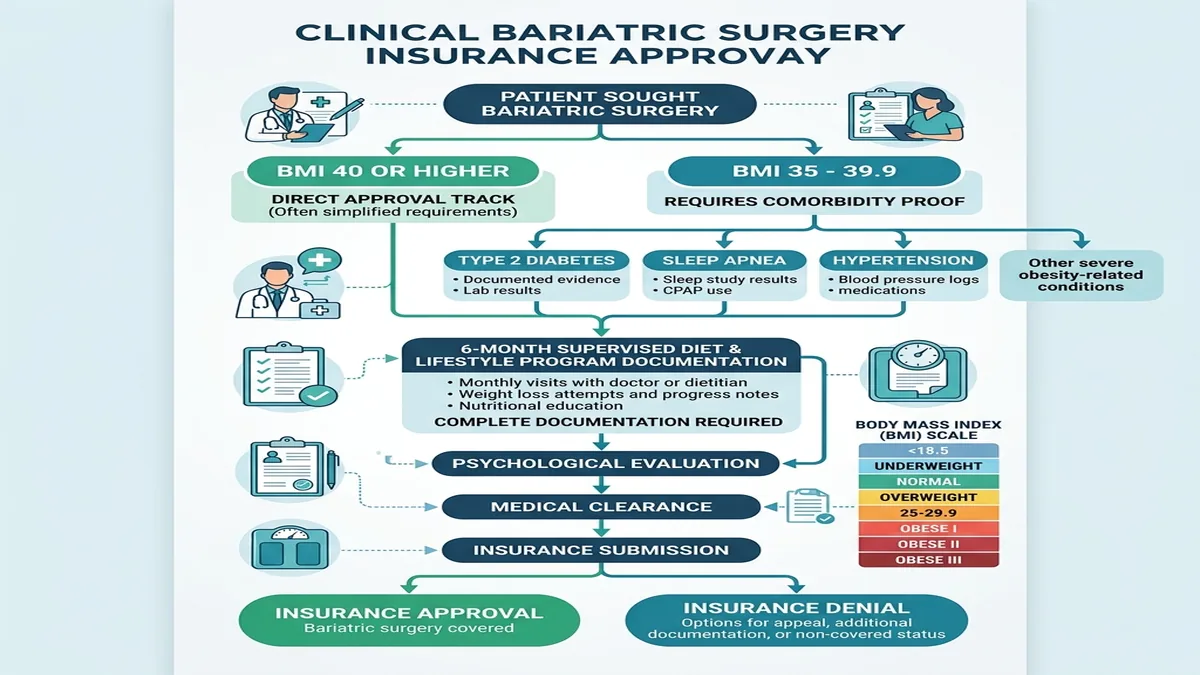
If you are attempting to force your commercial insurance or NHS provider to absorb the bariatric surgery cost, you must mathematically prove that you are a catastrophic risk to their profit margins if they do not approve the surgery. You must meet these rigid baseline requirements to trigger approval:
1. The BMI Mandate
This is the universal underwriting barrier. You must have a Body Mass Index (BMI) of 40 or higher to qualify for automatic coverage. If your BMI is between 35 and 39.9, you must prove you suffer from at least one severe, life-threatening co-morbidity, such as Type 2 Diabetes, severe Sleep Apnea (proven by a sleep study), or uncontrolled Hypertension. Use our BMI Calculator to check your current category.
The underwriting algorithms are absolute. A BMI of 34.9 will trigger an automatic system denial, even if you are suffering from multiple metabolic deficits. For patients who find themselves just below the BMI threshold, medical professionals recommend documenting body composition metrics using DXA scans to demonstrate the presence of visceral fat, which carries a higher risk profile than subcutaneous fat. Additionally, documenting waist-to-hip ratio metrics can assist in building a clinical case that the patient's adipose tissue distribution warrants aggressive surgical intervention.
2. The Supervised Diet Protocol
Insurance providers will force you to undergo a heavily documented, 3-to-6 month physician-supervised weight loss program. You must mathematically fail this tracking period to prove that non-surgical intervention is ineffective. If you do not have monthly weight check-ins and dietitian logs, the underwriting server will automatically deny your claim for administrative non-compliance.
This requirement is often the most frustrating phase of the approval process. The program must be supervised by a licensed physician or a registered dietitian, and any gaps in the monthly documentation (such as a missed appointment in month three) will reset the entire clock. The objective of this protocol is twofold: first, to establish a history of weight management attempts, and second, to prepare the patient for the behavioral modifications required post-surgery. Patients must ensure that their medical records contain detailed notes on caloric targets, exercise logs, and nutritional counseling to satisfy the underwriting criteria.
3. Constructing the Appeal Dossier
If your initial request is denied, do not panic. The first denial is often an automated cost-containment response. To defeat this, build a detailed appeal dossier containing: a letter of medical necessity from your primary care physician, copies of diagnostic sleep studies, lipid panels, HbA1c tests proving insulin resistance, and documented failure of previous weight loss attempts. Citing clinical guidelines from the ASMBS (American Society for Metabolic and Bariatric Surgery) will force the medical reviewer to evaluate your case on clinical merits rather than financial margins.
Your appeal letter should be structured logically, addressing every reason for denial specified in the insurance letter. If the denial states that your hypertension is controlled with medication, the appeal should cite clinical evidence showing that resolving the root cause (obesity) through bariatric surgery is a more effective long-term intervention than lifetime pharmaceutical management. Include peer-reviewed articles demonstrating the cost-effectiveness of bariatric surgery in reducing cardiovascular events. This actuarial approach shifts the discussion from clinical eligibility to financial risk management, which is the language underwriters understand.
Post-Operative Recovery Timeline & Nutritional Blueprint
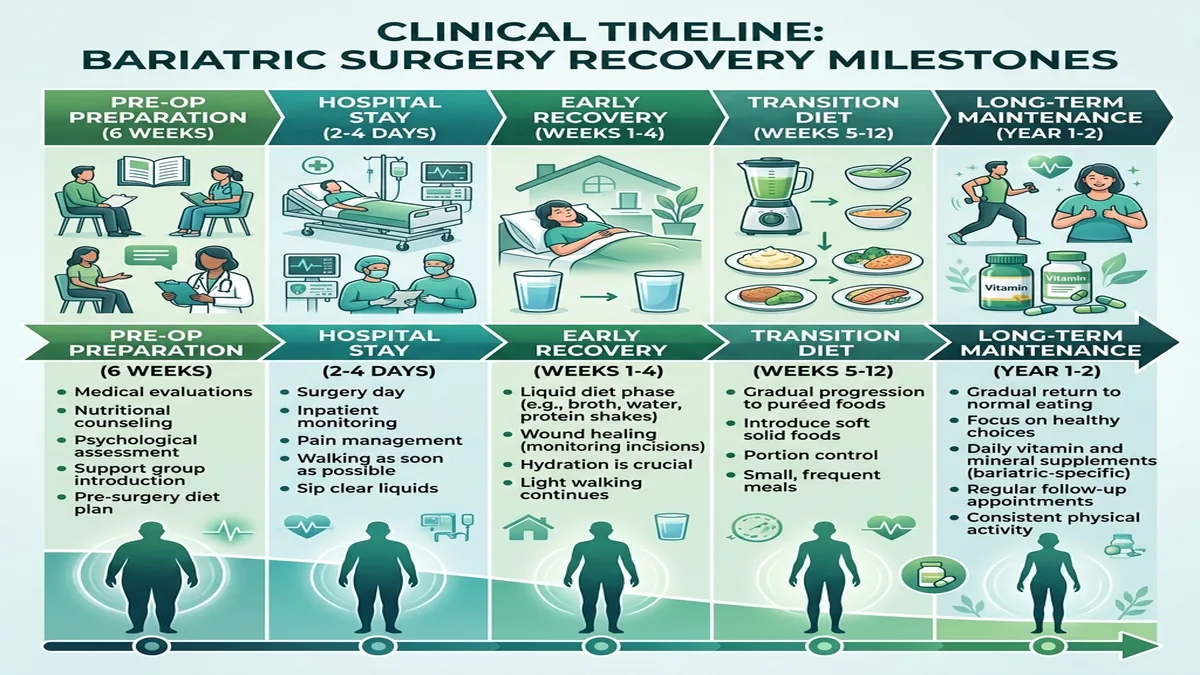
Survival and long-term success after gastric restructuring demand strict adherence to a highly defined post-operative pathway. The surgery only alters the physical hardware; you must manually reprogram the software (your behavioral eating patterns) to avoid severe complications like anastomotic leaks or dumping syndrome.
The Four-Phase Dietary Progression
Your new stomach sleeve or bypass pouch cannot tolerate solid food during the initial healing phase. Moving too quickly to solids can tear surgical staples, leading to life-threatening sepsis. You must progress through these strict phases:
- Phase 1: Clear Liquids (Days 1 - 7): Water, unsweetened decaf tea, broth, and diluted electrolyte drinks. You must sip slowly, limiting fluid intake to 1 to 2 ounces per hour. Use our Water Intake Calculator to track hydration metrics without stretching the pouch.
- Phase 2: Full Liquids (Weeks 2 - 3): Protein shakes, unsweetened yogurt, thin cream soups, and skim milk. Your primary goal is meeting a protein target of 60 to 80 grams daily to prevent muscle wasting.
- Phase 3: Pureed Foods (Weeks 4 - 5): Blended lean meats, eggs, cottage cheese, and soft fish. All food must be blended to the consistency of baby food. No chunks are allowed.
- Phase 4: Soft to Solid Foods (Week 6+): Soft vegetables, tender meats, and small portions of fruit. You must chew every bite 30 times and separate liquids from solids by 30 minutes to prevent dumping syndrome.
Adhering to the protein target is the most challenging task during the liquid and pureed phases. Since your stomach capacity is reduced to roughly 2 to 4 ounces, you cannot consume large volumes of food at once. Therefore, you must focus on protein-dense foods and utilize high-quality whey protein isolates or collagen peptides to meet your physiological needs. Dehydration is another common cause of readmission during the first month, which is why tracking your fluid intake throughout the day is essential to protect your kidneys.
Hormonal & Metabolic Recalibration
During the first six months, your body undergoes massive endocrine shifts. The rapid fat loss releases stored fat-soluble toxins and hormones, which can cause intense mood swings, fatigue, and temporary hair loss (telogen effluvium). Your insulin sensitivity will spike, resolving diabetes, but you must monitor your blood sugar to prevent reactive hypoglycemia. Use our Blood Sugar Checker to track your glucose levels during this metabolic transition.
The hormonal reset also affects reproductive health. In women with Polycystic Ovary Syndrome (PCOS), the reduction in insulin resistance leads to a rapid restoration of ovulation, which increases fertility significantly. Since pregnancy is contraindicated during the rapid weight loss phase (due to potential nutritional deficiencies for the fetus), bariatric clinics mandate the use of reliable contraception for the first 12 to 18 months post-op. In men, testosterone levels typically rise as adipose tissue (which converts testosterone to estrogen) is reduced, leading to improvements in energy and body composition.
Managing the 3-Week and 6-Month Plateaus
Almost every patient experiences a complete halt in weight loss around week 3 and month 6. This is a normal physiological adjustment, not a surgical failure. As your body adapts to the rapid deficit, it down-regulates thyroid hormones and reduces metabolic rate. To break these plateaus, calculate your adjusted energy requirements using our TDEE Calculator, focus on strength training to rebuild lean mass, and ensure you are meeting your daily hydration goals.
To overcome the week 3 plateau, patience is required. This plateau is primarily caused by water retention as the body adjusts its fluid balance after the initial drop in glycogen stores. For the 6-month plateau, a more active intervention is necessary. This is where calculating your active energy expenditure becomes critical. Incorporating progressive overload in your strength training routine can stimulate muscle protein synthesis, raising your basal metabolic rate. Adjusting your macronutrient distribution to prioritize protein while managing carbohydrate intake can assist in re-initiating the weight loss process.
Clinical Videos on Bariatric Surgery
To help you visualize the mechanical and anatomical realities of bariatric interventions, we have embedded detailed clinical videos. These videos demonstrate the differences between sleeve gastrectomy and gastric bypass procedures, helping you understand the structural changes made to your digestive system.
Frequently Asked Questions
How long does it take to recover from bariatric surgery and return to work?
For laparoscopic procedures (VSG or RYGB), most patients spend 1 to 2 nights in the hospital and can return to light desk work within 2 to 3 weeks. However, complete internal tissue healing takes 6 to 8 weeks, during which you must avoid lifting anything over 15 pounds to prevent surgical hernias.
Does bariatric surgery guarantee permanent weight loss?
No, bariatric surgery is a tool, not a permanent cure. While it forces massive weight loss in the first 12 to 18 months, the stomach pouch can stretch over time. If a patient returns to high-sugar liquids, grazing on processed carbohydrates, or eating through fullness, weight regain will occur.
What is dumping syndrome and how can it be avoided?
Dumping syndrome occurs primarily in bypass patients when high-sugar foods or liquids enter the small intestine too quickly, drawing in water. Symptoms include severe nausea, abdominal cramping, sweating, and rapid heart rate. Avoid it by omitting simple sugars and waiting 30 minutes after meals to drink fluids.
Will I need to take vitamins for the rest of my life after surgery?
Yes, permanent daily supplementation is mandatory, especially after a Gastric Bypass (RYGB) which bypasses the primary nutrient absorption zones. You must take high-dose multivitamins, Vitamin B12, Calcium Citrate, Iron, and Vitamin D, and undergo lifetime annual blood tests to monitor for nutritional deficiencies.
Scientific References & Clinical Sources
- American Society for Metabolic and Bariatric Surgery (ASMBS): Clinical standards, guidelines, and safety metrics for metabolic surgery. Explore ASMBS Guidelines
- National Institutes of Health (NIH): Long-term health outcomes and economic evaluation of bariatric surgery. Access NIH Data
- The Lancet (Diabetes & Endocrinology): Multi-center trials evaluating metabolic remission rates after surgical intervention. Search The Lancet
HealthisHeaven maintains absolute clinical integrity by sourcing data exclusively from high-authority, peer-reviewed medical and actuarial institutions. Every calculation and recommendation is cross-referenced against the latest biological benchmarks.
This article is for informational purposes only and is not a substitute for professional medical advice, diagnosis, or treatment. Always consult a qualified healthcare provider with questions about a medical condition. See our full Medical Disclaimer.

Ganesh G Kamble
Ganesh G Kamble is the founder and editor of Health is Heaven. He spent 14 years as a techno-functional consultant on enterprise ERP systems in Bangalore before turning his attention to health publishing. His background is technical, not clinical, and he is not a medical professional. He started Health is Heaven because most online health information is either too vague to act on, too technical to understand, or too commercial to trust. The site's mission is to provide clear, evidence-based answers to common health questions, with sources you can verify, alongside free interactive calculators built using standard medical formulas published by recognised authorities including the World Health Organization, the U.S. Centers for Disease Control and Prevention, the American Heart Association, the American Diabetes Association, and the National Institutes of Health. Every article is reviewed against authoritative sources before publishing, dated with both publish and last-updated timestamps, and clearly marked as informational only when covering medical topics. Articles dealing with diagnosis, treatment, or medication recommend speaking with a qualified healthcare provider. The site does not accept paid placements that influence editorial content; any future advertising is clearly labelled and separated from articles. Ganesh is based in Bangalore, India, and connects with readers and collaborators on LinkedIn.