
Medically reviewed by: Health is Heaven Medical Review Board | Published by Ganesh G Kamble, Health is Heaven | Published: April 11, 2026 · Last updated: October 28, 2026
This ultimate keto diet guide for beginners explores how the ketogenic diet-a highly structured, low-carbohydrate, lipid-dominant nutritional protocol-shifts human cellular metabolism away from glucose dependency toward fatty acid oxidation and hepatic ketone synthesis. While widely popularized in modern culture as a rapid intervention for weight loss, the ketogenic diet has a robust clinical history dating back to the 1920s, when it was engineered at the Mayo Clinic as an alternative treatment for drug-resistant pediatric epilepsy. Under strict clinical supervision, this metabolic reprogramming has demonstrated significant utility in correcting glycemic imbalances, restoring peripheral insulin sensitivity (which is a core requirement when learning how to improve metabolic flexibility), suppressing systemic inflammatory cascades, and optimizing cardiorespiratory efficiency through cellular mitochondrial adaptations.
Adopting a ketogenic protocol is not a casual dietary modification. It is a precise biochemical reconfiguration that requires an absolute commitment to metabolic mechanics, daily electrolyte balancing, and strict nutritional tracking. This comprehensive clinical guide explores the fundamental science of ketosis, the essential mathematical matrices required to sustain lipid-driven energy pathways, step-by-step initiation guidelines, and evidence-based strategies to bypass common physiological transition obstacles.
Biochemical Foundations of Metabolic Ketosis (Diet Overview)
To successfully initiate and sustain ketosis, one must understand the cellular energy transition that occurs when systemic glucose availability is deliberately restricted. Under standard nutritional patterns, the human body relies primarily on glycolysis: the enzymatic breakdown of glucose to generate adenosine triphosphate (ATP), the primary energy currency of cells. Dietary carbohydrates are converted into glucose, and any excess is stored in the liver and skeletal muscles as glycogen. The liver stores approximately 70 to 100 grams of glycogen, while skeletal muscle houses between 300 and 400 grams, depending on muscle mass and conditioning.
When daily net carbohydrate intake is restricted to less than 25 grams, the body quickly depletes its liver glycogen reserves, usually within 24 to 48 hours of strict deprivation. As circulating blood glucose levels decline, the pancreas suppresses insulin secretion and elevates the release of glucagon. This hormonal shift triggers systemic lipolysis: the mobilization of stored triacylglycerols from adipose tissue into free fatty acids (FFAs) and glycerol. These free fatty acids enter the circulatory system and are transported to the liver for metabolic processing.
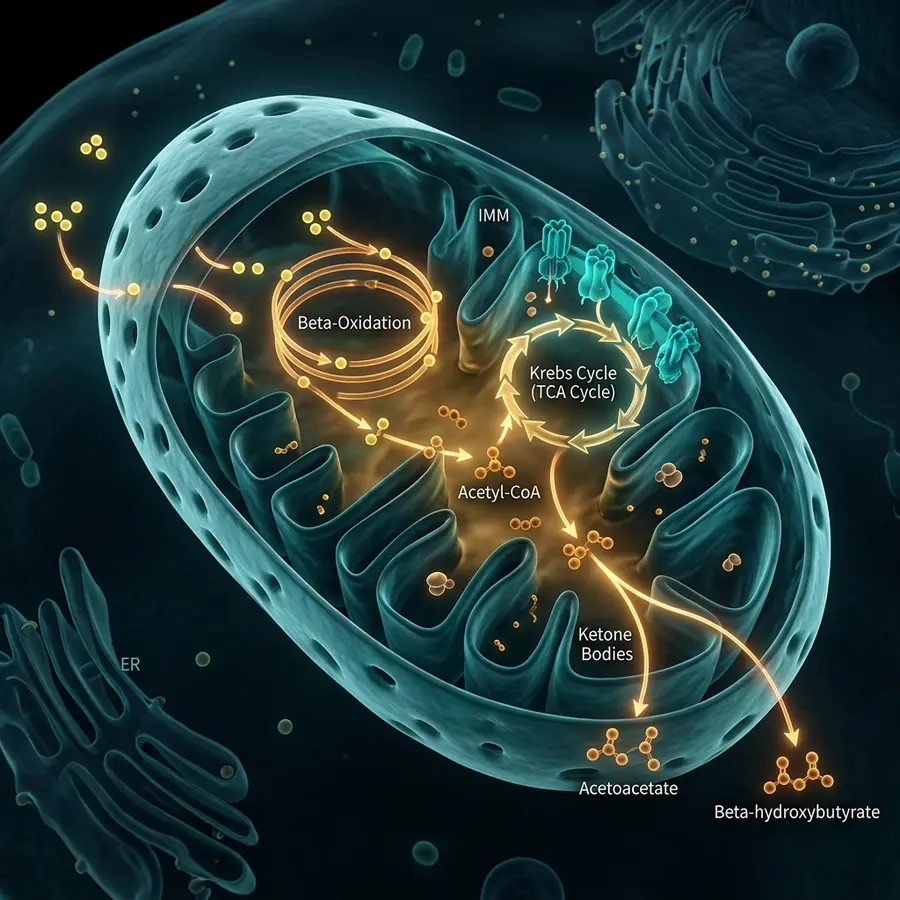
Once inside hepatic cells, fatty acids undergo a multi-step mitochondrial breakdown process known as beta-oxidation. Under normal carbohydrate-rich conditions, the entry of fatty acids into the mitochondria is regulated by malonyl-CoA, a key intermediate in fatty acid synthesis that inhibits the enzyme carnitine palmitoyltransferase-1 (CPT-1). As insulin drops and glucagon rises during carbohydrate restriction, malonyl-CoA levels plummet, lifting the inhibition on CPT-1. This allows free fatty acids to flood into the mitochondrial matrix, where they are sequentially oxidized into acetyl-CoA molecules.
Under standard metabolic states, acetyl-CoA combines with oxaloacetate to enter the citric acid cycle (TCA cycle) for ATP production. However, during glycogen depletion, oxaloacetate is diverted toward gluconeogenesis to maintain basal blood glucose levels for glucose-dependent tissues like red blood cells. This leaves an excess of acetyl-CoA in the liver. The liver mitochondria redirect this surplus acetyl-CoA into ketogenesis, synthesizing three distinct organic molecules known collectively as ketone bodies:
- Acetoacetate (AcAc): The initial ketone body synthesized from two molecules of acetyl-CoA. A portion of acetoacetate is excreted in the urine, while the majority is converted into beta-hydroxybutyrate or spontaneously decarboxylates into acetone.
- Beta-Hydroxybutyrate (BHB): Synthesized via the reduction of acetoacetate by the enzyme D-beta-hydroxybutyrate dehydrogenase. BHB is the most stable and abundant ketone body in the Circulation, serving as the primary fuel source for peripheral tissues and the central nervous system.
- Acetone: A volatile byproduct created by the spontaneous non-enzymatic decarboxylation of acetoacetate. Due to its high volatility, acetone is not used as fuel; instead, it is eliminated through the lungs and kidneys, giving rise to the characteristic sweet or fruity breath associated with early ketosis.
Ketone bodies exit the liver via monocarboxylate transporters (MCTs) and circulate to extrahepatic tissues, including cardiac muscle, skeletal muscle, and the brain. Because ketones can readily cross the blood-brain barrier via MCT1 and MCT2 transporters, they provide a highly efficient alternative fuel for the central nervous system, which normally relies on glucose. In peripheral tissues, BHB is converted back into acetoacetate, then into acetoacetyl-CoA by the tissue-specific enzyme succinyl-CoA:3-ketoacid CoA-transferase (SCOT), and finally split back into two molecules of acetyl-CoA. These acetyl-CoA molecules enter the TCA cycle locally, generating abundant ATP via oxidative phosphorylation.
The Macronutrient Matrix: Calibrating Your Metabolic Ratios
Achieving nutritional ketosis requires precise mathematical calibration of daily macronutrient intake. Relying on guesswork often leads to metabolic stagnation, where insulin remains too high to allow liver glycogen depletion, or protein intake is elevated enough to stimulate gluconeogenesis to a degree that limits ketone production. To establish your starting metrics, you should utilize the clinical free keto macros calculator (available on our free health tools and calculators hub), which calculates your personalized energetic limits based on basal metabolic rate, physical activity coefficient, and specific health objectives.

A standard clinical ketogenic protocol is structured around specific caloric percentages:
- Lipids: approximately 70 to 75 percent of daily energy from high-quality fats.
- Protein: 20 to 25 percent of daily energy from bioavailable sources.
- Net carbohydrates: 5 to 10 percent of daily energy.
For therapeutic interventions, such as pediatric epilepsy management, clinical protocols are even more aggressive, employing a 4:1 or 3:1 lipid-to-non-lipid mass ratio, where up to 90 percent of calories are derived from fat. For general metabolic restoration and weight management, the standard matrix is highly effective. Let us examine the three components of this nutritional equation:
1. The Carbohydrate Ceiling: Under 25g Net Daily
Carbohydrate restriction is the absolute physiological gatekeeper of ketosis. To prevent the pancreas from secreting insulin and signaling the liver to store glycogen, total daily carbohydrate intake must remain below a hard ceiling of 20 to 25 net grams. Net carbohydrates are calculated by subtracting non-digestible dietary fibers and specific sugar alcohols from the total carbohydrate mass. Consuming high-glycemic carbohydrates (such as bread, rice, pasta, cereal, sugar, and most fruits) causes an immediate rise in blood glucose, provoking an insulin spike that halts hepatic ketogenesis and locks fat stores for up to 24 hours.
2. The Protein Calibration: 20% to 25% of Energy
While animal-based options are common, vegetarians can consult our high protein vegetarian foods list to source keto-friendly plant proteins. Protein is critical for preserving skeletal muscle tissue, maintaining enzymatic function, and supporting cellular repair. However, protein intake must be carefully calibrated. Consuming excessive protein relative to your body's physiological requirements can trigger gluconeogenesis (GNG), a metabolic pathway where the liver converts excess amino acids (specifically glucogenic amino acids like alanine and glutamine) into glucose. Recent 2026 research continues to emphasize that while GNG is a demand-driven process necessary to supply glucose to vital tissues like red blood cells, excessive protein intake can elevate basal insulin levels, suppressing hepatic ketone synthesis and reducing metabolic efficiency. Your daily protein target should range between 0.8 and 1.2 grams per pound of lean body mass, ensuring adequate muscle preservation without metabolic disruption.
3. The Lipid Foundation: 70% to 75% of Energy
Under a ketogenic protocol, dietary fat is not merely an energy source; it is the primary driver of satiety, hormonal synthesis, and metabolic adaptation. Fats must supply the bulk of daily caloric intake. However, the quality of these lipids is of paramount clinical importance. The diet should be anchored by unrefined, single-ingredient fats rich in monounsaturated and saturated fatty acids. Examples include extra virgin olive oil, cold-pressed avocado oil, grass-fed butter, ghee, coconut oil, wild-caught salmon, and avocados. Conversely, highly processed, industrial seed oils (such as canola, corn, soybean, safflower, and sunflower oils) must be strictly eliminated. These refined oils are rich in omega-6 polyunsaturated fatty acids, which are highly susceptible to lipid peroxidation and can induce systemic mitochondrial stress and vascular endothelial inflammation.
10 Science-Backed Clinical Benefits of Ketogenic Adaptation
Transitioning into a sustained state of nutritional ketosis triggers comprehensive physiological adaptations that extend far beyond simple calorie restriction. Peer-reviewed clinical literature has documented numerous systemic benefits resulting from this metabolic shift:
1. Glycemic Control and Insulin Sensitivity
By eliminating high-glycemic carbohydrates, the ketogenic diet minimizes postprandial blood glucose excursions and reduces the demand for pancreatic insulin secretion. Over time, this down-regulation of insulin levels permits the restoration of peripheral insulin sensitivity. Clinical studies published in journals such as Diabetes Therapy demonstrate that patients with type 2 diabetes undergoing supervised ketogenic protocols experience significant reductions in glycated hemoglobin (HbA1c), often allowing for a structured reduction or complete discontinuation of exogenous insulin and oral hypoglycemic medications under medical supervision.
2. Adipose Tissue Mobilization and Visceral Fat Loss
Low levels of circulating insulin lift the physiological inhibition on hormone-sensitive lipase (HSL), the primary enzyme responsible for mobilizing fatty acids from adipose tissue. Consequently, the body is able to easily access and oxidize stored body fat (which can be monitored using our <a href="/

Ganesh G Kamble
Ganesh G. Kamble is the founder and editor of Health is Heaven. He built this site after losing his father to a preventable condition, with the mission of providing clear, trackable health indicators so others can act early. His background is in the IT industry (16 years as an enterprise consultant) and he is not a medical professional; all medical content, formulas, and guides are reviewed by a credentialed medical reviewer/board before publication.