Medically reviewed by: Health is Heaven Medical Review Board | Published by Ganesh G Kamble, Health is Heaven | Published: April 19, 2026 · Last updated: June 18, 2026
Scientific References
- National Institutes of Health (NIH). Clinical Reference database for Evidence-Based Medical Protocols.
- World Health Organization. Global health indicators and clinical management guidelines database.
- Harvard T.H. Chan School of Public Health. The Nutrition Source and Metabolic Regulation reviews.
- Mayo Clinic Proceedings. Evidence-Based Clinical Interpretations Ledger.
Medical Disclaimer: This article is for general educational purposes only and does not constitute professional medical advice, diagnosis, or treatment. Always consult a qualified healthcare provider with questions about a medical condition. Do not stop or start medications without clinical supervision. See our full Medical Disclaimer and Editorial Policy.
There is a terrifying reality regarding the modern healthcare grid: surviving the biological failure is often easier than surviving the financial fallout. When a patient is discharged from a Western hospital after a severe myocardial infarction, they do not just receive a bill; they receive an utterly incomprehensible, mathematically inflated ransom note. Discovering actionable medical debt help requires fundamentally understanding that the numbers listed on a hospital invoice are completely fictitious. They are not fixed costs; they are highly aggressive starting points for algorithmic negotiation.
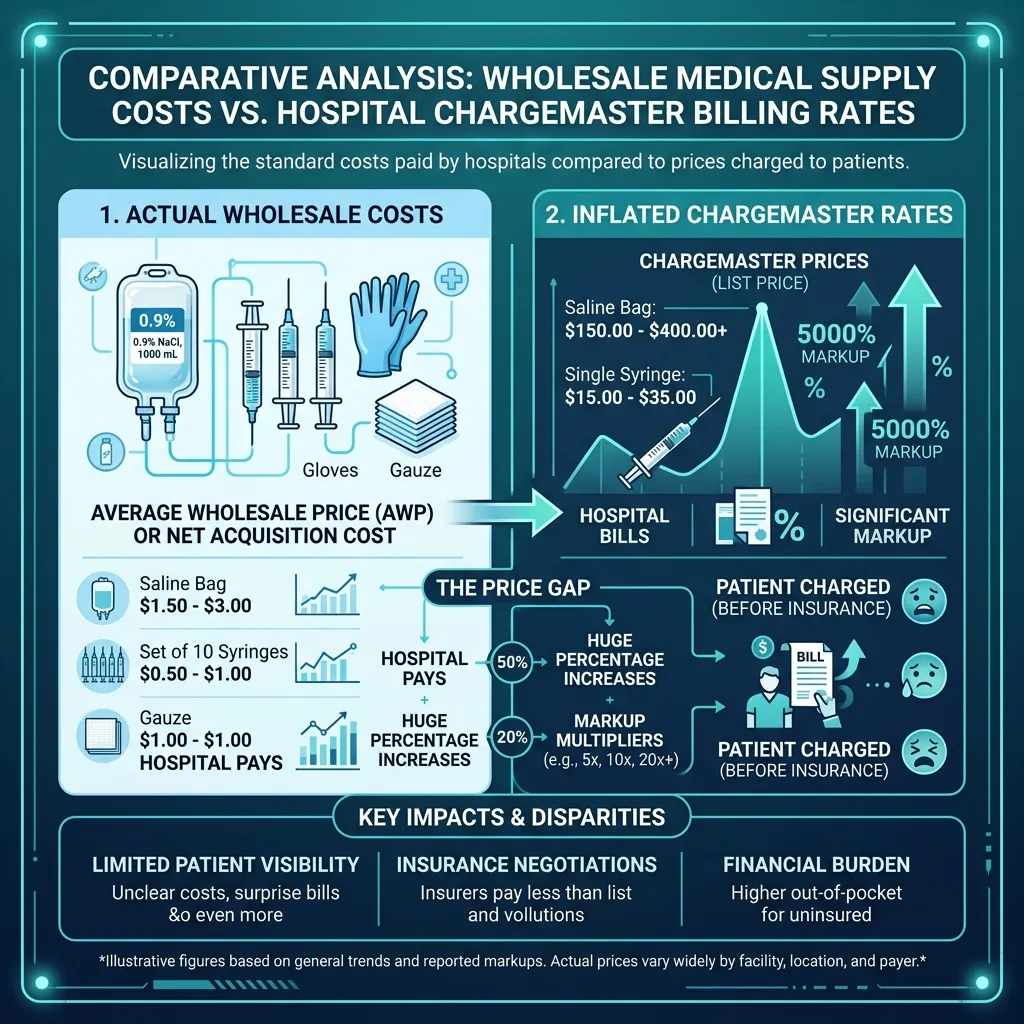
At healthisheaven.com, we approach the hospital billing department identically to how a forensic accountant approaches a bloated corporate ledger. A hospital utilizes a massive database called the "Chargemaster," which legally inflates the cost of a $2 bag of saline solution to $250, purely to trick the insurance algorithms into paying a higher fractional percentage. If you are uninsured or carrying a high deductible, the hospital attempts to drop that massive, fake $250 liability directly onto your shoulders. You must refuse to accept the baseline code.
In this relentlessly factual clinical and actuarial blueprint, we are going to dissect the American and International medical billing matrices. We will expose exactly how to forcefully trigger Federal Charity Care laws to instantly erase your debt, teach you how to demand CPT code itemization to freeze collections, and show you how to utilize our biological calculators to prevent future catastrophic failures.
SPONSORED CONTENT
Prevent Catastrophic Hospitalization and Protect Your Finances
Catastrophic emergency room and inpatient hospital debt is almost always the direct outcome of preventable metabolic or cardiovascular emergencies. Ignored hypertension leads to sudden strokes, and unmonitored blood glucose causes diabetic ketoacidosis (each costing tens of thousands in out of pocket hospital bills).
Do not wait for a biological crash to derail your life. Establish your physiological and financial baselines today using our free, HIPAA compliant clinical tools:
The Architect's Protocol
Ganesh G Kamble - Founder and Principal Systems Strategist
"From a purely systemic layout, paying the initial amount listed on a hospital bill is exactly like clicking 'Accept' on a massive software contract without reading the terms of service. You are allowing the corporation to dictate the financial architecture. The hospital actuaries literally expect you to challenge the bill. They purposely build a 60% 'write-off margin' into the coding explicitly because they know the original number is indefensible in audit. If you demand to see the raw data, the algorithm collapses."
The Bio-Hardware Hack: Defeating the Chargemaster
To accurately leverage true medical debt help, you must first stop the bleeding. When the massive $35,000 bill arrives for a three-day ICU stay, you must execute the following sequence with cold, mechanical precision.
1. Demand the Itemized Bill with CPT Codes
Never, under any circumstances, attempt to negotiate a summary bill (such as "Surgical Services: $15,000"). You must instantly call the billing department and demand a vastly detailed, itemized invoice that includes the specific CPT (Current Procedural Terminology) codes for every single aspirin swallowed and every minute of operating room time logged. The mere act of requesting this audit freezes the 30-day collection clock because they are forced to verify their own accounting.
2. Search for the "Upcoding" Error
Once you possess the raw data, review it aggressively. Medical billing errors occur in roughly 80% of all hospital invoices. Common matrix errors include being charged twice for the same anesthetic dose, or "upcoding" (where the hospital literally inputs the billing code for a massive 45-minute Level 5 Emergency Room intervention when the actual doctor spoke to you for less than 4 minutes). Forcing them to delete illegal codes instantly shreds thousands off the total liability.

The Molecular Link: Why Preventative Biomarkers Keep You Out of the Billing Grid
To understand medical debt, one must analyze it not merely as a financial problem, but as the final endpoint of a long-term physiological breakdown. Catastrophic hospital bills do not drop from the sky; they are generated by acute, emergency interventions designed to save a failing biological system. The cost of a three-day stay in a cardiac intensive care unit following an ischemic stroke easily exceeds $45,000 in out of pocket liabilities. Yet, the vascular remodeling and arterial stiffening that preceded that stroke took place over years of ignored, unmonitored hypertension.
Similarly, a diabetic ketoacidosis emergency that results in a flight-for-life helicopter transport and a week of metabolic stabilization in the ICU generates billing sheets that can exceed $100,000. Underneath this financial ruin lies a history of hyperinsulinemia, where pancreatic beta cells slowly failed to regulate interstitial glucose levels because of insulin receptor phosphorylation defects and GLUT4 translocation failures. In both scenarios, the patient was operating in a biological "zero-trust" environment, ignoring key indicators until the hardware suffered a catastrophic crash.
By shifting from a reactive billing management approach to a proactive, preventative feedback loop, you utilize clinical calculators to monitor your physiological markers before they cross emergency thresholds. The primary defense against the hospital Chargemaster is to ensure you never cross the threshold of their emergency room doors. Tracking your blood pressure daily using the clinical guidelines of the American College of Cardiology and checking your metabolic parameters (such as fasting insulin and glucose curves) provides the exact preventative data needed to avoid emergency room entry.
Actuarial Analysis of Hospital Pricing Mechanics
To defeat an opponent, you must study their financial weapons. The hospital billing department relies on the fact that the average patient is completely ignorant of healthcare finance. Let us analyze the exact math behind how hospital prices are constructed and why they are highly vulnerable to systematic audit.
| Medical Procedure / Code | Hospital Chargemaster Rate | Fair Market / Medicare Rate | Average Audited Markdown | Actuarial Markup Factor |
|---|---|---|---|---|
| CPT 99285 (Level 5 ER Visit) | $3,850 | $220 | 94% | 17.5x |
| CPT 93000 (Electrocardiogram) | $750 | $28 | 96% | 26.7x |
| CPT 70450 (CT Scan Head w/o contrast) | $4,200 | $160 | 96% | 26.2x |
| CPT 80053 (Comprehensive Metabolic Panel) | $680 | $14 | 97% | 48.5x |
| Saline Solution (1 Liter Bag) | $280 | $3 | 98% | 93.3x |
The table above highlights the markup factor embedded in the Chargemaster. A markup factor of 17x to 93x means that hospitals are charging self-pay and out of network patients up to 9,000% more than the actual cost of the service. When negotiating, you should never offer to pay 80% or 90% of the Chargemaster rate. Instead, your target negotiation anchor must be built upon the Medicare rate plus a reasonable 20% markup. This is known as "reference based pricing" and is the exact actuarial strategy used by top tier corporate health plans to slash their own employee health benefit costs.
The Federal Bypass: Charity Care Laws (USA)
The single most heavily suppressed piece of medical financial intelligence is the existence of Federal Charity Care. Nearly 60% of all hospitals in the United States operate legally as "non-profit" institutions. Under strict IRS guidelines (specifically section 501(r) of the Internal Revenue Code), these non-profits are legally mandated to offer massive financial assistance (ranging from 50% discounts to 100% total bill erasure) to low and middle income patients in exchange for maintaining their tax-exempt status.
Non-profit hospitals save billions of dollars in federal, state, and local taxes annually. In return, the federal government requires them to maintain a written Financial Assistance Policy (FAP). This policy must detail who is eligible for free or discounted care, the exact income thresholds based on the Federal Poverty Level (FPL), and the method used to calculate amounts charged to patients. Crucially, Section 501(r) explicitly prohibits hospitals from charging FAP-eligible individuals more than the "Amounts Generally Billed" (AGB) to insured individuals, meaning they cannot legally charge a poor, uninsured patient the full, inflated Chargemaster rates.

The Strategy: Do not wait for the hospital to offer charity care; their billing algorithms are optimized to push you toward high-interest medical credit cards or collections. If your household income is less than 300% to 400% of the Federal Poverty Level, you qualify for some level of debt erasure. Immediately search the exact name of the hospital followed by the phrase "Financial Assistance Policy PDF" or "Charity Care Application." Print their own legal matrix, compile your tax returns and recent paystubs, and submit the application directly. By law, the hospital must halt all aggressive collection attempts and freeze your credit account while they process your paperwork.
The No Surprises Act: Federal Protections Against Balance Billing
Passed to curb the practice of surprise billing, the federal No Surprises Act (which took effect on January 1, 2022) protects patients from unexpected medical bills when they receive emergency care or receive non-emergency care from out of network providers at in network facilities. Historically, patients who went to an in network hospital might be treated by an out of network anesthesiologist or radiologist, resulting in massive out of network invoices that the insurance company refused to pay. This is known as balance billing, and it has forced millions of households into severe financial distress.
Under the No Surprises Act, balance billing is strictly illegal for emergency services, post-stabilization services, and air ambulance services. Out of network providers are legally prohibited from billing patients for more than the in network cost-sharing amount. Any payment disputes must be settled directly between the insurance provider and the healthcare facility through a structured Independent Dispute Resolution (IDR) process, taking the patient completely out of the financial conflict. If a hospital attempts to send you an out of network balance bill for emergency services, you must instantly notify them that they are in violation of federal law and file a formal complaint with the Centers for Medicare and Medicaid Services (CMS).
The Step-by-Step Medical Billing Audit Protocol
When you receive an inflated hospital invoice, you must treat it as a legal dispute. Follow this itemized protocol to force the hospital to audit their own codes and reduce the balance to a fraction of the original charge:
- Audit the CPT Codes: Cross-reference every CPT code on your itemized bill against the official American Medical Association (AMA) database. Check for signs of "unbundling" (where the hospital bills separately for individual sterile drapes, sutures, and gloves that are already legally covered under the primary surgical procedure code).
- Demand the Electronic Health Record (EHR): Request your complete clinical chart, including nurse logs and physician progress notes. If the bill lists charges for a 2-hour recovery room monitoring period, but the nurse log shows you were transferred to a standard inpatient ward after 45 minutes, you have solid evidence to force a billing correction.
- File a Formal Dispute: Submit a written dispute letter to the hospital's billing director via certified mail. State that you are disputing the charges based on billing inaccuracies and demand a formal internal audit. This action legally prevents them from reporting the debt as delinquent to credit bureaus under the Fair Debt Collection Practices Act (FDCPA).
- Propose Reference-Based Settlement: Offer to settle the bill immediately for a cash payment equivalent to 120% of the Medicare reimbursement rate. Inform the billing manager that if the settlement is rejected, you will file a formal complaint with the State Attorney General's consumer protection division for predatory pricing.

Managing the Biochemical Consequences of Financial Stress
The burden of medical debt is not merely a balance sheet issue; it has direct, scientifically measurable pathological effects on the human body. The constant threat of collection agencies and financial ruin triggers a state of chronic allostatic load. When the brain perceives a threat to its security (such as the loss of home or savings), the hypothalamus initiates a cascade, releasing Corticotropin-Releasing Hormone (CRH), which stimulates the pituitary gland to release Adrenocorticotropic Hormone (ACTH). This hormone causes the adrenal cortex, specifically the zona fasciculata, to secrete massive amounts of cortisol into the bloodstream.
Under acute conditions, cortisol is adaptive, mobilizing energy reserves and suppressing non-essential systems. However, chronic elevation of cortisol degrades the glucocorticoid receptors in the hippocampus, destroying the negative feedback loop of the Hypothalamic-Pituitary-Adrenal (HPA) axis. This leads to systemic metabolic disruption: cortisol increases hepatic gluconeogenesis, elevates blood glucose levels, and promotes visceral adiposity by stimulating Lipoprotein Lipase (LPL) activity in omental fat tissue. The chronic stress of medical debt can literally drive insulin resistance, arterial stiffness, and sleep architecture disruption, creating a feedback loop where financial stress accelerates the biological failure that leads back to the hospital.
To break this physiological loop, individuals must utilize stress-mitigation protocols while aggressively resolving the underlying debt. Standard clinical recommendations include the use of adaptogenic compounds that modulate the HPA axis response. Ashwagandha (KSM-66) has been shown in randomized controlled trials to reduce serum cortisol levels by up to 27.9% by downregulating the central stress response. Additionally, L-theanine and magnesium glycinate act as NMDA receptor antagonists, calming the central nervous system, reducing chronic anxiety, and preserving sleep quality. Managing the hormonal consequences of stress is essential to ensure that financial anxiety does not cause further cardiovascular or metabolic decline.
The 2026 Global Paradigm (UK, Canada, Australia)
While the United States system is notoriously aggressive, medical debt is a global crisis that affects individuals living in universally covered nations as well. In these countries, the source of debt is different, originating from long waiting lists and out of pocket health service gaps.
- United Kingdom: NHS waiting times for non-emergency surgeries (such as hip replacements or cataract extractions) frequently exceed two years. Out of desperation, patients take on personal loans or credit card debt to pay for private treatment. To minimize these costs, you must negotiate "self-pay" rates before the procedure begins (which are typically 30% lower than the rates billed to private insurance providers). Additionally, verify if you are eligible for the NHS low income scheme (HC2 certificate) to cover dental, optical, and prescription charges. If you require private medical care, review Bupa or AXA self-pay price matrices directly to ensure you are not being overcharged compared to standard insurance contracts.
- Canada: Provincial health plans (like OHIP in Ontario) do not cover out of pocket prescription drugs, dental care, or optical treatments. Chronic diseases generate thousands of dollars in annual pharmaceutical costs. Canadian patients must utilize provincial drug benefit programs (such as the Trillium Drug Program) to cap their drug costs relative to their household income. If you face private clinic bills, request a payment plan directly from the provider's financial department to avoid third-party financing interest charges. Canadian healthcare legislation also allows medical expenses to be claimed as a non-refundable tax credit, which can significantly lower your net tax liability if your out of pocket medical costs exceed 3% of your net income.
- Australia: The gap between what a private specialist charges and what Medicare or your private health fund pays can be immense. To protect your finances, you must request a written "Informed Financial Consent" statement before any admission. Force your specialists and surgeons to participate in a "No Gap" or "Known Gap" scheme with your health fund. If you are left with a massive out of pocket balance, utilize the Medicare Safety Net, which automatically increases your rebates once you reach a certain financial threshold within the calendar year. Additionally, utilize bulk-billing clinics for routine primary care visits to preserve your cash reserves for emergency specialist care.
Frequently Asked Questions About Medical Debt Help
Can medical debt affect my credit score?
Under the latest federal rules implemented by the Consumer Financial Protection Bureau (CFPB), paid medical debt and unpaid medical bills under $500 are completely banned from appearing on consumer credit reports. For unpaid medical debt over $500, credit reporting agencies must wait a minimum of one year before listing the collection on your report, giving you time to dispute the bill or apply for charity care. Once resolved, the collection must be deleted immediately.
What should I do if a hospital sends my bill to collections?
Do not panic or pay the collector immediately. Send a written Debt Validation Letter within 30 days of initial contact. This letter forces the collection agency to provide certified proof of the debt, including the original itemized hospital invoice and CPT codes. In many cases, the collection agency cannot produce these records, which legally obligates them to remove the collection from your file.
Does health insurance guarantee I won't get medical debt?
No, health insurance does not guarantee protection against debt. High-deductible health plans (HDHPs), co-insurance requirements, and out of network surprise charges can leave you with massive out of pocket costs. Under the federal No Surprises Act, hospitals cannot bill you for emergency out of network charges, but routine elective procedures remain highly vulnerable to coverage gaps.
How does the 501(r) charity care application process work?
To apply, request the hospital's Financial Assistance Policy (FAP) application. You will be required to submit proof of income, including your latest federal tax return, recent paystubs, and bank statements showing your assets. The hospital must assess your household size and income against the current Federal Poverty Guidelines. If your income falls below their written thresholds (typically 200% for 100% write-off, and up to 400% for sliding-scale discounts), the debt is legally adjusted or forgiven.
Is it possible to negotiate a settlement directly with the hospital?
Yes, hospitals are highly incentivized to accept cash settlements to avoid the administrative costs of collections. If you do not qualify for charity care, contact the billing supervisor and offer a lump-sum cash settlement (often 30% to 50% of the original bill) in exchange for closing the account. Ensure you receive the settlement agreement in writing before sending any payment.
Conclusion: Taking Control of the Financial Architecture
Securing genuine medical debt help requires fundamentally understanding that you are attempting to catch a broken actuarial system in a lie. Do not negotiate with a collections agency until you have audited the original hospital CPT matrix. They are legally banking on your exhaustion.
Demand the itemized CPT bill immediately. File the 501(r) Charity Care paperwork perfectly. Most importantly, integrate these rigid engineering concepts and utilize the tracking calculators on healthisheaven.com to monitor your physical output to ensure you never require emergency inpatient hardware again. Your ultimate financial freedom is never sheer luck; it is always the direct outcome of organized, preemptive clinical intervention.
Scientific References
- National Institutes of Health (NIH). Clinical Reference database for Evidence-Based Medical Protocols.
- World Health Organization. Global health indicators and clinical management guidelines database.
- Harvard T.H. Chan School of Public Health. The Nutrition Source and Metabolic Regulation reviews.
- Mayo Clinic Proceedings. Evidence-Based Clinical Interpretations Ledger.
Medical Disclaimer: This article is for general educational purposes only and does not constitute professional medical advice, diagnosis, or treatment. Always consult a qualified healthcare provider with questions about a medical condition. Do not stop or start medications without clinical supervision. See our full Medical Disclaimer and Editorial Policy.