
Medically reviewed by: Health is Heaven Medical Review Board | Published by Ganesh G Kamble, Health is Heaven | Published: April 11, 2026 · Last updated: June 4, 2026
You wake up, reach for your bedside table, and open a cycle-tracking application on your phone. The screen displays a bright circle asserting that today is your peak fertile day. For millions of women, this calendar-math prediction is the primary method used to time conception or avoid pregnancy. Yet calendar-based predictions are often incorrect. A calendar application cannot see inside your ovaries. It operates on statistical averages, assuming your current cycle will mimic your past cycles. In reality, cycle length varies due to stress, illness, sleep disruptions, and metabolic changes. Your fertile window is not a date on a calendar; it is a dynamic physiological state governed by a precise sequence of hormone fluctuations.
To identify your fertile window with clinical accuracy, you must move past calendar averages and track the actual biomarkers your body secretes. This approach, known as fertility awareness-based methods, relies on daily biological surveillance. By tracking urinary hormones, basal body temperature, and cervical fluid changes, you establish a high-fidelity baseline of your reproductive health. This guide provides a detailed clinical breakdown of the physiological mechanisms behind ovulation and details the exact protocols required to track your cycle with precision.

The Endocrine Symphony: Hormonal Architecture of Your Cycle
Every menstrual cycle is a carefully timed sequence of communication between the brain and the ovaries. This pathway is called the hypothalamic-pituitary-ovarian axis. The hypothalamus, located at the base of the brain, acts as the master regulator. It releases gonadotropin-releasing hormone in pulses. These pulses travel to the anterior pituitary gland, signaling it to release follicle-stimulating hormone and luteinizing hormone. These two hormones act directly on the ovaries to guide follicular development and trigger the release of a mature egg.
SPONSORED CONTENT
During the follicular phase, which starts on the first day of your period, follicle-stimulating hormone stimulates several immature follicles in the ovaries to grow. As these follicles develop, they release estradiol, the primary form of estrogen. Eventually, one follicle becomes dominant and outgrows the others. This dominant follicle continues to release increasing amounts of estradiol, which thickens the uterine lining to prepare for potential embryo implantation.
When estradiol levels reach a critical threshold and remain there for at least 36 hours, a biological feedback loop triggers a massive release of luteinizing hormone from the pituitary gland. This surge is the final signal that causes the dominant follicle to rupture, releasing the mature egg into the fallopian tube (ovulation). The egg survives for only 12 to 24 hours after release. The fertile window extends for five days prior to ovulation because sperm can survive in high-quality cervical mucus for up to five days. This creates a six-day fertile window: the five days leading up to ovulation and the day of ovulation itself.
Immediately after ovulation, the follicular phase ends and the luteal phase begins. The collapsed dominant follicle transforms into a temporary endocrine gland called the corpus luteum. The corpus luteum begins releasing progesterone, which stabilizes the uterine lining and prevents further follicular development by suppressing follicle-stimulating hormone and luteinizing hormone. If fertilization does not occur, the corpus luteum degrades after 10 to 16 days, progesterone and estrogen levels drop, and the uterine lining sheds, starting your next period. If your luteal phase is consistently shorter than 10 days, it is referred to as a luteal phase defect, which can make it difficult for a fertilized egg to implant. Tracking the length of your luteal phase is vital for evaluating your overall fertility.
Some cycles are anovulatory, meaning a follicle grows and estrogen rises, but no egg is released. In anovulatory cycles, you may still experience bleeding when estrogen levels drop, but this is breakthrough bleeding rather than a true period. Anovulatory cycles are common during periods of extreme psychological stress, intense physical training, rapid weight changes, or in conditions like polycystic ovary syndrome (PCOS). Tracking multiple biomarkers allows you to verify whether your cycle was ovulatory or anovulatory.
| Cycle Phase | Primary Hormones | Key Physiological Events | Fertility Status |
|---|---|---|---|
| Menstrual Phase | Low Estrogen, Low Progesterone | Shedding of the functional uterine lining | Low (dry, hostile environment) |
| Early Follicular | FSH rising, Gradual Estrogen rise | Follicular recruitment in the ovaries | Low (gradual transition) |
| Late Follicular | Estrogen peaking, FSH dropping | Dominant follicle selection, lining thickens | High (fertile mucus begins) |
| Ovulatory Surge | LH surge, Estrogen peaks and drops | Follicle ruptures, egg released (12:24 hrs) | Peak (optimal window) |
| Luteal Phase | Progesterone peaking, Estrogen moderate | Corpus luteum stabilizes lining, suppresses ovulation | Low (impenetrable mucus) |
Method 1: Urinary Luteinizing Hormone Surge Monitoring
The luteinizing hormone surge is the most reliable predictor of impending ovulation. Once estrogen levels peak, the pituitary gland floods the circulation with luteinizing hormone, causing ovulation to occur 24 to 36 hours later. Urinary ovulation predictor kits detect this surge, giving you a clear warning that your peak fertile window has arrived. Testing urinary luteinizing hormone is the primary method used to time intercourse when trying to conceive.
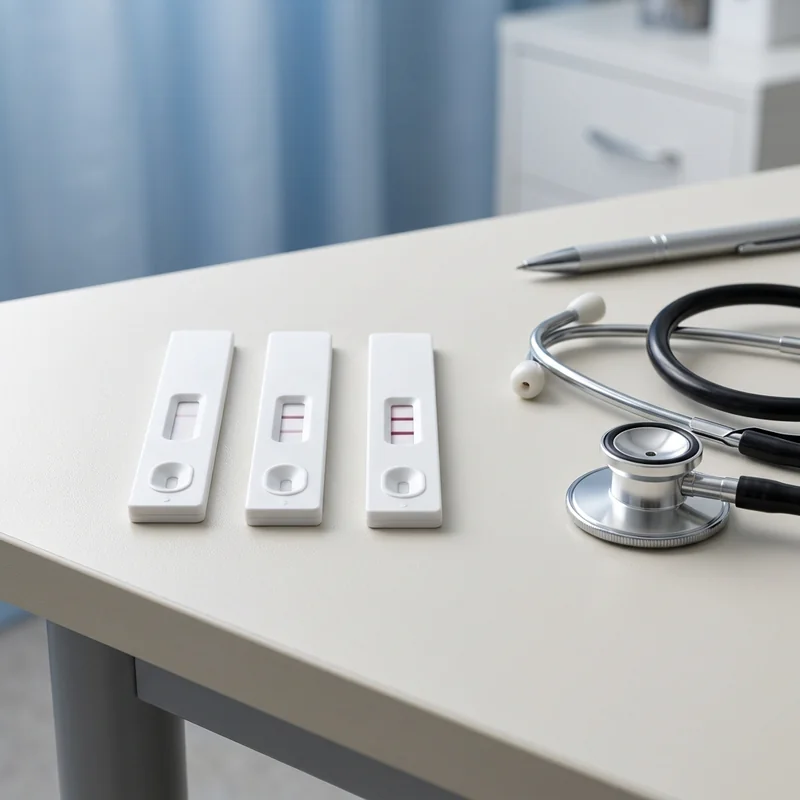
Standard ovulation predictor kits are qualitative, meaning they compare a test line to a control line. When the test line is as dark as or darker than the control line, the test is positive, indicating a luteinizing hormone surge. More advanced digital fertility monitors provide quantitative readings, tracking hormone concentrations over multiple days to identify both high and peak fertile days. Digital monitors are particularly useful because they often track estrone-3-glucuronide (a urinary metabolite of estrogen) alongside luteinizing hormone, providing an earlier warning of the approaching fertile window.
Many women make the mistake of testing their first morning urine for luteinizing hormone. This is a common failure point. Luteinizing hormone is synthesized in the brain during the early morning hours and takes several hours to appear in your urine. Testing first morning urine can lead to false negatives or delayed detection. The optimal testing window is between 10:00 AM and 8:00 PM, with mid-afternoon being the ideal time. You should limit your fluid intake for two hours before testing to avoid diluting the hormone concentration in your urine.
The duration of the luteinizing hormone surge varies significantly between individuals. Some women experience a long surge that lasts for two to three days, while others have a short surge that peaks and disappears within a 10-hour window. If you have a short surge and only test once a day, you may miss it entirely. If you are tracking your cycle or have irregular periods, you should test twice daily: once at 10:00 AM and again at 6:00 PM once you enter your estimated fertile window. This ensures you capture the ascending curve of the surge.
Urinary testing has limitations. If you have polycystic ovary syndrome, your baseline luteinizing hormone levels may be chronically elevated, leading to multiple false positives or positive results that persist for days without actual ovulation. Similarly, as women approach perimenopause, follicle-stimulating hormone and luteinizing hormone levels rise as the brain tries to stimulate the ovaries, which can disrupt test accuracy. Understanding these limitations is vital to avoid frustration. Luteinizing hormone tests prove the body is attempting to ovulate, but they do not confirm that an egg was successfully released.
Method 2: Basal Body Temperature (BBT) Charting
While luteinizing hormone tests predict ovulation, basal body temperature charting is the primary method used to confirm that ovulation has actually occurred. Your basal body temperature is your core body temperature at rest. Immediately after ovulation, the newly formed corpus luteum secretes progesterone. Progesterone acts on the thermoregulatory center in the hypothalamus, raising your basal body temperature by 0.4 degrees Fahrenheit to 1.0 degree Fahrenheit. This thermal shift remains elevated until your next period begins.
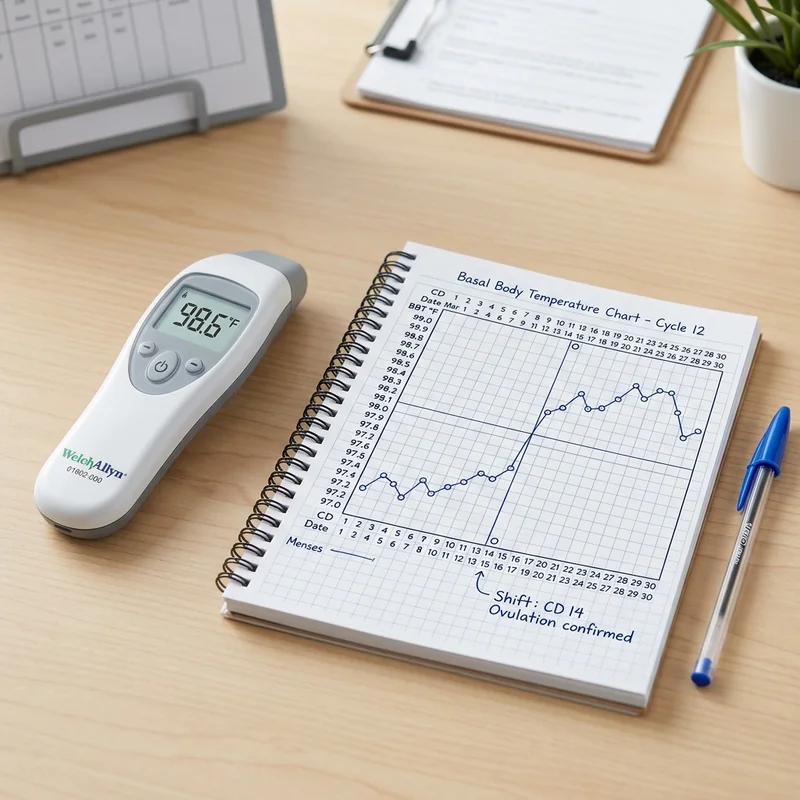
To track basal body temperature, you must follow a rigid protocol. You must take your temperature immediately upon waking, before you sit up, speak, drink water, or get out of bed. Any movement can raise your body temperature, rendering the reading inaccurate. You must use a specialized basal thermometer that displays readings to the hundredth degree (e.g., 97.65°F), as standard medical thermometers are not sensitive enough to capture the subtle thermal shift. You should aim to take your temperature at the same time every morning, as body temperature naturally fluctuates throughout the day.
When you chart your daily readings, you are looking for a biphasic pattern: a series of lower temperatures during the follicular phase, followed by a clear shift to higher temperatures during the luteal phase. Ovulation is confirmed when you see three consecutive temperatures that are higher than the previous six days. The day before the thermal shift is typically your ovulation day. If your temperature remains elevated for 18 consecutive days after ovulation, it is a strong indicator of pregnancy.
Basal body temperature tracking has several confounding factors. Illness, fever, alcohol consumption, poor sleep, travel, sleeping under an electric blanket, or taking your temperature at different times can all cause erratic readings. If your chart shows no clear biphasic shift over several months, it is highly likely you are experiencing anovulatory cycles. Basal body temperature is a retrospective confirmation tool: it proves you have already ovulated, meaning by the time your temperature rises, the fertile window has closed. It is best used in combination with other methods to map cycle patterns over time.
Method 3: Cervical Mucus Analysis
While temperature charting confirms ovulation after the fact, monitoring your cervical mucus provides a real-time, physical indicator of your fertility status. Cervical mucus is produced by the cervical crypts under the influence of estrogen and progesterone. As estrogen rises during the follicular phase, it alters the water content, electrolyte levels, and glycoprotein structures of the mucus, transforming it from a hostile barrier to a fertile transit medium.
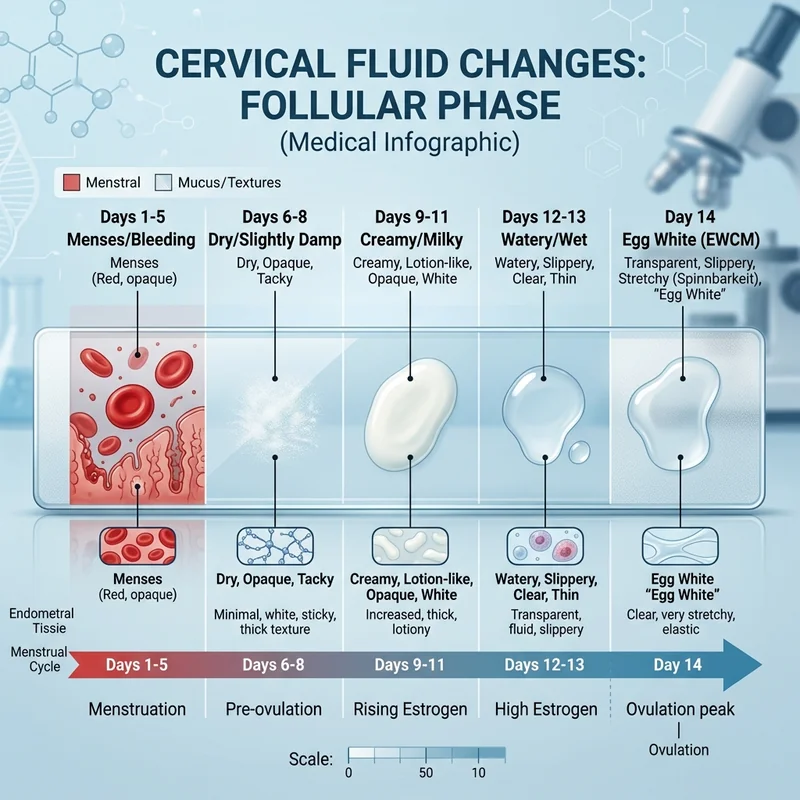
During the early follicular phase, estrogen levels are low, and the cervix is blocked by a thick, acidic mucus plug that prevents sperm from entering. At this stage, you will notice a sensation of dryness at the vulva, and little to no discharge. As estrogen levels rise, the mucus becomes sticky, pasty, or creamy. This creamy mucus is still relatively hostile to sperm. As you approach ovulation, estrogen levels peak, and the mucus shifts to a watery, slippery, and highly stretchable consistency, similar to raw egg whites. This is fertile cervical mucus.
Fertile cervical mucus has a unique molecular structure. The glycoprotein fibers align in parallel channels, creating microscopic pathways that protect sperm from the acidic vaginal environment and help them swim toward the fallopian tubes. Without this fertile mucus, sperm cannot survive in the vagina for more than a few hours. When fertile mucus is present, sperm can survive for up to five days, waiting for the egg to be released. The final day you observe this wet, slippery mucus is called the peak day, which is highly correlated with the day of ovulation.
To check your cervical mucus, you should observe the discharge on your toilet tissue or insert a clean finger into the vagina to collect a sample. You should evaluate the color, texture, and stretchability of the fluid. Avoid checking your mucus immediately after intercourse, as seminal fluid can be confused with fertile mucus. Certain medications, such as antihistamines, can dry out your cervical mucus, while vaginal infections or lubricants can mimic fertile discharge, disrupting your tracking accuracy.
| Mucus Type | Visual & Tactile Properties | Hormone Profile | Fertility Level |
|---|---|---|---|
| Dry / None | Sensation of dryness at vulva, no visible fluid | Low Estrogen, Low Progesterone | Hostile (Low) |
| Sticky / Pasty | Thick, white or yellow, breaks easily when stretched | Gradual Estrogen rise | Hostile (Low) |
| Creamy / Lotion | Smooth, white or cloudy, moist but not stretchy | Estrogen rising | Transitional (Moderate) |
| Watery | Clear, thin, wet, runs off fingers easily | Estrogen peaking | Highly Fertile (High) |
| Egg-White (EWCM) | Clear, slippery, stretches 1 to 2 inches without breaking | Estrogen at maximum | Peak Fertile (Maximum) |
The Competitive Wedge: Bypassing the App Fallacy & Tracking Irregular Cycles
Most cycle-tracking applications use simple calendar algorithms to predict ovulation. They take the average length of your last three cycles and assume your next cycle will be identical, predicting ovulation exactly 14 days before your estimated next period. This is the calendar method, and it is highly unreliable. Even in women with regular 28-day cycles, the follicular phase can vary by several days, shifting the ovulation date. For those with irregular cycles, PCOS, thyroid disorders, or hypothalamic amenorrhea, calendar-based predictions are virtually useless.
If you have polycystic ovary syndrome, your body may make multiple attempts to ovulate before succeeding. In these cycles, you might experience several patches of fertile cervical mucus and multiple luteinizing hormone peaks. A standard app will assume the first peak was ovulation and predict your period incorrectly. To track ovulation with PCOS, you must use basal body temperature to verify which hormone peak was successful. Your temperature will only rise and remain elevated once progesterone is released after a successful ovulation event.
Bypassing the app fallacy requires you to become the compiler of your own biological data. By documenting your daily LH tests, temperature readings, and cervical mucus observations, you create a personalized reproductive map. This data is invaluable not only for timing conception but also for identifying subclinical hormonal imbalances. If you share a detailed cycle chart showing a short luteal phase or highly erratic temperatures with your physician, they can order targeted hormone panels rather than relying on guesswork.
Establish Your Menstrual Baseline: To calculate your fertile window based on your actual cycle parameters rather than standardized averages, use the Fertility & Ovulation Predictor. Complete the calculations, record your fertile window, and save the data in your health journal to track trends over time, recognize early physiological patterns, and share high-fidelity details with your physician during clinical checkups.
Your Daily Fertility Tracking Action Checklist
To successfully implement a fertility tracking protocol, you should establish a structured daily routine. Consistently documenting these three primary biomarkers creates a clear picture of your reproductive health.
- Morning Protocol (Waking): Take your basal body temperature immediately upon waking, before speaking, moving, or drinking water. Record the reading to the hundredth degree in your logbook or tracking application.
- Mid-Day Protocol (10:00 AM to 2:00 PM): Perform your first urinary luteinizing hormone test. Ensure you have limited fluid intake for two hours prior to testing to maintain hormone concentration.
- Throughout the Day (Bathroom Visits): Observe the consistency, color, and stretchability of your cervical mucus on toilet tissue. Note any sensations of wetness or dryness.
- Evening Protocol (6:00 PM to 8:00 PM): Perform a second luteinizing hormone test if you are in your estimated fertile window or have irregular cycles, to ensure you do not miss a short surge.
- Nightly Log: Update your cycle chart with your daily temperature, highest LH test result, cervical mucus classification, and any secondary symptoms like ovulation pain.
Frequently Asked Questions
Can you get pregnant the day after ovulation?
The fertile window closes rapidly once ovulation occurs. The egg survives for only 12 to 24 hours after release. While conception is theoretically possible in the early hours of the day after ovulation, the probability drops close to zero beyond the 24-hour mark. Once the egg begins to degrade, it can no longer be fertilized, and the cervix becomes blocked by thick mucus to protect the uterus.
How do I know if I am ovulating if my cycle is irregular?
Tracking ovulation with irregular cycles requires combining cervical mucus checks with basal body temperature charting. You should watch for a patch of wet, slippery mucus, which indicates your body is attempting to ovulate. You then verify that ovulation was successful by confirming a sustained basal body temperature rise that remains elevated for at least 10 days.
Does a positive ovulation test guarantee ovulation?
A positive urinary ovulation predictor kit detects the luteinizing hormone surge, proving the brain has signaled the ovaries to release an egg. It does not guarantee that the egg was successfully released. In some cases, such as luteinized unruptured follicle syndrome, the follicle responds to the surge but fails to rupture. You must use basal body temperature charting to confirm progesterone release and successful ovulation.
Can stress delay or stop ovulation?
Stress can delay or completely prevent ovulation. When you experience high levels of physical or psychological stress, the hypothalamus releases corticotropin-releasing hormone, which stimulates cortisol release. High cortisol levels suppress gonadotropin-releasing hormone pulses, reducing follicle-stimulating hormone and luteinizing hormone release, which can halt follicular development and delay ovulation.
Conclusion and Next Steps
Tracking your ovulation with precision requires a shift in perspective. You must move past passive cycle-tracking applications that rely on calendar averages and begin actively monitoring your body's natural biomarkers. By combining urinary luteinizing hormone testing, basal body temperature charting, and cervical mucus analysis, you gain an accurate, real-time map of your fertility window.
Understanding these hormonal pathways allows you to take control of your reproductive health. Whether you are trying to conceive or trying to understand irregular cycles, documenting your daily biomarkers provides the objective data needed to identify patterns and work productively with your healthcare provider. Your cycle is a direct reflection of your underlying physiology: monitoring it is a vital step toward long-term wellness.
Medical Disclaimer: This article is for general information only and is not medical advice. Please consult a qualified healthcare provider for personalized guidance, especially if you have an existing medical condition or are taking medications. See our full Medical Disclaimer and Editorial Policy.

Ganesh G Kamble
Ganesh G Kamble is the founder and editor of Health is Heaven. He spent 14 years as a techno-functional consultant on enterprise ERP systems in Bangalore before turning his attention to health publishing. His background is technical, not clinical, and he is not a medical professional. He started Health is Heaven because most online health information is either too vague to act on, too technical to understand, or too commercial to trust. The site's mission is to provide clear, evidence-based answers to common health questions, with sources you can verify, alongside free interactive calculators built using standard medical formulas published by recognised authorities including the World Health Organization, the U.S. Centers for Disease Control and Prevention, the American Heart Association, the American Diabetes Association, and the National Institutes of Health. Every article is reviewed against authoritative sources before publishing, dated with both publish and last-updated timestamps, and clearly marked as informational only when covering medical topics. Articles dealing with diagnosis, treatment, or medication recommend speaking with a qualified healthcare provider. The site does not accept paid placements that influence editorial content; any future advertising is clearly labelled and separated from articles. Ganesh is based in Bangalore, India, and connects with readers and collaborators on LinkedIn.