
Medically reviewed by: Health is Heaven Medical Review Board | Published by Ganesh G Kamble, Health is Heaven | Published: April 12, 2026 · Last updated: June 11, 2026
Determine Your Daily Baseline Hydration Target
Adequate hydration is essential for facilitating primary esophageal peristalsis and maintaining salivary volume, which dilutes gastric acid. Enter your weight and activity level into the Water Intake Calculator to discover your customized daily fluid target.
Open Water Intake Calculator →1. Lower Esophageal Sphincter (LES) and Transient Relaxations (TLESRs) Mechanics
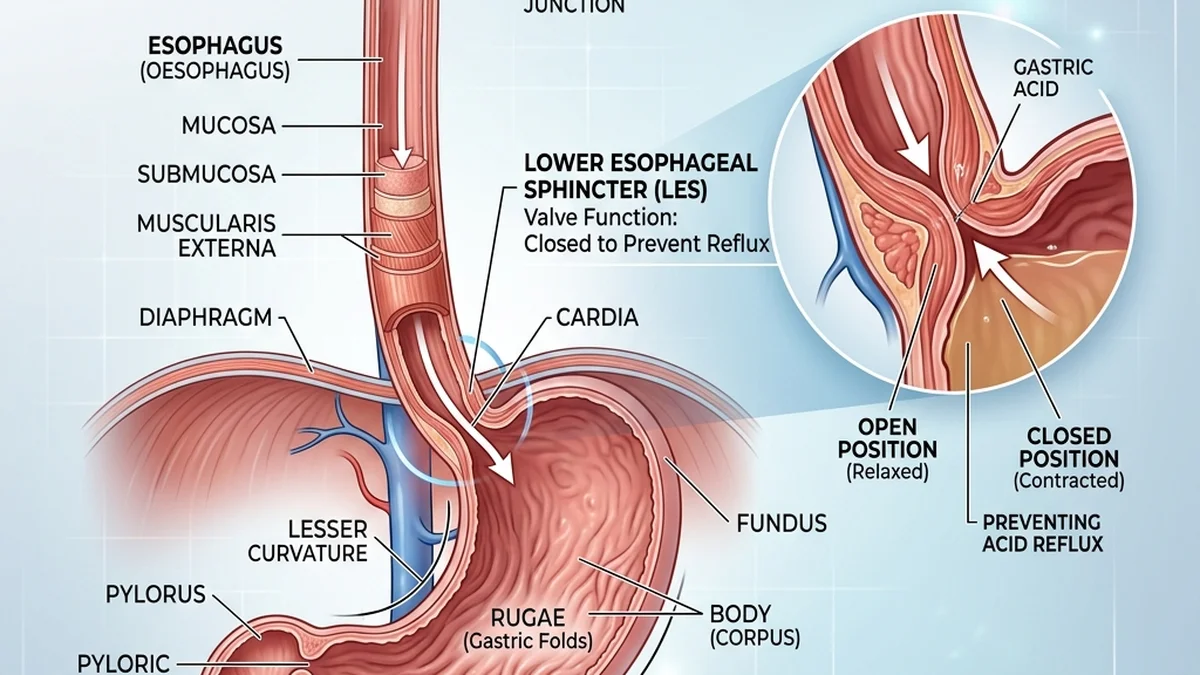
The primary barrier to gastroesophageal reflux is the lower esophageal sphincter (LES), a specialized ring of smooth muscle located at the gastroesophageal junction. The LES maintains a baseline high-pressure zone (resting pressure of 10 to 30 mmHg) that exceeds the intragastric pressure, effectively sealing the gastric cavity from the low-pressure thoracic cavity. The muscle tone of the LES is regulated by complex neurohumoral pathways, including excitatory cholinergic (vagal) inputs that contract the sphincter and inhibitory nitrergic (nitric oxide and vasoactive intestinal peptide) inputs that relax it.
Acid reflux occurs when this pressure barrier is compromised. The most common mechanism for reflux in individuals without structural hiatal hernia is transient lower esophageal sphincter relaxations (TLESRs). TLESRs are neural reflexes mediated by the vagus nerve, triggered by gastric distension (stretching of the stomach walls after a meal). Unlike swallow-induced LES relaxation, TLESRs occur independently of swallowing, last longer (typically 10 to 45 seconds), and are accompanied by inhibition of the crural diaphragm, which acts as an external sphincter. When TLESRs occur frequently or when resting LES tone is chronically low (under 10 mmHg), acidic gastric juice (pH 1.5 to 3.5) escapes into the esophageal lumen, irritating the delicate squamous epithelium.
SPONSORED CONTENT
The biophysical relationship governing the risk of reflux can be expressed by the gastric pressure-gradient equation:
Delta P = P_gastric - P_thoracic
An increase in the pressure gradient (Delta P) due to elevated intragastric pressure (P_gastric) or decreased intrathoracic pressure (P_thoracic) will push gastric contents past a weakened LES. Factors that elevate abdominal pressure, such as visceral obesity, pregnancy, or tight clothing, directly increase P_gastric, thereby increasing the driving force for acid reflux. Modifying lifestyle factors to minimize this pressure gradient is a core therapeutic goal.
2. Sleep Position Anatomy and Gravity Assist (Left-Side Sleeping)
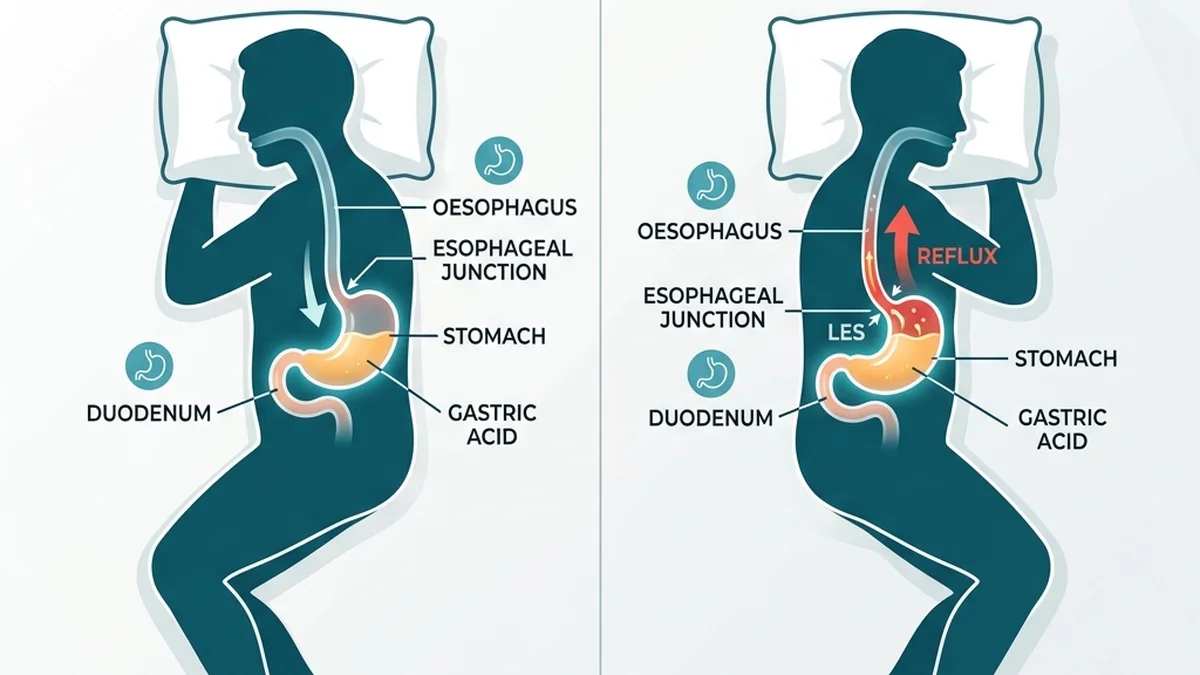
Nighttime reflux (nocturnal GERD) is associated with more severe esophageal mucosal damage because swallowing frequency and salivary flow decrease during sleep, prolonging acid contact time. Clinical research demonstrates that sleeping in the left lateral decubitus position (on the left side) significantly reduces esophageal acid exposure compared to the right lateral or supine (flat on the back) positions.
The efficacy of left-side sleeping is explained by the asymmetrical anatomy of the human stomach. The esophagus enters the stomach on its right side, creating an anatomical junction known as the cardias. The rest of the stomach body, including the fundus, curves toward the left side of the body. When a person sleeps on their left side, the gastric acid pool settles in the large curvature of the stomach, below the level of the gastroesophageal junction. In this position, gravity keeps the acidic pool away from the LES. Even if the LES relaxes transiently, the air bubble in the stomach, rather than liquid acid, is positioned near the junction, preventing reflux.
Conversely, when sleeping on the right side, the gastroesophageal junction is positioned beneath the stomach body. Gravity causes the pool of gastric acid to submerge the LES. Any transient relaxation of the sphincter allows acid to flow directly into the esophagus. Additionally, sleeping on the back (supine) allows acid to pool evenly, eliminating the gravity barrier and slowing down the clearance of refluxed acid. Clinical trials using pH-impedance monitoring have shown that while the number of reflux episodes may remain similar, the average acid clearance time is significantly shorter when sleeping on the left side, thereby protecting the esophageal lining from prolonged exposure.
3. Portion Sizes and Gastric Volumetric Pressure
One of the most effective dietary strategies for managing acid reflux is regulating meal size. Large meals stretch the stomach wall, triggering mechanoreceptors that initiate the vagal reflex loop responsible for TLESRs. As the volume of food in the stomach increases, the pressure within the gastric cavity rises, challenging the resting pressure of the LES.
Splitting daily food intake into 4 to 5 smaller meals rather than 2 to 3 large portions helps maintain low gastric volume and minimizes postprandial stomach stretching. Smaller meals also reduce the physical surface area of food in contact with gastric acid, which helps optimize digestion and limits the elevation of the gastric acid pool. Clinical guidelines from the American College of Gastroenterology (ACG) suggest that portion control is a foundational lifestyle intervention that can reduce the need for pharmacological antacids in patients with mild symptoms.
4. Gastric Emptying Kinetics and Fat-Induced CCK Release
The rate at which the stomach empties its contents into the duodenum (gastric emptying rate) directly influences the duration of the postprandial reflux window. Delayed gastric emptying (gastric stasis) keeps food in the stomach longer, extending the period of gastric distension and increasing the frequency of TLESRs.
Dietary fats are potent triggers for the release of cholecystokinin (CCK) from I-cells in the duodenum. CCK is a peptide hormone that coordinates digestion by stimulating pancreatic enzyme secretion and gallbladder contraction. However, CCK also acts on the stomach to delay gastric emptying and directly relaxes the smooth muscle of the LES. High-fat meals (such as fried foods, fatty meats, and heavy cream) delay gastric emptying, reduce LES pressure, and prolong the presence of highly acidic chive in the stomach, creating ideal conditions for severe reflux. Choosing low-fat meals helps maintain optimal gastric emptying kinetics and supports sphincter closure.

5. Salivary Bicarbonate Buffering and Esophageal Clearance
When acid reflux occurs, the body relies on two primary defense mechanisms to clear the acid and protect the esophagus: esophageal peristalsis and salivary buffering. Esophageal peristalsis refers to the coordinated wave of muscle contractions that pushes refluxed liquid back down into the stomach. Primary peristalsis is initiated by swallowing, while secondary peristalsis is a local reflex triggered by the stretching or acidity of the esophagus itself.
Although peristalsis clears the majority of the refluxed volume, a thin film of acidic residue remains on the esophageal mucosa. To neutralize this residual acid, the body utilizes salivary bicarbonate. Saliva is naturally alkaline, containing bicarbonate ions (HCO3-) that participate in a vital buffering reaction:
HCO3- + H+ <=> H2CO3 <=> H2O + CO2
This reaction neutralizes hydrogen ions (H+), converting them into water and carbon dioxide, which raises the pH of the esophageal lumen toward a neutral 7.0. Swallowing saliva delivers this buffering agent directly to the distal esophagus. Stimulating saliva production (for example, by chewing sugar-free, non-mint gum after a meal) increases the flow of bicarbonate-rich saliva, accelerating the neutralization of esophageal acid and reducing symptom duration.
6. Soluble Fiber Fermentation and Mucosal Protection
Dietary fiber plays an underappreciated role in preventing acid reflux. Soluble fibers (found in foods like oatmeal, chia seeds, and psyllium husk) absorb water to form a viscous gel that slows the mixing of gastric juices. This gel-like structure helps keep gastric acid at the bottom of the stomach, preventing it from splashing upward toward the gastroesophageal junction.
Furthermore, fiber intake supports gut health. When gut bacteria ferment soluble fiber in the colon, they produce short-chain fatty acids (SCFAs) like butyrate, acetate, and propionate. SCFAs act as signaling molecules that support systemic anti-inflammatory pathways and help maintain tight junctions in the intestinal and esophageal epithelial barriers. This mucosal protection reduces the sensitivity of the esophageal lining to micro-injuries caused by gastric acid.
7. Trigger Food Identification and Elimination Protocols
Certain foods are known to trigger or worsen acid reflux by relaxing the LES, irritating the esophageal lining, or increasing gastric acid production. The most common triggers include:
- Chocolate: Contains methylxanthines (such as theobromine), which relax the smooth muscle of the LES by inhibiting phosphodiesterase enzymes, leading to an accumulation of cyclic adenosine monophosphate (cAMP).
- Caffeine: Coffee and energy drinks relax the LES and stimulate the secretion of gastrin, the hormone responsible for acid production.
- Citrus and Tomatoes: Highly acidic foods that can directly irritate the inflamed squamous epithelium of the esophagus, worsening the sensation of heartburn.
- Peppermint: Menthol relaxes the smooth muscle of the LES, facilitating the upward flow of acid.
- Alcohol: Directly damages the esophageal mucosa, relaxes the LES, and stimulates gastric acid secretion.
Because sensitivity to trigger foods varies by individual, clinical guidelines recommend keeping a food and symptom log for two weeks before starting an elimination protocol. This log helps patients identify their specific triggers, avoiding unnecessary dietary restrictions and preserving overall nutritional balance.
8. Weight Reduction and Intra-Abdominal Pressure Mitigation
Clinical studies show a strong, dose-dependent relationship between body mass index (BMI) and the risk of developing GERD and its complications. Excess visceral adiposity (abdominal fat) acts as a physical driver of reflux by placing constant external pressure on the stomach, which increases resting intragastric pressure.
This chronic pressure gradient can widen the diaphragmatic hiatus, the opening where the esophagus passes through the diaphragm. Over time, this pressure can push the upper portion of the stomach through the diaphragm, causing a hiatal hernia. A hiatal hernia separates the LES from the crural diaphragm, disabling the external valve mechanism and leaving the esophagus unprotected. Losing even 10 to 15 pounds can lower intra-abdominal pressure, reduce the pressure gradient across the LES, and significantly decrease reflux frequency.
9. Mechanical Antacids vs. Physiological Reset (Baking Soda & Vinegar Risks)
Many internet resources promote baking soda (sodium bicarbonate) or apple cider vinegar as home remedies for acid reflux. While these remedies can alter gastric chemistry, they carry physiological risks that warrant clinical caution:
Sodium Bicarbonate: Baking soda is highly alkaline (pH ~8.3) and acts as a rapid chemical antacid by neutralizing hydrochloric acid in the stomach. However, the reaction produces carbon dioxide gas, which can cause bloating and stretch the stomach, potentially triggering TLESRs. Additionally, baking soda has a high sodium content, which poses risks for individuals with hypertension or kidney disease. Frequent use can also cause a rebound effect, where the stomach produces excess acid to compensate for the sudden rise in pH.
Apple Cider Vinegar (ACV): The theory that ACV helps by increasing stomach acid is not supported by clinical evidence. ACV is highly acidic (acetic acid pH ~2.5 to 3.0) and can directly irritate an already inflamed esophageal lining, potentially worsening heartburn. While some individuals report subjective relief, ACV carries risks of dental erosion and mucosal irritation, and should be used with caution.
10. Chronic Risks of Untreated Reflux (Barrett's Esophagus and Metaplasia)
Acid reflux is more than a source of discomfort; chronically untreated reflux poses serious long-term health risks. The squamous epithelium of the esophagus is designed to facilitate the passage of food, not to resist gastric acid. Prolonged exposure to acid and pepsin causes inflammation (esophagitis), which can progress to erosive ulcers, bleeding, and the formation of scar tissue (esophageal strictures) that makes swallowing difficult.
Over time, the body may attempt to adapt to this acidic environment through a process called metaplasia. In Barrett's esophagus, the normal squamous cells of the distal esophagus are replaced by columnar epithelial cells similar to those lining the intestines. This column-like tissue is more resistant to acid, but it is also unstable. Barrett's esophagus carries a small but significant risk of progressing to esophageal adenocarcinoma, a serious form of cancer. This risk highlights why persistent reflux symptoms require clinical evaluation rather than long-term reliance on self-medication.
Clinical Evaluation of Acid Reflux Home Remedies
The table below provides a clinical comparison of common home remedies for acid reflux, detailing their scientific evidence levels, primary physiological mechanisms, and key precautions.
| Remedy | Evidence Level | Primary Physiological Mechanism | Clinical Precautions |
|---|---|---|---|
| Left-Side Sleeping | High | Uses stomach anatomy and gravity to keep acid below the LES. | Requires consistent side-sleeping positioning. |
| Portion Control | High | Prevents gastric stretching and minimizes TLESR triggers. | Requires consistent behavior change. |
| Elevating Bed Head | High | Uses gravity to accelerate esophageal acid clearance. | Requires bed risers; stacking pillows increases pressure. |
| Bicarbonate Gum | Moderate | Stimulates flow of alkaline, bicarbonate-rich saliva. | Avoid mint-flavored gum, which relaxes the LES. |
| Baking Soda | Low (Temporary) | Directly neutralizes gastric acid chemically. | High sodium content; risk of bloating and acid rebound. |
| Apple Cider Vinegar | Very Low | No established clinical mechanism. | Can directly irritate inflamed esophageal lining. |
Daily Acid Reflux Prevention and Tracking Checklist
This tracking checklist can help you monitor key lifestyle habits that influence gastric pressure and esophageal acid exposure. Keeping a consistent record helps identify patterns and track improvement over time.
| Lifestyle Target | Clinical Objective | Daily Standard | Completed (M / T / W / T / F / S / S) |
|---|---|---|---|
| Portion Control | Minimizes gastric stretching and TLESR triggers | Max 2 cups volume per meal | [ ] [ ] [ ] [ ] [ ] [ ] [ ] |
| Bedtime Window | Ensures gastric emptying before lying down | Min 3 hours after last meal | [ ] [ ] [ ] [ ] [ ] [ ] [ ] |
| Sleeping Position | Keeps the LES above the gastric acid pool | Sleep on left side or elevated | [ ] [ ] [ ] [ ] [ ] [ ] [ ] |
| Trigger Avoidance | Prevents chemical relaxation of the LES | Zero coffee, chocolate, or mint | [ ] [ ] [ ] [ ] [ ] [ ] [ ] |
| Hydration Target | Facilitates peristalsis and saliva production | 80 to 96 oz fluid spread out | [ ] [ ] [ ] [ ] [ ] [ ] [ ] |
Clinical Frequently Asked Questions
Why does chocolate trigger acid reflux?
Chocolate contains methylxanthines (such as theobromine), which are organic compounds that inhibit phosphodiesterase enzymes. This inhibition leads to an accumulation of cyclic adenosine monophosphate (cAMP) in smooth muscle cells, causing the lower esophageal sphincter (LES) to relax and allowing stomach acid to enter the esophagus.
How does sleeping on your left side prevent acid reflux?
The esophagus enters the stomach on its right side. Sleeping on the left side positions the gastroesophageal junction above the level of the gastric acid pool, utilizing gravity to keep stomach contents in place. On the right side, the junction is submerged, allowing acid to leak past the LES.
Is baking soda safe to use for acid reflux?
Baking soda (sodium bicarbonate) can neutralize stomach acid and provide temporary relief. However, it is high in sodium and can cause bloating by producing carbon dioxide gas, which may trigger TLESRs. It should be used occasionally and is not a long-term solution.
Why do high-fat meals worsen reflux symptoms?
High-fat meals stimulate the release of cholecystokinin (CCK) from the duodenum. CCK delays gastric emptying and directly relaxes the lower esophageal sphincter (LES), keeping acid in the stomach longer and increasing the likelihood of reflux.
When should I see a doctor for acid reflux?
You should consult a healthcare provider if you experience reflux symptoms more than twice a week, have difficulty or pain when swallowing, experience unexplained weight loss, or rely on over-the-counter antacids for more than two weeks.
High-Authority Educational Videos
To deepen your understanding of gastroesophageal physiology and learn practical strategies for managing acid reflux, watch these educational video guides from leading clinical resources.
Johns Hopkins Medicine: GERD Overview
Minimally invasive surgical and gastroenterology experts at Johns Hopkins Medicine explain the causes, complications, and treatments for GERD.
Mayo Clinic: Reducing Acid Reflux
Clinical specialists at the Mayo Clinic discuss key lifestyle modifications, including sleeping positions and diet, to manage reflux naturally.
Clinical Sources and References
- National Institute of Diabetes and Digestive and Kidney Diseases (NIDDK): Acid Reflux (GER & GERD) in Adults. NIDDK GERD Info.
- American College of Gastroenterology (ACG): Clinical Guidelines for the Diagnosis and Management of Gastroesophageal Reflux Disease. ACG Guidelines.
- Mayo Clinic: Gastroesophageal Reflux Disease (GERD) Symptoms and Causes. Mayo Clinic GERD Page.
- Harvard Health Publishing: 9 ways to relieve acid reflux without medication. Harvard Health ACV & Lifestyle.
- Kahrilas, P. J., et al. (2008): American Gastroenterological Association Medical Position Statement on the Management of Gastroesophageal Reflux Disease. Gastroenterology, 135(4), 1383-1391.
- Festi, D., et al. (2009): Body mass index, physical activity, and gastro-esophageal reflux disease. World Journal of Gastroenterology, 15(21), 2557-2565.
Medical Review Disclaimer: The physiological descriptions, dietary guidelines, and lifestyle comparisons outlined in this article are for educational purposes only and represent standard clinical knowledge. They are not a substitute for professional diagnosis, medical advice, or treatment. If you experience severe symptoms, swallowing difficulties, or persistent heartburn, please consult a qualified healthcare provider. See our full Medical Disclaimer and Editorial Policy.

Ganesh G Kamble
Ganesh G Kamble is the founder and editor of Health is Heaven. He spent 14 years as a techno-functional consultant on enterprise ERP systems in Bangalore before turning his attention to health publishing. His background is technical, not clinical, and he is not a medical professional. He started Health is Heaven because most online health information is either too vague to act on, too technical to understand, or too commercial to trust. The site's mission is to provide clear, evidence-based answers to common health questions, with sources you can verify, alongside free interactive calculators built using standard medical formulas published by recognised authorities including the World Health Organization, the U.S. Centers for Disease Control and Prevention, the American Heart Association, the American Diabetes Association, and the National Institutes of Health. Every article is reviewed against authoritative sources before publishing, dated with both publish and last-updated timestamps, and clearly marked as informational only when covering medical topics. Articles dealing with diagnosis, treatment, or medication recommend speaking with a qualified healthcare provider. The site does not accept paid placements that influence editorial content; any future advertising is clearly labelled and separated from articles. Ganesh is based in Bangalore, India, and connects with readers and collaborators on LinkedIn.