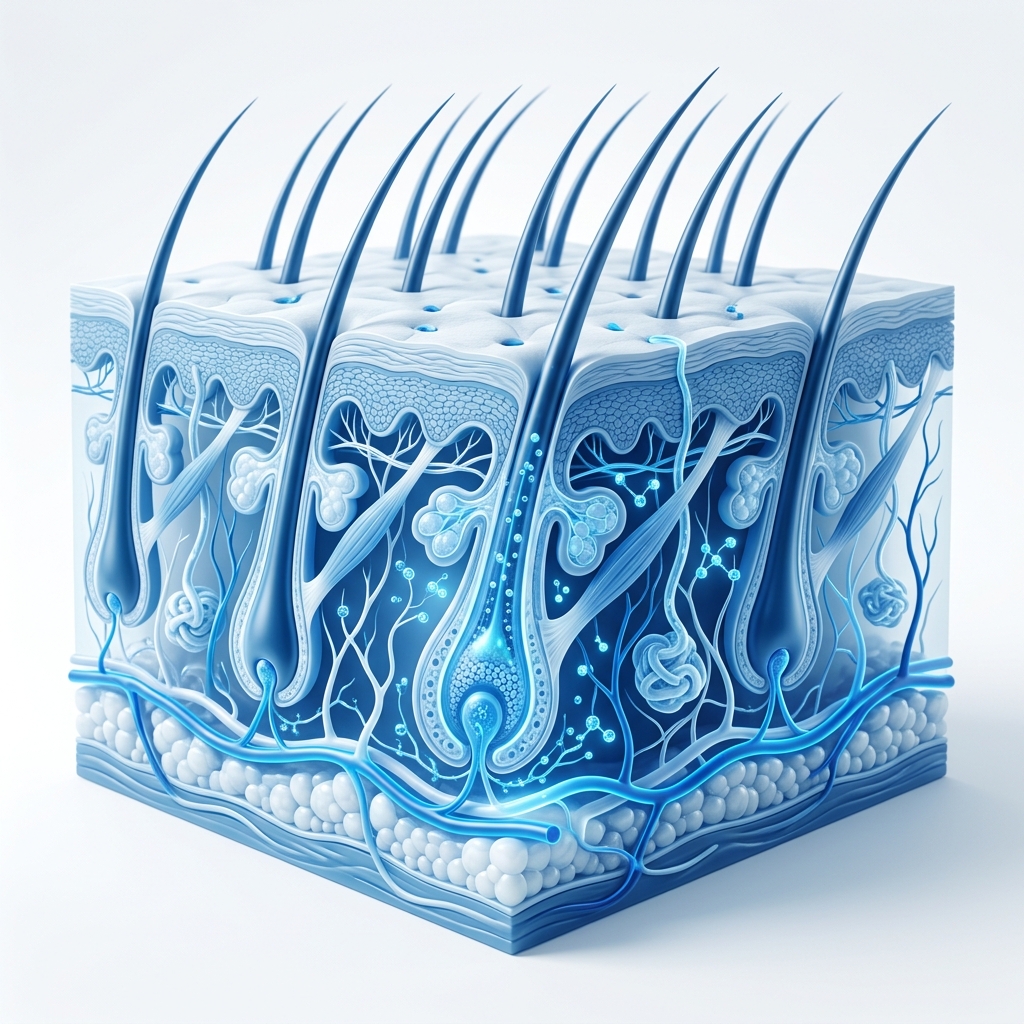
In the realm of men's aesthetic health, denial is the enemy of retention. Once a hair follicle dies, it can never be medically revived without surgical intervention. Use our clinical Hair Loss Assessment (based on the Norwood Scale) to rapidly identify your exact stage of male pattern baldness and deploy aggressive, FDA-approved interventions to halt the shedding before it becomes permanent.
Hair Loss Assessment
Determine your Norwood Scale stage & find the right treatment.
*This assessment is a general guide based on the Norwood Scale. Only a certified physician can prescribe clinical treatments.
Understanding the Norwood Scale
The Norwood Scale (or Hamilton-Norwood Scale) is the internationally recognized clinical standard used by dermatologists to classify male pattern baldness (Androgenetic Alopecia). Hair loss in men is rarely random; it follows incredibly predictable, biological patterns—typically starting with recession at the temples (creating an "M" shape) or profound thinning at the vertex (the crown of the head), before eventually merging into complete slick baldness on top.
The Biological Mechanism: Why Hair Dies
Male pattern baldness is not caused by wearing hats, poor blood circulation, or washing your hair too much. It is almost entirely driven by a single destructive hormone sequence:
- The DHT Cascade: An enzyme in your body called 5-alpha-reductase converts normal testosterone into a highly potent androgen called DHT (Dihydrotestosterone).
- Follicular Miniaturization: If you are genetically predisposed, the hair follicles on the top of your head are highly sensitive to DHT. When DHT binds to these specific follicles, it literally chokes off their blood supply.
- The Point of No Return: The affected hair becomes thinner, shorter, and less pigmented with every growth cycle (miniaturization). Eventually, the follicle scars over and dies permanently, leaving a slick scalp behind.
How to Read Your Norwood Results
| Norwood Stage | Clinical Description | Intervention Strategy |
|---|---|---|
| Stage 1 - 2 | Early Stage / Mature Hairline. No significant loss, or very minor recession at the temples forming a slight V-shape. | Preventative. This is the golden era. Low-dose DHT blockers here ensure you never reach advanced stages. |
| Stage 3 - 4 | Moderate Loss. Deep, obvious "M" shape recession at the temples, often accompanied by a developing bald spot on the crown. | Aggressive Reversal. The critical window. Combination therapy (DHT blockers + Vasodilators) is mandatory to save dying follicles. |
| Stage 5 - 7 | Advanced Loss. Severe frontal recession merging aggressively with a large, slick bald crown. | Surgical / Acceptance. Medical therapies will only preserve the meager ring of remaining hair. Hair transplants (FUE) are the only viable path to restoration. |
Actionable Clinical Protocols for Hair Retention
Do not waste money on generic "biotin gummies" or expensive shampoos if you are dealing with genetic hair loss. You must attack the mechanism biologically:
- Halt the Hormone (Finasteride/Dutasteride): This is the undisputed anchor of hair loss prevention. Oral or topical Finasteride blocks the 5-alpha-reductase enzyme, slashing scalp DHT levels by up to 70%. If you do not stop the DHT, you will inevitably go bald.
- Force Blood Flow (Minoxidil): While Finasteride stops the bleeding, Minoxidil acts as a powerful vasodilator, forcing massive amounts of blood, oxygen, and nutrients into dormant follicles to jolt them back into the active "Anagen" growth phase.
- Micro-Needling (Dermarolling): Clinically shown to vastly amplify the results of Minoxidil. Rolling a 1.5mm medical-grade needle over the scalp once a week induces localized trauma, triggering massive stem cell proliferation and collagen production.
Frequently Asked Questions (FAQ)
Once I start Finasteride or Minoxidil, do I have to take it forever?
Yes. These medications do not cure the underlying genetic sensitivity to DHT; they simply suppress the mechanism while you use them. If you stop taking the medication, the DHT will rapidly re-bind to your follicles, and you will lose all the hair you "saved" within 3 to 6 months.
Are the side effects of DHT blockers dangerous?
Millions of men use oral Finasteride daily with zero issues. However, because it alters systemic hormones, roughly 2-4% of men report side effects like lowered libido or brain fog. If oral medication causes issues, modern dermatology relies on highly effective topical Finasteride, which crashes scalp DHT levels with very little systemic absorption into the bloodstream.