
Medically reviewed by: Health is Heaven Medical Review Board | Published by Ganesh G Kamble, Health is Heaven | Published: April 22, 2026 · Last updated: June 7, 2026
The wellness industry frequently treats intermittent fasting as a generic weight-loss switch, casually recommending that eating dinner slightly earlier guarantees biological optimization. This fundamentally misunderstands human cellular architecture. The overarching goal of fasting is not simply burning stored abdominal fat; the target is profound internal recycling. Millions of individuals execute searches for the exact fasting hours deep autophagy requires, only to be fed highly inaccurate, diluted timelines. You cannot trigger a massive intracellular cleanup by simply skipping breakfast. Autophagy is a severe, survival-based stress response; it must be forcefully mandated through precise chronological engineering.
At healthisheaven.com, we approach the human body exactly as we map a highly complex data server network. The mTOR pathway (Mechanistic Target of Rapamycin) is your body's primary growth and building algorithm. As long as any amino acids or glucose are actively circulating in your upper digestive tract, mTOR is permanently switched on, continuously pushing cells to grow. If a cell becomes corrupted, oxidized, or prematurely aged (senescent), mTOR blindly continues to feed it. To stop this toxic growth and force the system to hunt down and cannibalize these weak, malfunctioning cells for spare parts (Autophagy), you must definitively cut the power supply. You must mathematically starve the mTOR pathway to force it entirely offline. To achieve cellular repair, you must understand the exact fasting hours deep autophagy requires to activate, transition, and complete this cellular purge.
To initiate an effective fasting and cellular rejuvenation plan, it is vital to establish your baseline metabolic metrics. Utilizing our interactive calculators allows you to evaluate your current energy expenditure and track body hydration changes accurately during the fast. Before we dissect the biological timeline in detail, you can run your numbers in our clinical tools below to establish your hydration parameters and baseline caloric needs.
SPONSORED CONTENT
Calculate Hydration and Metabolic Metrics for Safe Fasting
Fasting triggers a massive release of cellular waste that must be filtered by the kidneys. Use our clinical calculators to estimate your mandatory fluid requirements, evaluate baseline energy levels, and check your biological age targets before executing a deep fast.
1. The Bio-Hardware Switch: mTOR Inhibition vs. AMPK Activation
At the center of cellular lifespan regulation lies a delicate balance between two opposing proteins: Mechanistic Target of Rapamycin Complex 1 (mTORC1) and Adenosine Monophosphate-Activated Protein Kinase (AMPK). These two molecular complexes act as the fuel sensors of the human body, directing energy storage, cellular replication, protein synthesis, and lysosomal recycling. Under normal feeding conditions, the ingestion of macronutrients, particularly carbohydrates and amino acids, leads to a rapid elevation in circulating glucose and insulin. This insulin surge, combined with the presence of intracellular amino acids (specifically leucine, arginine, and lysine), activates the Rag GTPase complexes on the lysosomal membrane. This recruitment signals the activation of mTORC1, the master regulator of anabolic growth.
When mTORC1 is active, it promotes transcription of genes involved in ribosomal biogenesis, lipid synthesis, and cell growth. Concurrently, active mTORC1 directly phosphorylates and inactivates the ULK1 (Unc-51 Like Autophagy Activating Kinase 1) complex, specifically at the Serine 757 site. This phosphorylation events halts the assembly of the molecular machinery required to construct the autophagosome, the double-membrane vesicle that isolates cellular waste. As a result, in the fed state, autophagy is suppressed to a minimal basal level. The cell focuses entirely on expansion and synthesis, ignoring the accumulation of intracellular damage, oxidized proteins, and worn-out organelles. This state is metabolically optimal during periods of nutrient abundance, but when sustained chronically without relief, it leads to the accumulation of damaged mitochondria and senescent proteins, which accelerate aging and increase metabolic dysfunction.
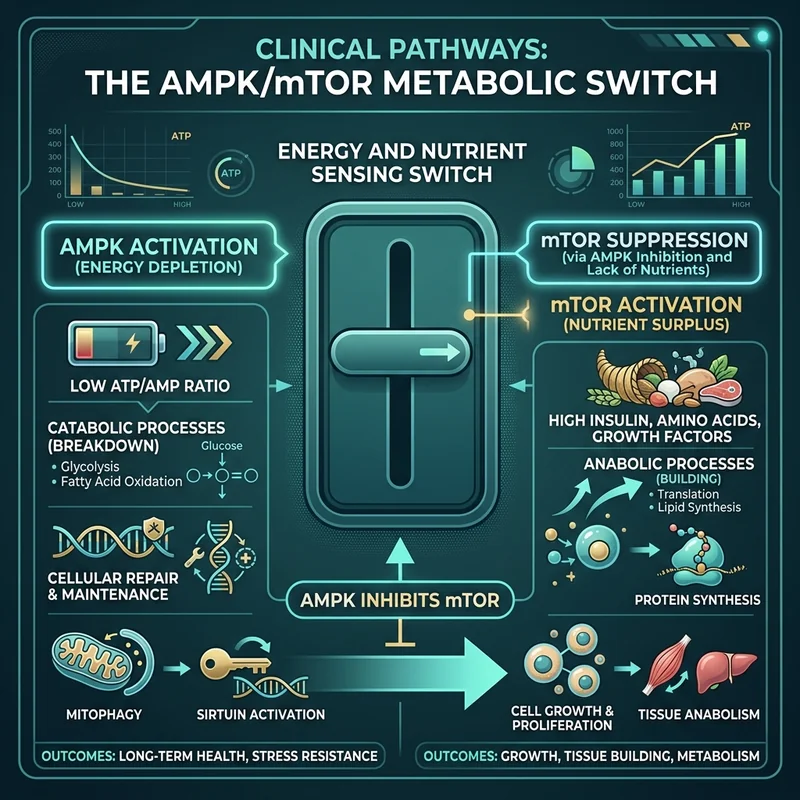
To reverse this anabolic dominance and initiate cellular repair, the cell must experience a significant energy deficit. As fasting progresses, circulating glucose levels fall, causing a drop in insulin and a decrease in intracellular amino acid availability. This starvation state triggers a rise in the ratio of Adenosine Monophosphate (AMP) and Adenosine Diphosphate (ADP) relative to Adenosine Triphosphate (ATP). The kinase LKB1 detects this increase in AMP and ADP and phosphorylates the alpha subunit of AMPK at Threnaline 172. Once activated, AMPK initiates a rapid, multi-pronged catabolic response to restore energy homeostasis. AMPK directly phosphorylates the regulatory-associated protein of mTOR (Raptor) at Serine 792 and Serine 818, leading to its inactivation. Additionally, AMPK phosphorylates Tuberous Sclerosis Complex 2 (TSC2), which acts as a GTPase-activating protein for Rheb, turning off Rheb-mediated activation of mTORC1. By disabling mTORC1 and directly phosphorylating ULK1 at Serine 317 and Serine 777, AMPK releases the molecular brakes on autophagy, allowing the cellular recycling machinery to assemble and begin the purge of mutated proteins.
2. The Molecular Mechanics of Lysosomal Recycling
Once the ULK1 complex is activated by AMPK, it translocates to specialized domains on the endoplasmic reticulum known as omegasomes. This migration initiates the complex process of macroautophagy, which can be divided into four distinct phases: nucleation, elongation, fusion, and degradation. The ULK1 complex phosphorylates components of the Class III Phosphatidylinositol 3-Kinase (PI3K) complex, which includes Beclin-1, VPS34, and VPS15. This phosphorylation stimulates local synthesis of Phosphatidylinositol 3-Phosphate (PI3P) at the omegasome membrane. The accumulation of PI3P recruits specific effector proteins, such as WIPI2 (WD Repeat Domain Phosphoinositide Interacting 2) and DFCP1, which act as a physical scaffold for the recruitment of the ATG (Autophagy-related) conjugation systems.
The elongation of the autophagosomal membrane requires two ubiquitin-like conjugation systems. First, ATG7 and ATG10 catalyze the conjugation of ATG12 to ATG5, which then binds to ATG16L1 to form a large multi-protein complex. This ATG12-ATG5-ATG16L1 complex acts as an E3 ligase for the second system, which involves the protein LC3 (Microtubule-associated protein 1 Light Chain 3). Cytosolic LC3-I is cleaved by ATG4 and then conjugated to the membrane lipid phosphatidylethanolamine (PE) by ATG7 and ATG3 to form lipidated LC3-II. The insertion of LC3-II into the expanding double-membrane sheet, known as the phagophore, is essential for membrane elongation and cargo selection. LC3-II interact directly with cargo receptors like p62 (SQSTM1), which bind selectively to ubiquitinated protein aggregates, damaged mitochondria, and dysfunctional endoplasmic reticulum, pulling them into the closing vesicle. Once the edges of the phagophore fuse, the cargo is completely isolated inside the mature autophagosome, a secure transport vesicle destined for destruction.
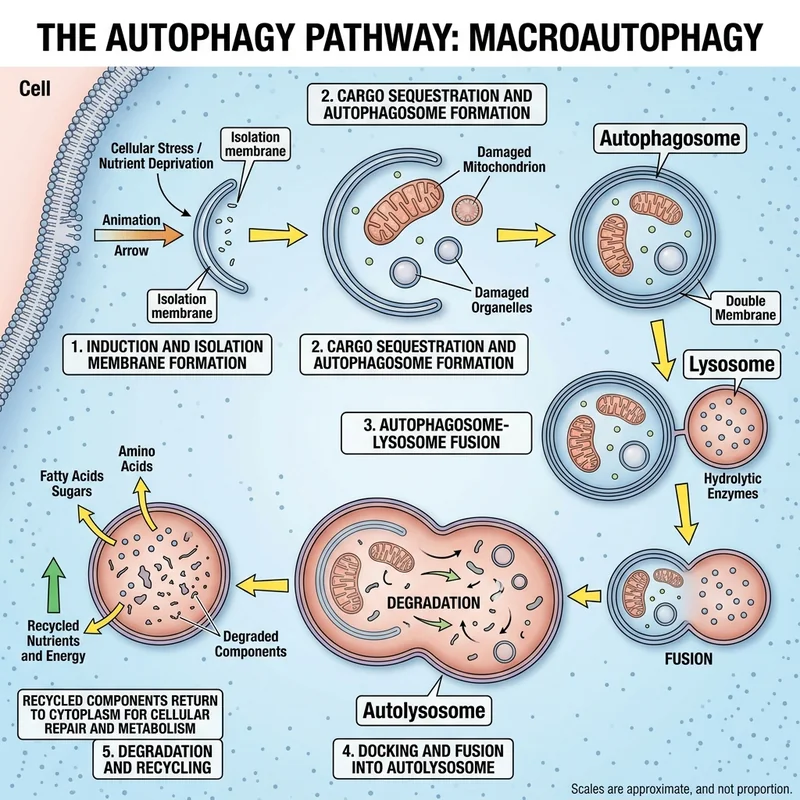
The final phase of autophagy involves the transport of the autophagosome along the microtubule network toward the perinuclear region of the cell, where lysosomes are concentrated. The outer membrane of the autophagosome fuses with the lysosomal membrane, a process mediated by SNARE proteins (such as Syntaxin 17, SNAP29, and VAMP8) and tethering factors (such as the HOPS complex). This fusion creates a single hybrid organelle called the autolysosome. The lysosome contributes its internal pool of acid hydrolases, including cathepsins, lipases, and nucleases, which require a highly acidic environment (pH 4.5 to 5.0) maintained by the vacuolar ATPase proton pump. Once inside the autolysosome, the inner membrane of the autophagosome and its cargo are rapidly degraded into basic molecular building blocks: free amino acids, simple sugars, fatty acids, and nucleotides. These molecules are exported back into the cytosol via specialized transporters to be utilized for energy production or to synthesize new, fully functional cellular structures. This process was discovered and mapped in detail by Nobel laureate Yoshinori Ohsumi in 2016, confirming that autophagy is a highly regulated, essential recycling program that prevents cellular toxicity.
3. The Chronological Timeline: Hour-by-Hour Cellular Shifts
To utilize fasting effectively for cellular rejuvenation, you must understand the exact biological thresholds your body crosses over a continuous timeline. Autophagy is not a binary switch; it is a progressive physiological response that increases as hepatic energy reserves are depleted. The timeline below outlines the metabolic and cellular transitions that occur during a prolonged fast, based on clinical endocrinology and kinetic studies.
Hours 0 to 12: The Glycogen Depletion Phase
During the first 12 hours after your last meal, your body is in the postprandial and early post-absorptive states. The digestive tract is actively processing, absorbing, and transporting nutrients from the consumed food. Circulating levels of glucose and insulin remain elevated, keeping the mTOR pathway active and suppressing autophagy. During this period, the liver and skeletal muscle cells rely on circulating glucose for energy, storing any excess as glycogen. The liver holds approximately 100 to 120 grams of glycogen, which acts as a primary glucose backup battery to maintain normal blood sugar levels between meals. As you progress past the 6-hour mark, active absorption ends, and the pancreas decreases insulin secretion while increasing glucagon release. The liver begins glycogenolysis, breaking down its stored glycogen into glucose to release into the bloodstream. At this stage, lipolysis (the breakdown of fat) is blocked by residual insulin, and autophagy remains at baseline levels because the cells still have abundant energy stores.
Hours 12 to 18: The Lipolysis Shift and Ketogenesis
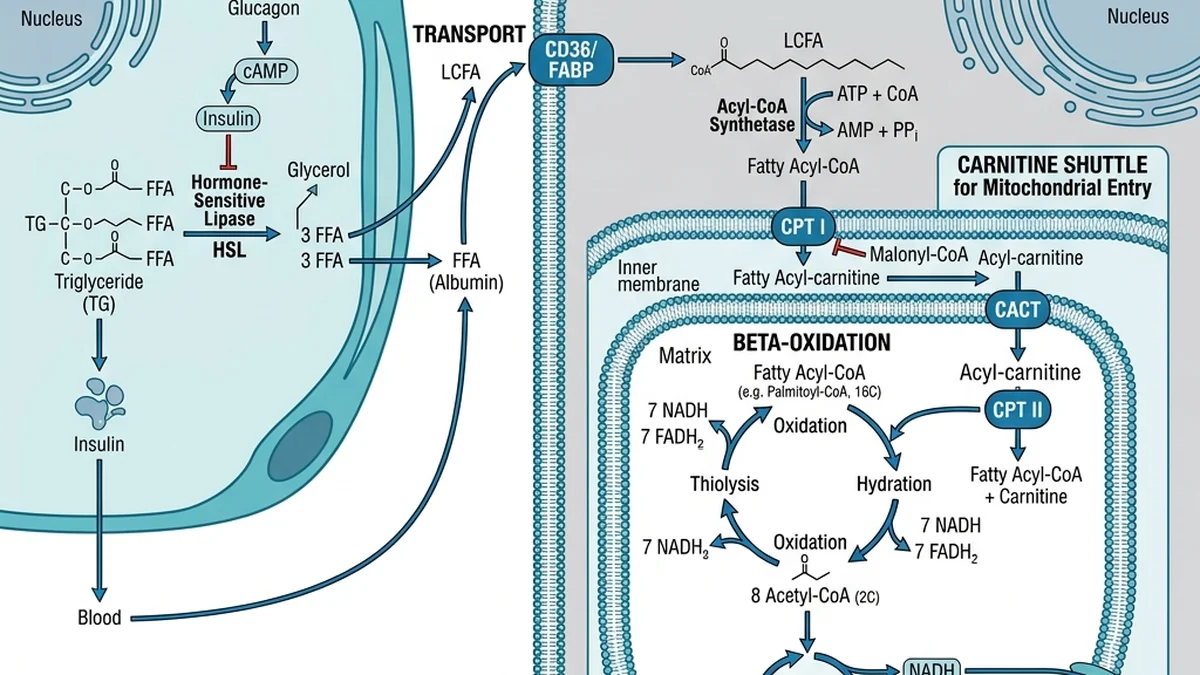
As you cross the 12-hour threshold, hepatic glycogen reserves become significantly depleted, falling by 50 to 80 percent. To maintain systemic energy supplies, the endocrine system initiates a major metabolic shift. The decrease in insulin relieves the inhibition on Hormone-Sensitive Lipase (HSL) in adipose tissue. HSL, activated by catecholamines (epinephrine and norepinephrine) binding to beta-adrenergic receptors, begins lipolysis: breaking down stored triglycerides in fat cells into free fatty acids (FFAs) and glycerol. These free fatty acids enter the circulation and are transported to the liver and skeletal muscle tissues. Inside the hepatocytes, the enzyme Carnitine Palmitoyltransferase-1 (CPT-1) facilitates the transport of fatty acids across the mitochondrial membranes, initiating beta-oxidation. This process breaks down fatty acids into acetyl-CoA, which enters the Krebs cycle to produce ATP. When the liver is flooded with fatty acids, the production of acetyl-CoA exceeds the capacity of the Krebs cycle. The excess acetyl-CoA is directed toward ketogenesis, producing ketone bodies: acetoacetate and beta-hydroxybutyrate (BHB). Ketone bodies enter the bloodstream and cross the blood-brain barrier, providing a highly efficient alternative fuel source for the brain, preserving skeletal muscle mass by reducing the need for gluconeogenesis from amino acids.
Hours 18 to 24: The AMPK Trigger and Onset of Autophagy
This is the critical metabolic window where autophagy transitions from basal maintenance to active cellular repair. At approximately 18 continuous hours of zero caloric intake, hepatic glycogen is almost entirely exhausted. The cellular energy charge drops, resulting in a significant increase in the ratio of AMP to ATP. This alteration activates AMPK, which directly phosphorylates and shuts down the mTORC1 complex. Once mTORC1 is suppressed, the ULK1 complex is released, initiating the formation of the phagophore membrane. The cells, recognizing that no external nutrients are arriving, begin to seek out internal sources of energy and amino acids. They target dysfunctional components: misfolded proteins, oxidized lipid droplets, and damaged mitochondria that are leaking reactive oxygen species (ROS). The process of mitophagy (selective autophagy of mitochondria) is upregulated, allowing the cell to eliminate inefficient energy producers and replace them with healthy organelles. At 24 hours of fasting, systemic autophagy levels in tissues such as liver, muscle, and vascular endothelial cells show a significant increase, marking the onset of deep cellular repair.
Hours 24 to 48: Deep Autophagy and mTOR Shutdown
Between 24 and 48 hours of continuous fasting, your body enters a state of deep autophagy and metabolic adaptation. Circulating insulin levels reach their lowest physiological baseline, while glucagon, growth hormone, and cortisol are elevated to maintain blood glucose stability and preserve muscle tissue. In this state, the suppression of the mTOR pathway is complete, and the rate of autophagosome formation and lysosomal fusion reaches its peak. Mitophagy and proteolysis (protein recycling) occur at high levels throughout the body, particularly in the liver, brain, and immune cells. This deep recycling process clears out aggregated proteins associated with neurodegenerative decline, such as amyloid-beta and tau proteins. Additionally, the elimination of damaged mitochondria leads to a reduction in systemic oxidative stress and inflammation. The body is operating almost entirely on fat-derived ketones, with BHB levels rising to 1.5 to 3.0 mmol/L, providing neuroprotective signals and promoting the expression of Brain-Derived Neurotrophic Factor (BDNF) in the central nervous system.
Hours 48 and Beyond: Prolonged Fasting and Cellular Renewal
When a fast is extended beyond 48 hours, the cellular response transitions from recycling existing structures to initiating systemic regeneration. Clinical studies show that prolonged fasting (typically 48 to 72 hours) causes a significant reduction in circulating levels of Insulin-Like Growth Factor 1 (IGF-1) and downregulates Protein Kinase A (PKA) activity. This hormonal shift acts as a molecular trigger to clear out old, senescent immune cells (immunosenescence) through apoptosis. Once these worn-out white blood cells are removed, the reduction in IGF-1 and PKA signals hematopoietic stem cells in the bone marrow to transition from a dormant state to an active self-renewal program. Upon refeeding, these stem cells proliferate, generating fresh, highly functioning immune cells, effectively rejuvenating the immune system. However, extending fasts beyond 48 hours carries increased risks of electrolyte imbalances, muscle protein catabolism, and refeeding syndrome, and should only be conducted under close medical supervision.
4. Clinical Comparison of Fasting States
To understand the physiological impact of different fasting durations, the table below compares fasting windows across primary metabolic states, hormonal markers, and cellular autophagy levels.
| Fasting Duration | Metabolic State | Primary Hormonal Markers | Autophagy Activity Level | Primary Biomarkers |
|---|---|---|---|---|
| 0 to 12 Hours | Postprandial / Absorbative | Elevated Insulin, Low Glucagon | Basal (Minimal) | Circulating Glucose (70-120 mg/dL) |
| 12 to 18 Hours | Early Post-absorbative / Lipolysis | Decreasing Insulin, Rising Glucagon | Initiating (Low) | Free Fatty Acids, Acetoacetate |
| 18 to 24 Hours | Metabolic Switch / Ketogenesis | Low Insulin, High Glucagon, High GH | Active (Medium) | BHB Ketones (0.5-1.5 mmol/L) |
| 24 to 48 Hours | Deep Ketosis / Autophagy | Baseline Insulin, Elevated Cortisol | Peak (High) | BHB Ketones (1.5-3.0 mmol/L), Reduced IGF-1 |
| 48+ Hours | Prolonged Starvation / Stem Cell Activation | Low IGF-1, Low PKA Activity | Regenerative (Stem Cells) | hematopoietic Stem Cell Activation |
5. The Autophagy Safe Practice Checklist
While the exact fasting hours deep autophagy requires can provide significant cellular benefits, executing a prolonged fast requires careful planning and physiological monitoring to prevent complications. When cells degrade internal waste and enter survival modes, they release cellular byproducts, uric acid, and organic acids into the bloodstream, which must be filtered by the kidneys. Proper hydration and electrolyte balance are essential to support renal function and prevent metabolic stress.
Use the following clinical guidelines to ensure safety and monitor your body during a fast target: 18 to 24 hours.
| Fasting Target | Clinical Metric | Daily Standard | Completed (M / T / W / T / F / S / S) |
|---|---|---|---|
| Hydration Monitoring | Maintains renal blood flow to flush cellular waste | Minimum 2.5 to 3.5 Liters of water daily | [ ] [ ] [ ] [ ] [ ] [ ] [ ] |
| Electrolyte Balance | Prevents muscle cramps, headaches, and cardiac strain | 300 mg Magnesium, 2000 mg Sodium, 1000 mg Potassium | [ ] [ ] [ ] [ ] [ ] [ ] [ ] |
| Glucose / Ketone Tracking | Monitors metabolic transition and depth of ketosis | Glucose 70-85 mg/dL, Ketones 0.5-2.0 mmol/L | [ ] [ ] [ ] [ ] [ ] [ ] [ ] |
| Refeeding Strategy | Avoids insulin surges and gastrointestinal distress | Break fast with bone broth, lean protein, and healthy fats | [ ] [ ] [ ] [ ] [ ] [ ] [ ] |
| Heart Rate Check | Monitors orthostatic stability and autonomic function | Resting Heart Rate within 60 to 90 beats per minute | [ ] [ ] [ ] [ ] [ ] [ ] [ ] |
It is important to recognize when to terminate a fast immediately. If you experience severe lightheadedness, heart palpitations, persistent nausea, confusion, or extreme weakness, your body may be experiencing severe electrolyte depletion or hypoglycemia. You should break the fast immediately with a small, easily digestible meal. Additionally, certain populations must avoid fasting entirely unless under direct clinical supervision, including pregnant or lactating women, individuals with a history of eating disorders, type 1 diabetics, individuals with advanced cardiovascular disease, and children under the age of 18.
6. High-Authority Educational Videos
Watch these educational videos from leading scientific experts and medical institutions to learn more about the biology of autophagy, fasting mechanics, and metabolic health guidelines.
Dr. Jason Fung: The Autophagy Myth
Renowned nephrologist and author Dr. Jason Fung explains the biological triggers of autophagy, highlighting key misconceptions about caloric restriction and fasting timelines.
Mayo Clinic: Is Fasting Right For Me?
Medical experts on the Mayo Clinic Nutrition Podcast analyze intermittent fasting guidelines, metabolic transitions, and key safety precautions for individuals.
7. Clinical Frequently Asked Questions
How many hours of fasting are required to initiate autophagy?
Autophagy begins to rise above basal levels at approximately 18 continuous hours of fasting, as hepatic glycogen becomes depleted and the AMPK pathway is activated. Peak autophagy activity typically occurs between 24 and 48 hours of fasting, when the mTOR pathway is fully suppressed and cells rely primarily on lysosomal recycling and ketone bodies for energy.
Does consuming bone broth or black coffee break autophagy?
Bone broth contains amino acids (such as glycine, proline, and glutamine) which can bind to nutrient sensors in cells and reactivate the mTOR pathway, temporarily blocking autophagy. Pure black coffee, water, and unsweetened herbal teas do not contain amino acids or carbohydrates and are generally considered safe because they do not trigger insulin release or mTOR activation.
Why is a 12-hour fast insufficient for deep cellular repair?
A 12-hour fast is generally insufficient to trigger autophagy because the body is still operating in the post-absorptive state. During this time, the liver still contains abundant glycogen reserves to maintain blood sugar, and circulating insulin levels are not low enough to release the blocks on HSL and the ULK1 complex. The cell has no survival-based reason to cannibalize its own structures.
What is the role of the lysosome in cellular recycling?
The lysosome is an acidic organelle containing over 50 different acid hydrolase enzymes. In autophagy, the autophagosome fuses with the lysosome, releasing these enzymes to degrade isolated cellular waste (misfolded proteins, worn-out mitochondria) into basic molecular building blocks like amino acids and fatty acids, which are then recycled by the cell.
What are the primary clinical contraindications for prolonged fasting?
Prolonged fasting is contraindicated for pregnant or lactating women, children under 18, individuals with a history of eating disorders, type 1 diabetics, and those with advanced liver, kidney, or cardiovascular disease. These conditions require stable nutrient availability and metabolic consistency to prevent severe complications, including electrolyte imbalances and refeeding syndrome.
8. Clinical Sources and References
- The Nobel Assembly at Karolinska Institutet: Discoveries of Mechanisms for Autophagy by Yoshinori Ohsumi. Karolinska Nobel Press Release.
- Cell Metabolism: Inactivation of the mTORC1 pathway via nutrient sensing and its role in cellular lifespan. Cell Metabolism Archive.
- Journal of Clinical Endocrinology & Metabolism: AMPK activation and hormonal adjustments during prolonged fasting in humans. JCEM Publications.
- Harvard T.H. Chan School of Public Health: Intermittent Fasting: Scientific and Clinical Evidence. Harvard Health Publications.
- Alirezaei, M., et al. (2010): Short-term fasting induces profound neuronal autophagy. Autophagy, 6(6), 702-710.
- de Cabo, R., & Mattson, M. P. (2019): Effects of Intermittent Fasting on Health, Aging, and Disease. New England Journal of Medicine, 381(26), 2541-2551.
Medical Review Disclaimer: The physiological descriptions, metabolic pathways, and fasting guidelines outlined in this article are for general educational purposes and represent standard evidence-based health recommendations. If you have underlying cardiovascular, renal, endocrine, or metabolic conditions (such as diabetes, gout, or kidney disease), please consult a qualified healthcare provider or registered dietitian before starting a prolonged fasting program. See our full Medical Disclaimer and Editorial Policy.

Ganesh G Kamble
Ganesh G Kamble is the founder and editor of Health is Heaven. He spent 14 years as a techno-functional consultant on enterprise ERP systems in Bangalore before turning his attention to health publishing. His background is technical, not clinical, and he is not a medical professional. He started Health is Heaven because most online health information is either too vague to act on, too technical to understand, or too commercial to trust. The site's mission is to provide clear, evidence-based answers to common health questions, with sources you can verify, alongside free interactive calculators built using standard medical formulas published by recognised authorities including the World Health Organization, the U.S. Centers for Disease Control and Prevention, the American Heart Association, the American Diabetes Association, and the National Institutes of Health. Every article is reviewed against authoritative sources before publishing, dated with both publish and last-updated timestamps, and clearly marked as informational only when covering medical topics. Articles dealing with diagnosis, treatment, or medication recommend speaking with a qualified healthcare provider. The site does not accept paid placements that influence editorial content; any future advertising is clearly labelled and separated from articles. Ganesh is based in Bangalore, India, and connects with readers and collaborators on LinkedIn.