
Medically reviewed by: Health is Heaven Medical Review Board | Published by Ganesh G Kamble, Health is Heaven | Published: April 22, 2026 · Last updated: September 29, 2026
 By
Each morning, your adrenal glands execute one of the most precisely orchestrated events in human physiology. Within the first 20 to 30 minutes of waking, cortisol surges to 50 to 160% above its initial baseline. If you struggle with early-morning jitters, learning how to stop a morning cortisol spike naturally is essential for resetting your metabolic health. You can calculate your baseline metabolic parameters using our free metabolic age calculator. This process, known as the Cortisol Awakening Response (CAR), is a biological launch sequence required for vascular tone, hepatic glucose mobilization (a key metabolic function evaluated in our hepatic function and fatty liver disease NAFLD guide), immune priming, and cognitive activation. Notably, chronic cortisol elevation is also a primary driver of telogen effluvium, meaning stress regulation is a crucial adjunct to clinical hair loss treatments for men that work (and monitoring stages with our male pattern baldness calculator) before follicles become permanently inactive. Additionally, mitigating chronic stress is a foundational step in how to lower biological age naturally by protecting telomere integrity.
The clinical goal is not to eliminate this response. Cortisol is essential: a complete absence of morning cortisol, as occurs in primary adrenal insufficiency (Addison's disease), is a medical emergency. The goal is to optimize the CAR so it peaks cleanly and declines back toward baseline by late morning, rather than remaining pathologically elevated for hours. Chronic high-cortisol patterns are associated with visceral fat accumulation, sleep architecture disruption, making it essential to understand how to sleep better at night naturally, hippocampal volume reduction, and progressive insulin resistance. Therefore, managing cortisol is a fundamental component of how to lose belly fat naturally. Integrating structured science-based stress management techniques is vital to reduce this cumulative allostatic load and prevent long-term systemic damage.
This guide covers the clinical science of the CAR, the physiological factors that dysregulate it, and six evidence-based morning protocols grounded in endocrinology and circadian biology. As with any health intervention, consult a qualified healthcare provider before making significant changes, particularly if you suspect an underlying adrenal or hormonal condition.
Health is Heaven Interactive Tools
Is Chronic Stress Driving Your Morning Cortisol?
Elevated morning cortisol is often downstream of accumulated sleep debt and chronic psychological stress. Use these two tools to establish your baseline before starting any CAR protocol.
What Is a Morning Cortisol Spike? The Clinical Mechanism
The Cortisol Awakening Response is a distinct neuroendocrine event that occurs in the first 20 to 45 minutes after spontaneous awakening. Unlike the broader diurnal cortisol rhythm, which peaks at approximately 8:00 AM and reaches its nadir around midnight, the CAR is a rapid, superimposed spike triggered specifically by the act of waking. It is not simply an extension of the circadian rhythm. Studies using abrupt versus gradual alarm-induced awakenings confirm that the CAR is uniquely coupled to the transition from sleep to wakefulness.
The cascade begins in the hypothalamus, where corticotropin-releasing hormone (CRH) is secreted into the hypophyseal portal system. CRH acts on the anterior pituitary to stimulate adrenocorticotropic hormone (ACTH) release. ACTH travels through the bloodstream to the adrenal cortex, specifically the zona fasciculata, where it drives the enzymatic conversion of cholesterol to cortisol via the steroidogenesis pathway (StAR protein transport, CYP11A1, CYP17A1, and CYP11B1 enzyme activity). This HPA axis cascade takes approximately 10 to 15 minutes from initiation to cortisol output, which is why the cortisol peak appears 20 to 30 minutes post-awakening rather than immediately.
Research published in Psychoneuroendocrinology has shown that the CAR is influenced by psychological anticipation of the coming day. As of 2026, updated meta-analyses continue to confirm that individuals expecting a high-demand or threatening day show a significantly larger CAR than those anticipating a restful one, demonstrating that the brain pre-activates the HPA axis based on anticipated load, not just the mechanical act of waking. This anticipatory regulation provides a biological advantage in preparedness but becomes maladaptive when chronically activated in response to ongoing perceived threat or burnout. Recent 2026 longitudinal studies have further documented that individuals exposed to workplace chronic stressors exhibit CAR amplification that persists even during vacation periods, suggesting a durable remodeling of HPA responsiveness that may require sustained intervention beyond the immediate stressor removal.
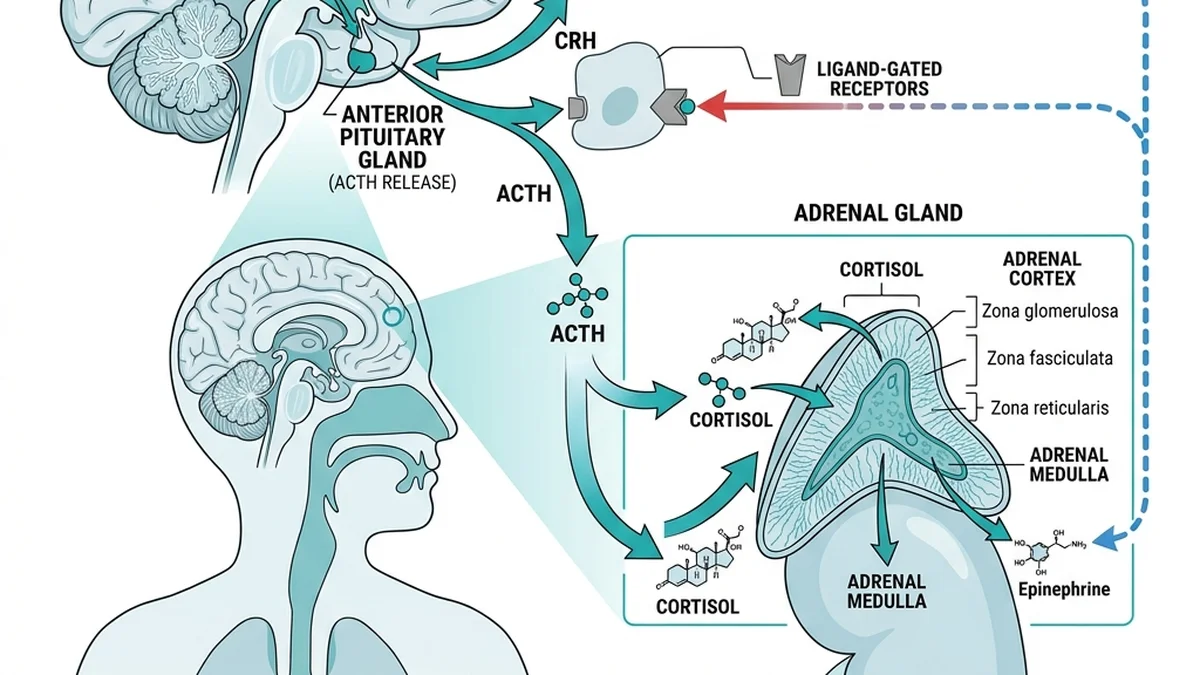
Cortisol performs essential functions during this morning window:
- Hepatic gluconeogenesis: Cortisol acts on glucocorticoid receptors (GRs) in the liver to upregulate phosphoenolpyruvate carboxykinase (PEPCK) and glucose-6-phosphatase, driving glucose production from amino acids and glycerol. This provides the brain's primary fuel substrate for the first active hours of the day before the first meal.
- Immune modulation: The morning cortisol surge suppresses pro-inflammatory cytokine production (TNF-alpha, IL-6) and modulates leukocyte trafficking from bone marrow. This is part of the normal immunomodulatory cycle and helps calibrate immune readiness for the day.
- Cardiovascular activation: Cortisol sensitizes vascular smooth muscle to catecholamines (norepinephrine, epinephrine) and upregulates angiotensin II receptors, increasing peripheral vascular resistance and supporting the blood pressure required for standing upright, effectively opposing orthostatic hypotension.
- Cognitive priming: Moderate cortisol levels facilitate working memory, sustained attention, and prefrontal cortex activity via mineralocorticoid receptor (MR) activation in the hippocampus, which predominates at the lower cortisol concentrations typical of the early post-waking period.
When the CAR Becomes Dysregulated: Clinical Consequences
The CAR becomes clinically problematic when it is chronically exaggerated, when the normal decline back toward baseline is blunted, or when cortisol remains abnormally elevated across the full daily rhythm. Bruce McEwen at Rockefeller University described this pattern as allostatic overload: the cumulative physiological cost of repeated or chronic stress-driven HPA axis activation. This persistent neuroendocrine drive can increase intestinal permeability, proving that stabilizing the gut-brain axis and anxiety pathways is necessary to reduce chronic systemic stress.
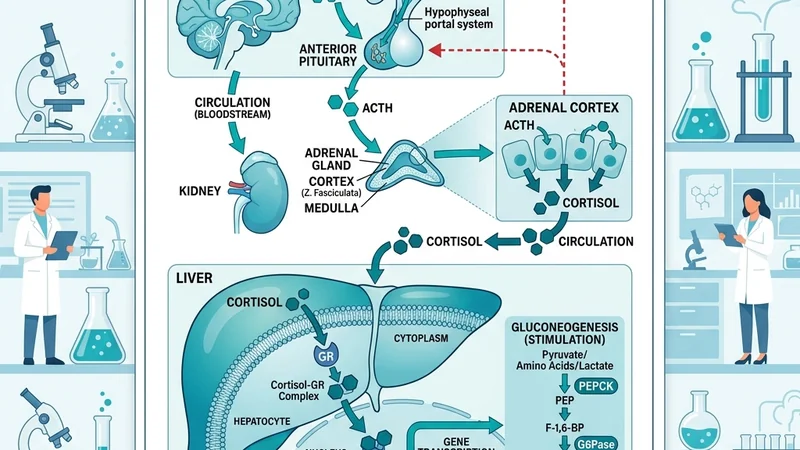
The downstream consequences of a dysregulated CAR include:
- Visceral adiposity: Glucocorticoid receptors are expressed at substantially higher density in omental (visceral) fat than in subcutaneous fat. Chronic cortisol exposure selectively drives lipid deposition in visceral depots via lipoprotein lipase (LPL) upregulation. Visceral adipose tissue then secretes pro-inflammatory adipokines and free fatty acids directly into the portal Circulation, further impairing hepatic insulin sensitivity.
- Insulin resistance: Cortisol inhibits insulin-stimulated glucose uptake in peripheral tissues by suppressing GLUT4 translocation in skeletal muscle and adipose tissue. Simultaneously, cortisol-driven hepatic gluconeogenesis raises fasting glucose. The resulting compensatory hyperinsulinemia can progressively impair pancreatic beta cell function.
- Sleep architecture disruption: Cortisol and melatonin maintain a reciprocal rhythm. Elevated afternoon and evening cortisol suppresses pineal melatonin secretion via CRH pathway modulation of the suprachiasmatic nucleus (SCN) output to the pineal gland. This delays sleep onset, reduces deep NREM sleep duration, and creates a negative feedback loop where fragmented sleep then elevates the next morning's CAR further.
- Hippocampal neuroplasticity impairment: Chronic glucocorticoid excess accelerates hippocampal neuronal apoptosis and reduces BDNF (brain-derived neurotrophic factor) synthesis. This mechanism underlies the association between chronic stress and impaired episodic memory, and partly explains the elevated risk of depressive illness in chronically high-cortisol states.
- Immune dysregulation: While acute cortisol is anti-inflammatory, chronic sustained elevation leads to glucocorticoid resistance in immune cells, producing a paradoxical pro-inflammatory shift. This is one mechanism behind the increased infection susceptibility and persistent low-grade inflammation seen in individuals with chronic allostatic load.